Trypsin inhibitor inhibits Trypsin with high effiency, and, to a lesser extent, chymotrypsin. Additionally, there is a light inhibiting effect on plasmin, kallikrein, thrombin and a few other proteolytic enzymes. Directions for use Recommended final concentration: 1-100 µg/ml Solutions of higher concentration may be hazy and slightly yellow-coloured. pH optimum: pH 7.6-8.0. Trypsin inhibitor ≥7 000 BAEE U/mg, salt-free
Phenylmethyl sulphonyl fluoride ≥98 %, for biochemistry General, irreversible inhibitor of serin proteases (chymotrypsin, trypsin and thrombin) and for the dystin-protease papain. Inhibiton by sulphonation of the serine localised in the enzymatic active site. Reversible inhibitor of cysteine-proteases. K i = 0.91 ±0.01 mM Directions for use Working concentration: 17-174 µg/ml (0,1-1 mM). Dissolves easily in isopropanol, ethanol and methanol. Not stable in aqueous solutions (half-life value of 1 h at pH 7.5/RT). For stock solutions of 200-250 mM heat shortly (approx. 30 mins) to 30 °C. Stock solutions should be stored at -20 °C. Short term storage of few weeks may be done at +4 °C in the dark. PMSF reacts with thiols. DTT and β-mercaptoethanol reduce the inhibitory effect. At every stage of isolating or purifying the proteins, PMSF should be added fresh from the stock solution. PMSF is often not sufficient as the only protease inhibitor in the preparation to protect against decomposition processes, as for example high salt concentration (3.0 M) impairs the inhibitory effect of PMSF.
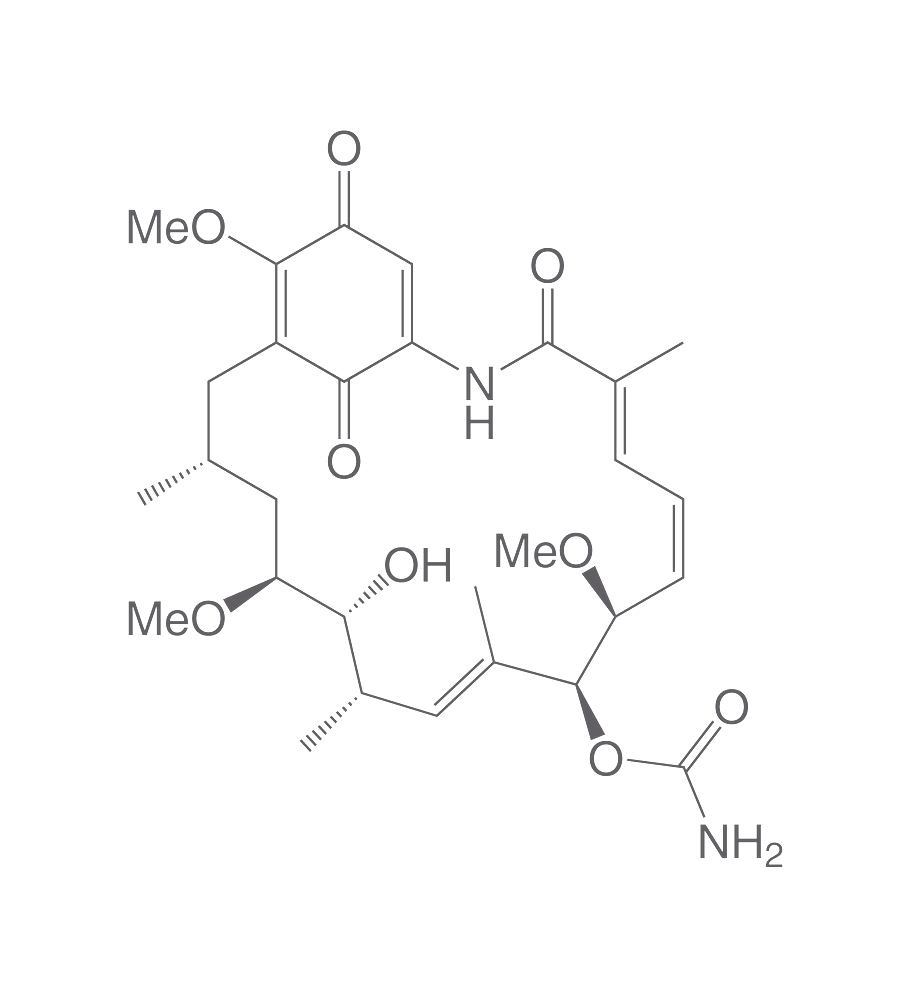
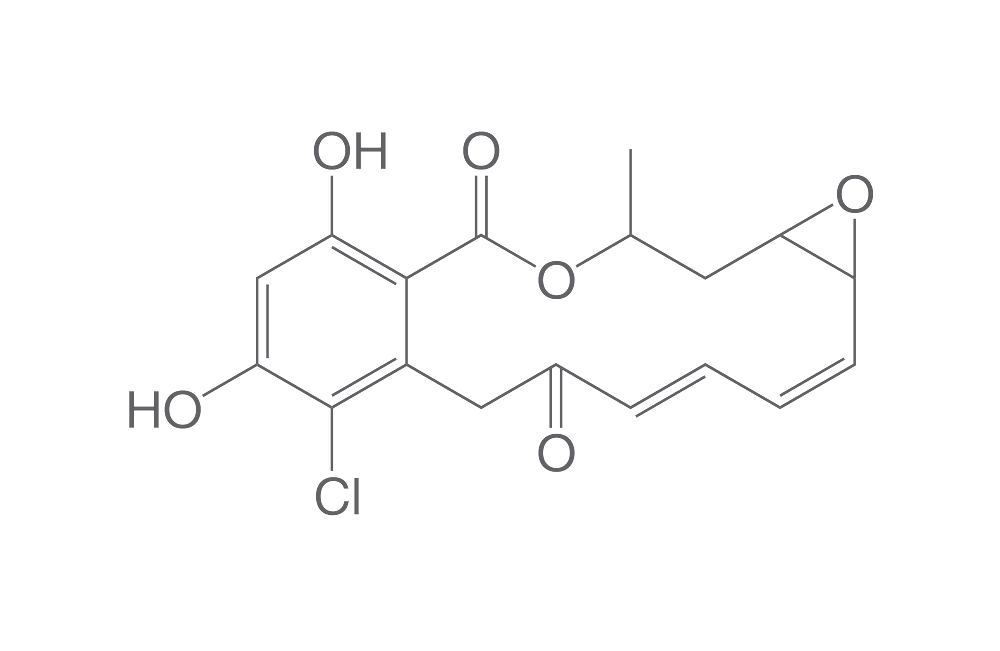
Geldanamycin ≥98 %, for biochemistry Geldanamycin arrests cells in G 2 phase, thus interfering with angiogenesis and oncogenesis. The specific binding of geldanamycin to heat shock protein 90 (HSP90) and its ER homologue GP96 leads to inhibition of the chaperone, results in degradation of HSP90 substrates and, subsequently, to deregulation of central cell mechanisms - cell cycle, cell proliferation, apoptosis/cell vitality. Due to its antitumor potential it may be used as antibiotic against several eucaryotic carcinogenic cell lines. Additionally, geldanamycin is used as inhibitor of tyrosin-kinase and during analysis of several other physiological regulatory mechanisms. Directions for use Working concentration: 1-10 µg/ml. Photo sensitive! Store protected from light.
Ethylenediamine tetraacetic acid disodium salt dihydrate ≥99 %, p.a., ACS EDTA forms chelate complexes with Mg 2+ -ions and other bivalent metal cations. It can therefore be applied as a general inhibitor for all enzymes which require such metal cations to function (e.g. DNases and metal proteases).
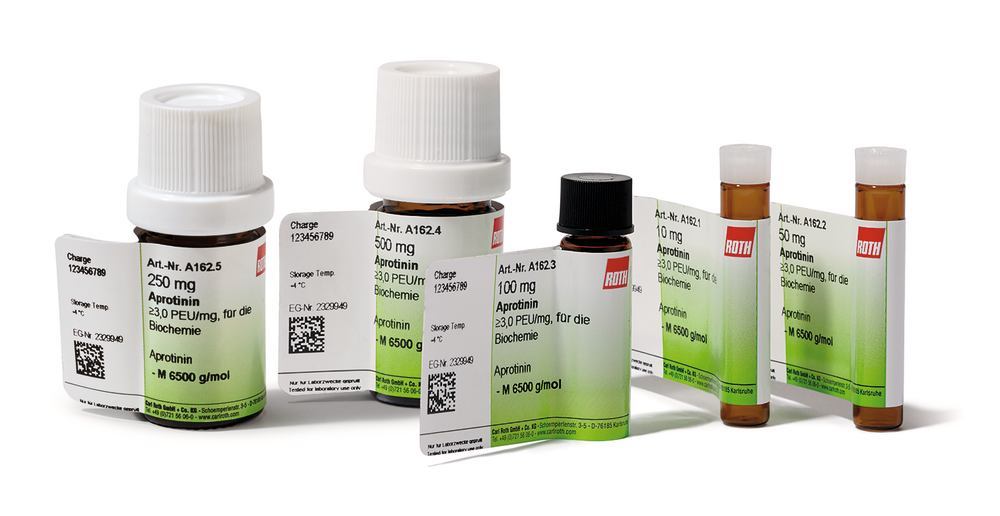
Aprotinin ≥3,0 PEU/mg, for biochemistry Aprotinin inhibits trypsin, chymotrypsin, plasmin and kallikrein with high activity. Kininogens are cysteine proteases from the cystatin superfamily. Kininogenases split kininogens into kinins (inflammation mediators). Unit definition Activity: 1 PEU (Ph. Eur. Unit) corresponds to 1950 KIU (Kallikrein Inhibitory Units). 1 PEU corresponds to approx. 1.5 TIU (Trypsin Inhibitory Units). 1 TIU corresponds to approx. 1300 KIU. Specific Activity: ≥3.0 PEU/mg corresponding to ≥5850 KIU/mg Directions for use Recommended end concentration: 1.54 µM (10 µg/ml). pH-optimum: 7.0-8.0.
AEBSF hydrochloride ≥97 %, for biochemistry Irreversible inhibition. Inhibits trypsin, chymotrypsin, plasmin, kallikrein and thrombin by sulphurizing a functional group in the active centre of an enzyme. Due to its low toxicity, AEBSF is a good alternative to PMSF. Directions for use Working concentration: 0.1-5 mM. Optimal at pH 6.5, alkali-labile. Avoid pH-value 7 and do not exceed pH-value 9.
Bestatin hydrochloride ≥98 %, for biochemistry Competitive and specific inhibition of aminopeptidase B, leucin-aminopeptidase and triaminopeptidase. Does not inhibit aminopeptidase A, trypsin, chymotripyin, elastase, papain, pepsin, thermolysin. Bestatin does not have an antibacterial effect and is non-fungicidal. Its low toxicity facilitates the application. Directions for use Working concentration: 10-100 µM.
Ethylenediamine tetraacetic acid disodium salt dihydrate ≥99 %, p.a., ACS EDTA forms chelate complexes with Mg 2+ -ions and other bivalent metal cations. It can therefore be applied as a general inhibitor for all enzymes which require such metal cations to function (e.g. DNases and metal proteases).
E-64 ≥99 %, for biochemistry Irreversible, strong and highly selective inhibition of cysteine protease (e. g. papain, bromelain, ficin, cathepsin B, H and L, tumor-cathepsin, calpain etc.). Does not inhibit serine proteases except trypsin. Low toxicity, high cell permeability and stability against reducing reagents makes E-64 an excellent alternative to leupeptin or antipain. Directions for use Working concentration: 1-10 µM.
Geldanamycin ≥98 %, for biochemistry Geldanamycin arrests cells in G 2 phase, thus interfering with angiogenesis and oncogenesis. The specific binding of geldanamycin to heat shock protein 90 (HSP90) and its ER homologue GP96 leads to inhibition of the chaperone, results in degradation of HSP90 substrates and, subsequently, to deregulation of central cell mechanisms - cell cycle, cell proliferation, apoptosis/cell vitality. Due to its antitumor potential it may be used as antibiotic against several eucaryotic carcinogenic cell lines. Additionally, geldanamycin is used as inhibitor of tyrosin-kinase and during analysis of several other physiological regulatory mechanisms. Directions for use Working concentration: 1-10 µg/ml. Photo sensitive! Store protected from light.
Trypsin inhibitor inhibits Trypsin with high effiency, and, to a lesser extent, chymotrypsin. Additionally, there is a light inhibiting effect on plasmin, kallikrein, thrombin and a few other proteolytic enzymes. Directions for use Recommended final concentration: 1-100 µg/ml Solutions of higher concentration may be hazy and slightly yellow-coloured. pH optimum: pH 7.6-8.0. Trypsin inhibitor ≥10 000 BAEE U/mg 1 mg of lyophilisate inhibits at minimum 10.000 BAEE Units of trypsin. Directions for use Application in cell culture (stock solution 1 mg/ml): Following trypsination, add the same volume inhibitor solution as was used for trypsin. Zentrifuge cells (5 mins, 1000 rpm), and remove supernatant. Resuspend cells in medium and cultivate further.
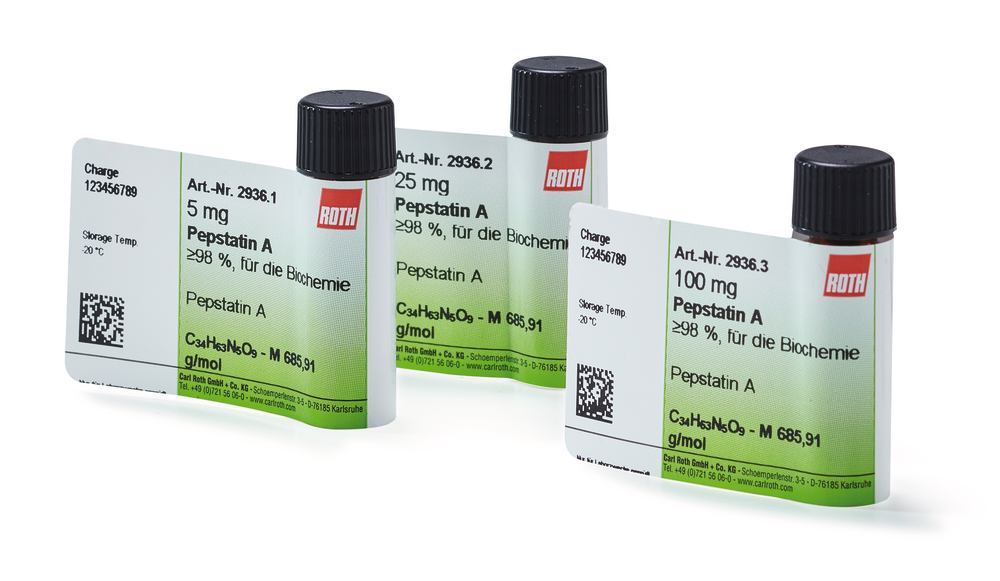
Pepstatin A ≥95 %, synthetic Synthesized Pepstatin A. Strong, highly selective inhibition. Inhibits pepsin, renin, cathepsin D, chymosin, protease B and also retroviral proteases. No inhibitive effect on thiolproteases, neutral proteases and serine proteases. Hardly toxic. Directions for use Working concentration: 1-10 µM. It may be necessary to add 10-50 % acetic acid to completely dissolve pepstatin A. Not a medical device / Not an IVD product