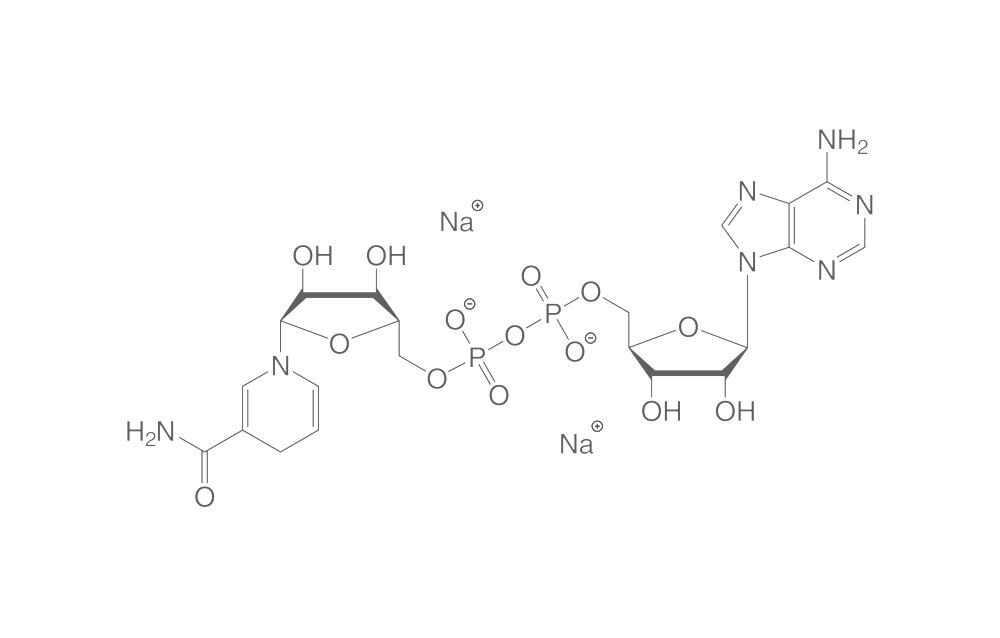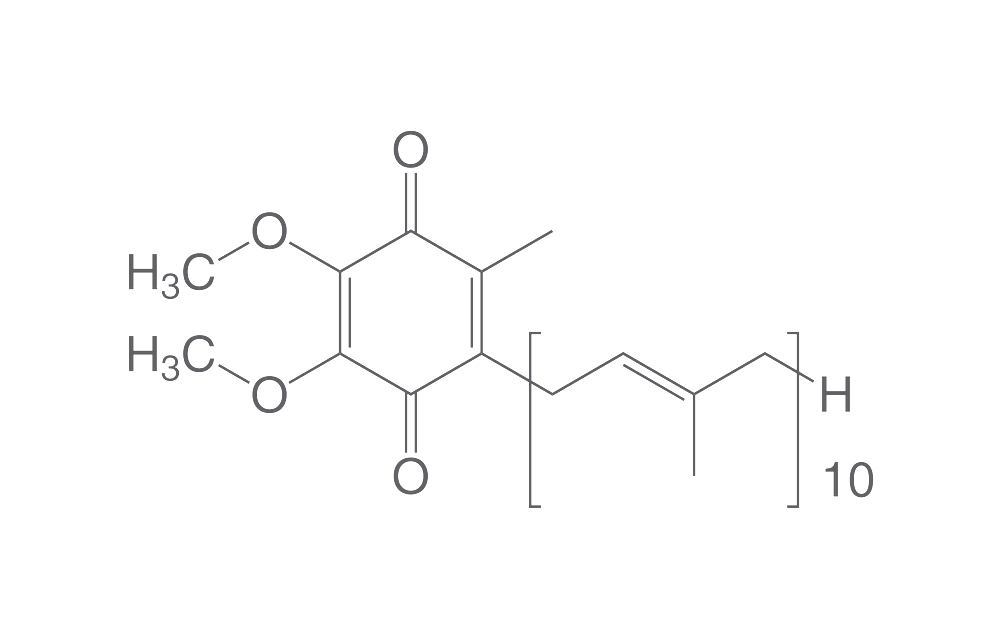
Coenzyme Q 10 ≥98 %, for biochemistry Ubiquinones represent a vital component in electron transport of the mitochondrial respiratory chain (hydrogen, electron and oxygen carriers). They, therefore, are almost ubiquitously distributed through the species, with the only exclusion of gram positive bacteria and cyanobacteria. Coenzyme Q functions as electron carrier between flavoproteins and cytochrome molecules of the respiratory chain. Well soluble in organic solvents (e. g. acetone, diethyl ether, chloroform) and fats. Virtually insoluble in water.
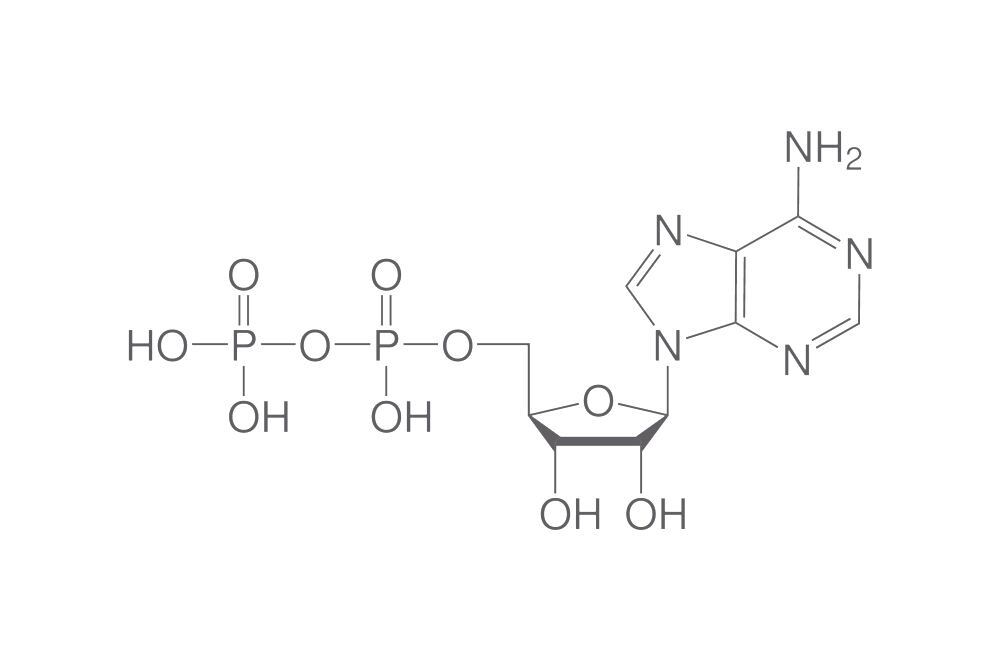
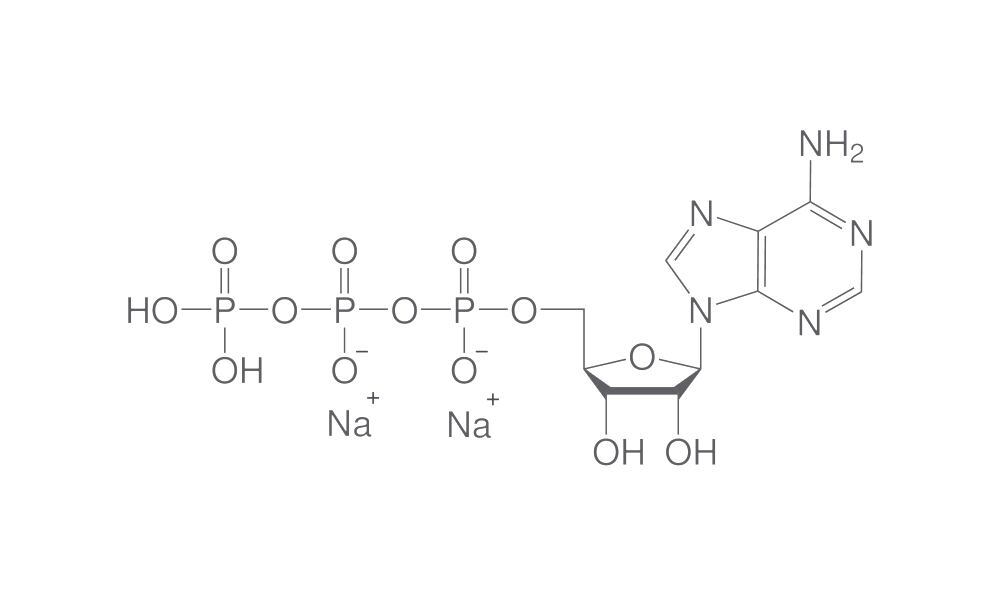
Adenosin-5'-triphosphate disodium salt (ATP) ≥95 %, for biochemistry Discovered in 1929 by Karl Lohmann. Main molecular currency of energy in all cells and highly important regulator of energy providing processes. During hydrolysis of phospho-anhydride bonds, energy of 30.5 kJ/mol (ADP) or 45.6 kJ/Mol (AMP), respectively, is released. Ligand of purinergic receptors and intercellular signalling molecule. Additionally, ATP is coenzyme of phosphate-transferring kinases like proteine kinases A, proteine kinases C, calmodulin-dependent kinases, and substrate of adenylate cyclases, which synthesize the second-messenger molecule cAMP.