Deliver to United Kingdom
0
Products Found: 13
Showing Results For: Slides, adhesive

Slides, adhesive


PC71.1, Marienfeld

MF Part: PC71.1
MOQ: 1 - 5
£ 37.85
In Stock
more details

PC68.1, Marienfeld

MF Part: PC68.1
MOQ: 1 - 5
£ 37.85
In Stock
more details

PC66.1, Marienfeld

MF Part: PC66.1
MOQ: 1 - 5
£ 37.71
In Stock
more details

H867.1, Epredia

MF Part: H867.1
MOQ: 1 - 5
£ 25.61
In Stock
more details

ET10.1, Epredia

MF Part: ET10.1
MOQ: 1 - 5
£ 23.40
In Stock
more details

PC67.1, Marienfeld

MF Part: PC67.1
MOQ: 1 - 5
£ 37.85
In Stock
more details

PC69.1, Marienfeld

MF Part: PC69.1
MOQ: 1 - 5
£ 37.85
In Stock
more details

ET09.2, Epredia

MF Part: ET09.2
MOQ: 1 - 5
£ 76.68
In Stock
more details

CL20.1, Carl Roth

MF Part: CL20.1
MOQ: 1 - 5
£ 11.12
In Stock
more details

CL20.2, Carl Roth

MF Part: CL20.2
MOQ: 1 - 5
£ 87.62
In Stock
more details

CL20.3, Carl Roth

MF Part: CL20.3
MOQ: 1 - 5
£ 136.76
In Stock
more details

CEX0.1, Marienfeld

MF Part: CEX0.1
MOQ: 1 - 5
£ 34.83
In Stock
more details

New Items
New
PC71.1, Marienfeld

PC71.1, Marienfeld

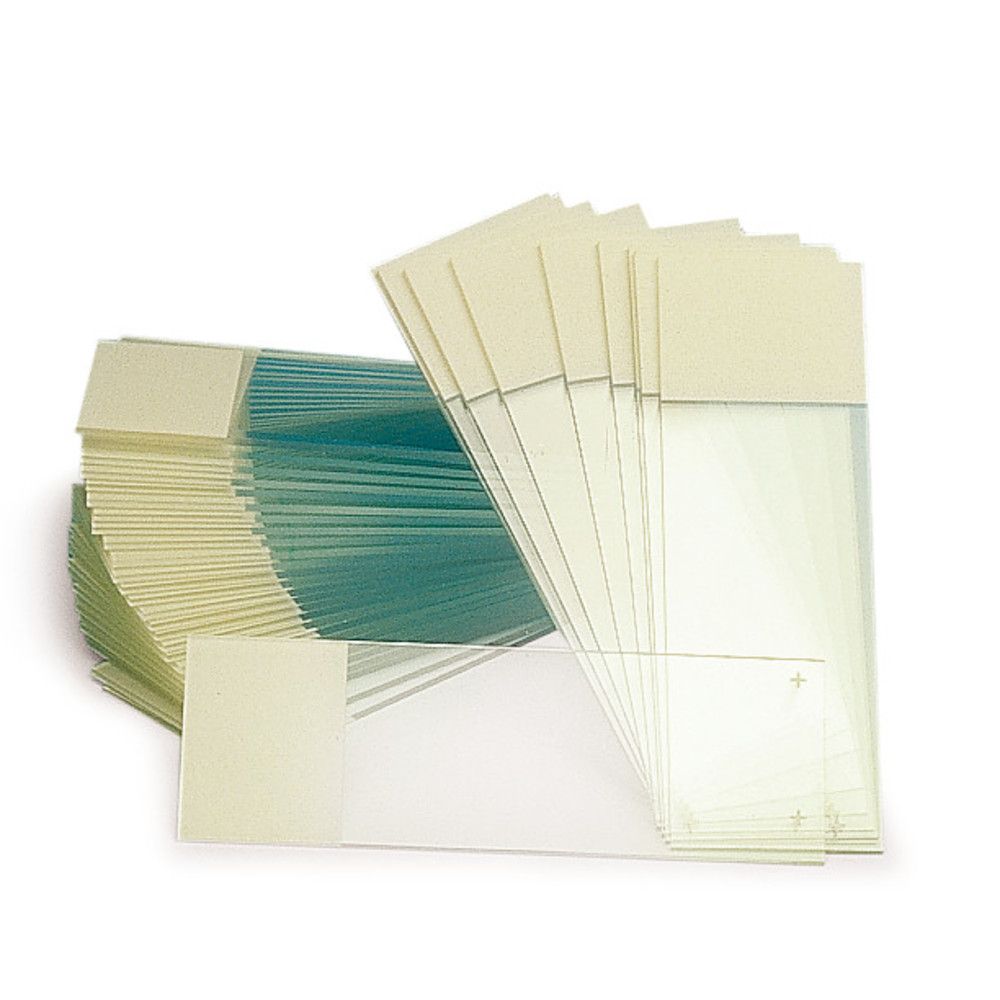
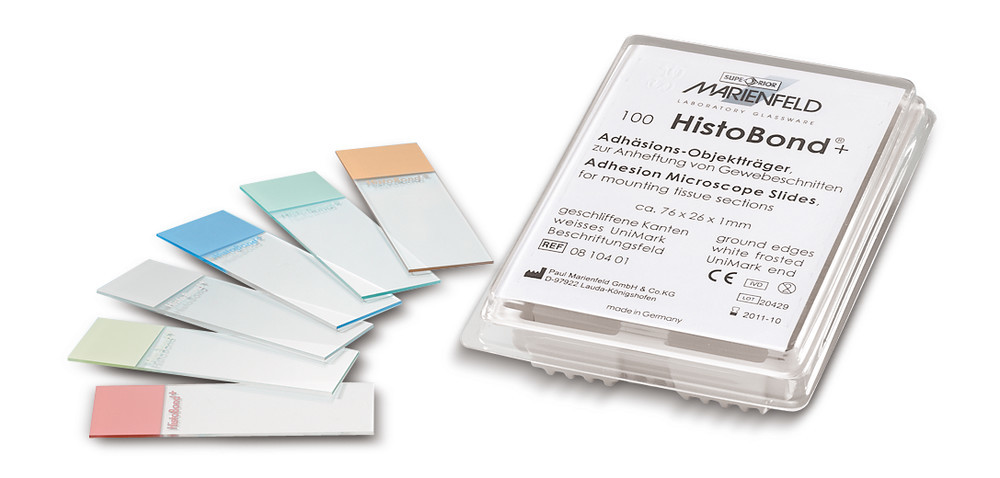
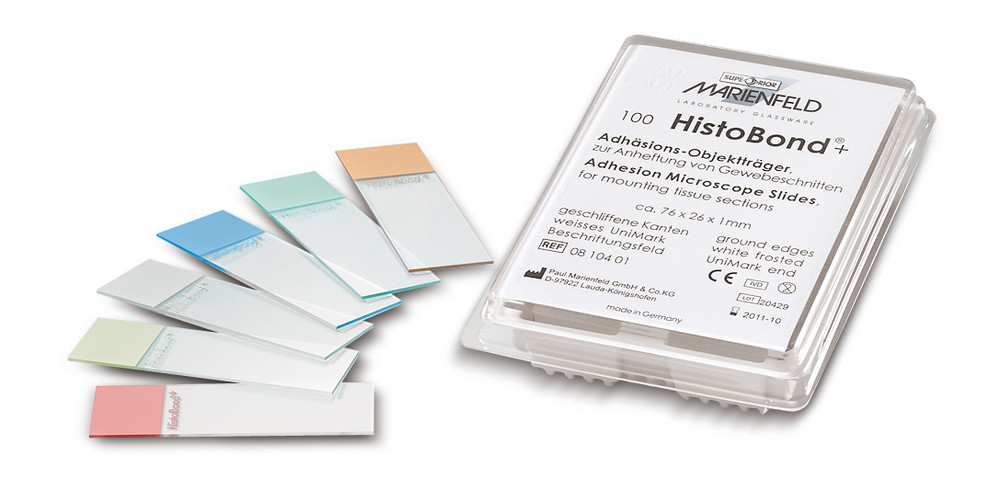
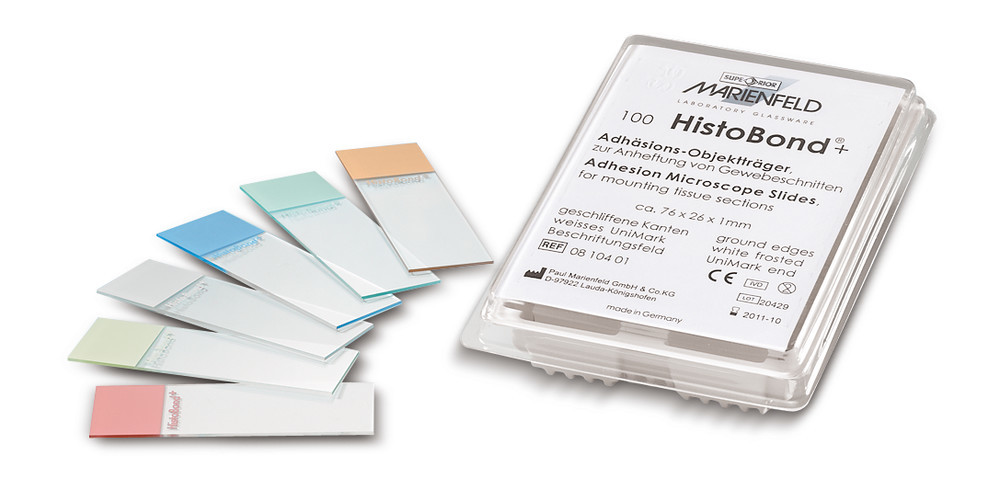
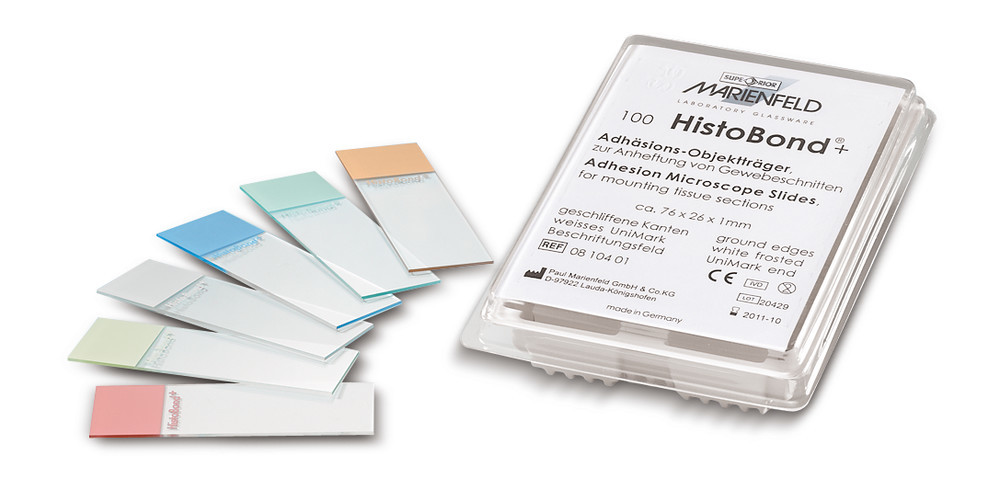
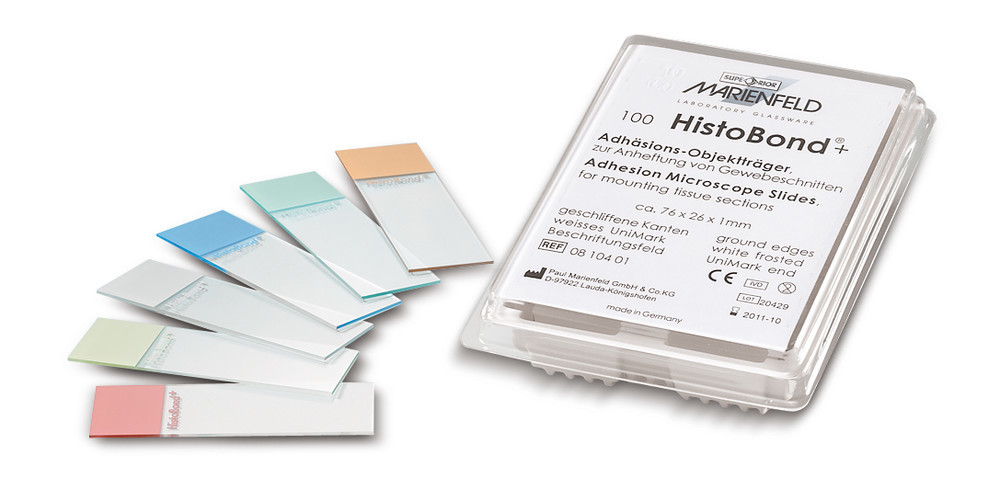
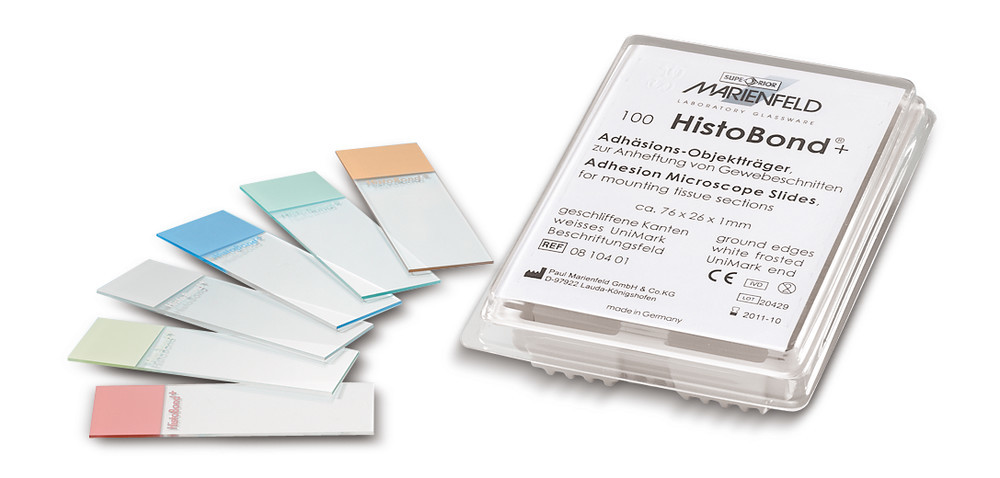
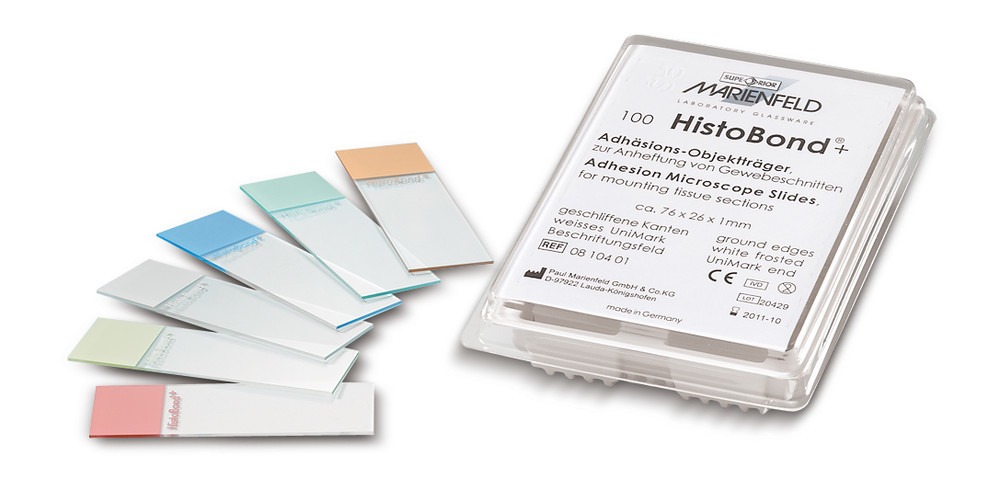
Material: soda-lime glass. The silanised glass surface has a permanent positive charge which ensures that all types of section attach securely to the glass. Coloured labelling spaces enable use in routine histology. Suitable for: In-situ hybridisation Problematic tissue samples, such as brain or bone marrow Multiple washing cycles, sections adhere firmly to the glass Microwave staining Purpose: microscope slides are accessories for in vitro diagnostic examinations in optical microscopy and are used to cover specimens of biological samples (tissue and bodily fluids) and for archiving purposes. Adhesion slides Histobond ® Corners grounded 90° In vitro diagnostic medical device class A

Product Detail
New
PC68.1, Marienfeld

PC68.1, Marienfeld

Material: soda-lime glass. The silanised glass surface has a permanent positive charge which ensures that all types of section attach securely to the glass. Coloured labelling spaces enable use in routine histology. Suitable for: In-situ hybridisation Problematic tissue samples, such as brain or bone marrow Multiple washing cycles, sections adhere firmly to the glass Microwave staining Purpose: microscope slides are accessories for in vitro diagnostic examinations in optical microscopy and are used to cover specimens of biological samples (tissue and bodily fluids) and for archiving purposes. Adhesion slides Histobond ® Corners grounded 90° In vitro diagnostic medical device class A

Product Detail
New
PC66.1, Marienfeld

PC66.1, Marienfeld

Material: soda-lime glass. The silanised glass surface has a permanent positive charge which ensures that all types of section attach securely to the glass. Coloured labelling spaces enable use in routine histology. Suitable for: In-situ hybridisation Problematic tissue samples, such as brain or bone marrow Multiple washing cycles, sections adhere firmly to the glass Microwave staining Purpose: microscope slides are accessories for in vitro diagnostic examinations in optical microscopy and are used to cover specimens of biological samples (tissue and bodily fluids) and for archiving purposes. Adhesion slides Histobond ® Corners grounded 90° In vitro diagnostic medical device class A

Product Detail
New
H867.1, Epredia

H867.1, Epredia

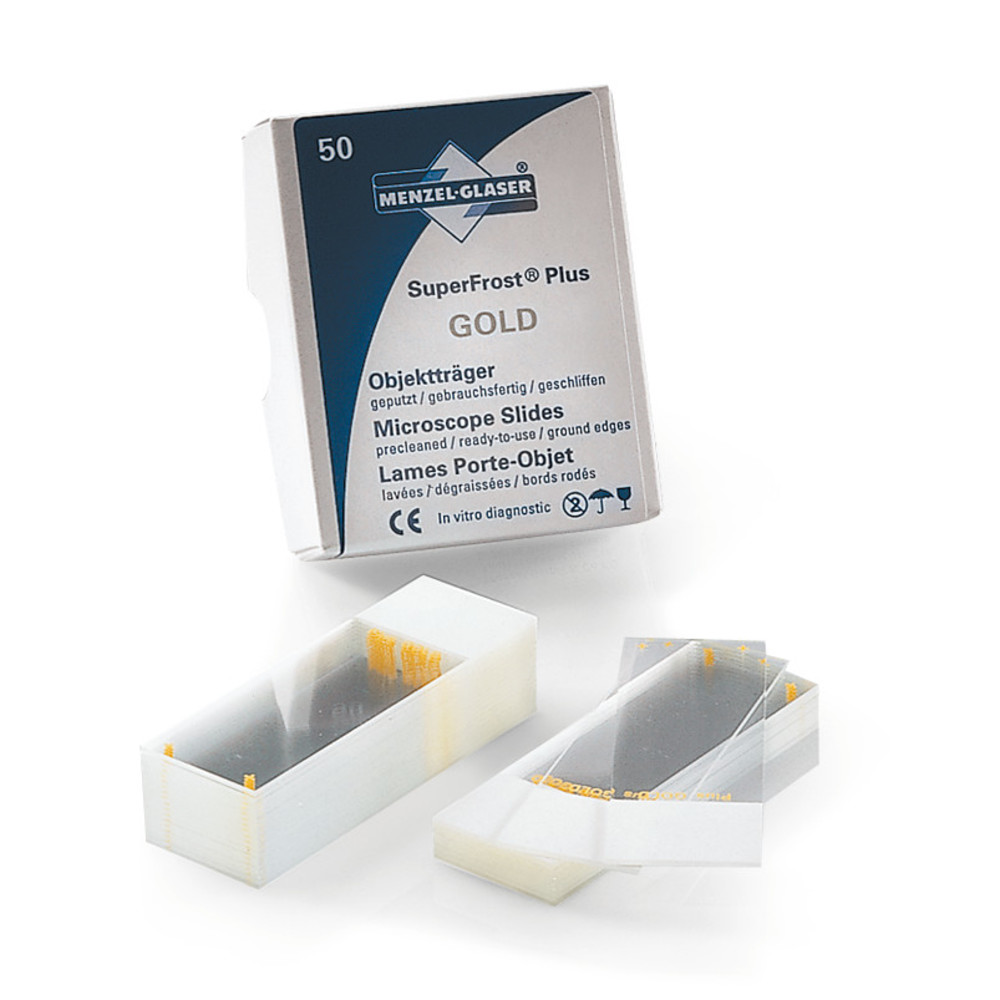
Material: soda-lime glass. With special adhesives for affixing cells and tissues. Complex and expensive application of adhesives or protein layers is not necessary. Unwanted background colours do not occur. Freshly frozen tissue sections and cytology preparations are attracted electrostatically to the microscope slides. Suitable for: Fixed tissue sections, embedded in paraffin (2-5 µm) Cell adhesions for cyto-centrifugal preparations in standard Papanicolaou smears Immuno-peroxidase hybridisation In-situ DNA hybridisation Adhesion slides Superfrost ® Plus In vitro diagnostic medical device class A

Product Detail
New
ET10.1, Epredia

ET10.1, Epredia

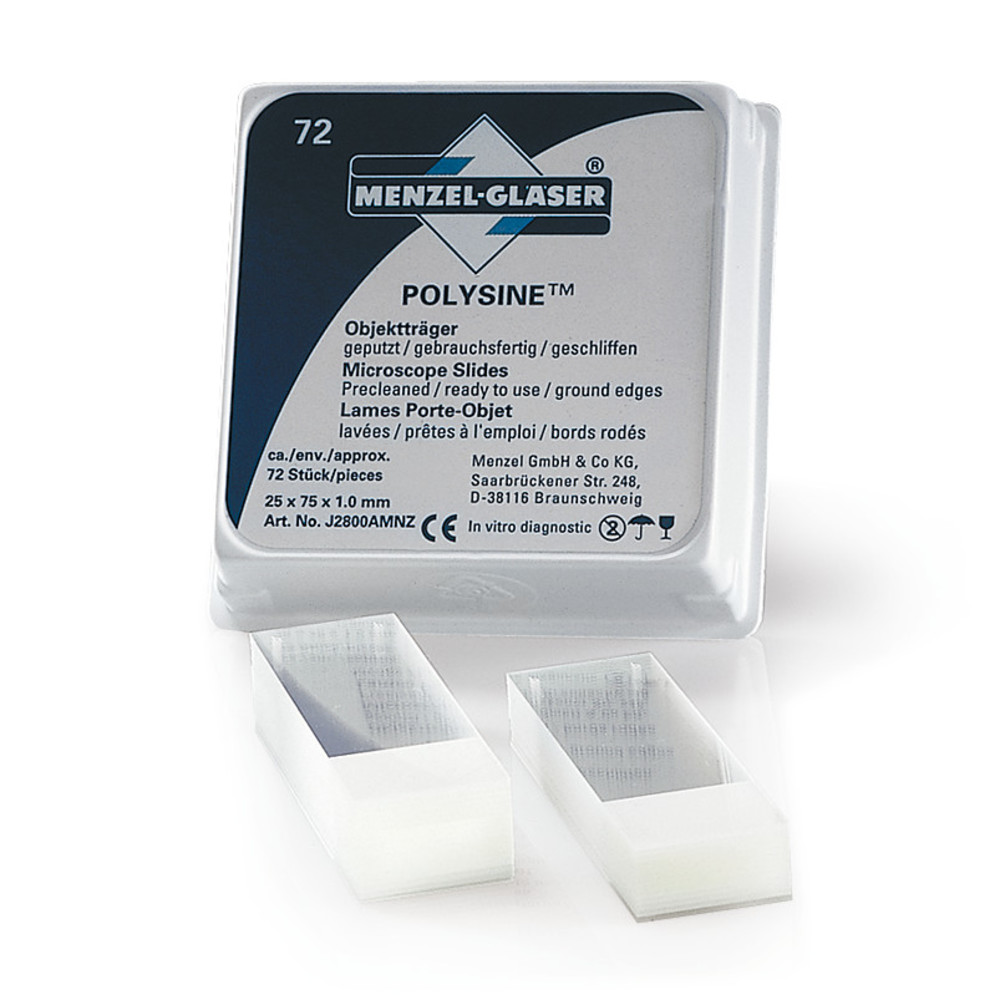
Material: soda-lime glass. With special adhesives for the fixation of cells and tissue. Complex and expensive application of adhesives or protein coatings is not necessary. Preparations are first electrostatically attracted and then biochemically bound. The permanent adhesive gives the slide excellent cell and tissue adhesion. Polysine ® slides are insensitive to enzyme effects or heating. Ideally suitable for: Fresh frozen sections Paraffin-embedded (2-5 µm, fixed with alcohol, formalin, bouins or non-crosslinking sections) Extended staining process Extended in-situ DNA hybridisation and immunocytochemical methods Cytocentrifuge preparations Adhesion slides Polysine ® In vitro diagnostic medical device class A

Product Detail
New
PC67.1, Marienfeld

PC67.1, Marienfeld

Material: soda-lime glass. The silanised glass surface has a permanent positive charge which ensures that all types of section attach securely to the glass. Coloured labelling spaces enable use in routine histology. Suitable for: In-situ hybridisation Problematic tissue samples, such as brain or bone marrow Multiple washing cycles, sections adhere firmly to the glass Microwave staining Purpose: microscope slides are accessories for in vitro diagnostic examinations in optical microscopy and are used to cover specimens of biological samples (tissue and bodily fluids) and for archiving purposes. Adhesion slides Histobond ® Corners grounded 90° In vitro diagnostic medical device class A

Product Detail
New
PC69.1, Marienfeld

PC69.1, Marienfeld

Material: soda-lime glass. The silanised glass surface has a permanent positive charge which ensures that all types of section attach securely to the glass. Coloured labelling spaces enable use in routine histology. Suitable for: In-situ hybridisation Problematic tissue samples, such as brain or bone marrow Multiple washing cycles, sections adhere firmly to the glass Microwave staining Purpose: microscope slides are accessories for in vitro diagnostic examinations in optical microscopy and are used to cover specimens of biological samples (tissue and bodily fluids) and for archiving purposes. Adhesion slides Histobond ® Corners grounded 90° In vitro diagnostic medical device class A

Product Detail
New
ET09.2, Epredia

ET09.2, Epredia

Material: soda-lime glass. With special adhesives for affixing cells and tissues. Complex and expensive application of adhesives or protein layers is not necessary. Unwanted background colours do not occur. Fresh frozen sections or frozen section fixed in formalin are attracted to the slide and then chemically fixed onto the glass surface. Suitable for: Special staining methods (toluidine blue staining, hematoxylin staining and quick-freeze eosin section staining) Tissue sections up to 20 µm Bone, frozen heart, brain, skin and other tissue sections that are normally difficult to bind Immunocytochemical and in-situ DNA-hybridisation of frozen tissue sections Selection counting for immunofluorescence analysis in the event of low tissue quantities Adhesion slides Superfrost ® Plus Gold In vitro diagnostic medical device class A

Product Detail
New
CL20.1, Carl Roth

CL20.1, Carl Roth

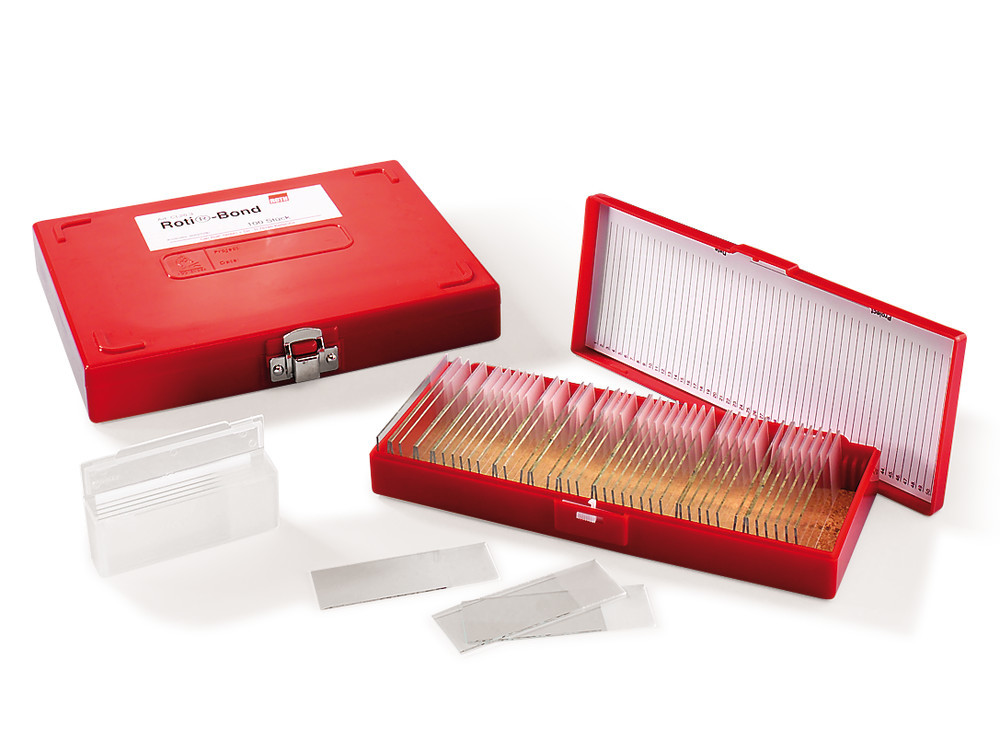
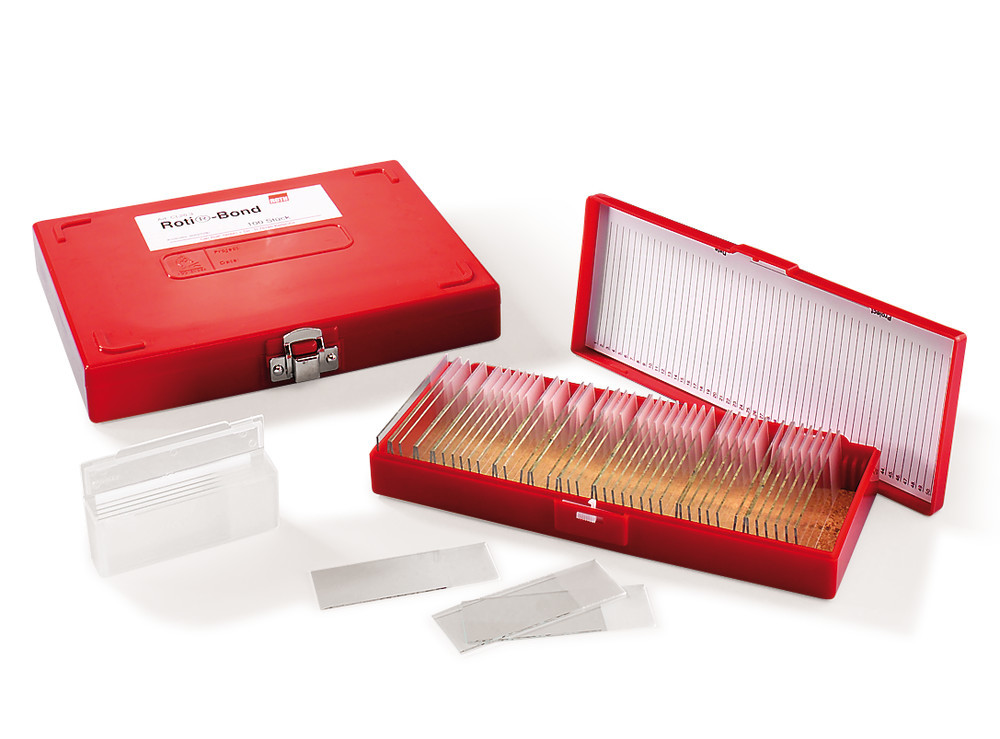
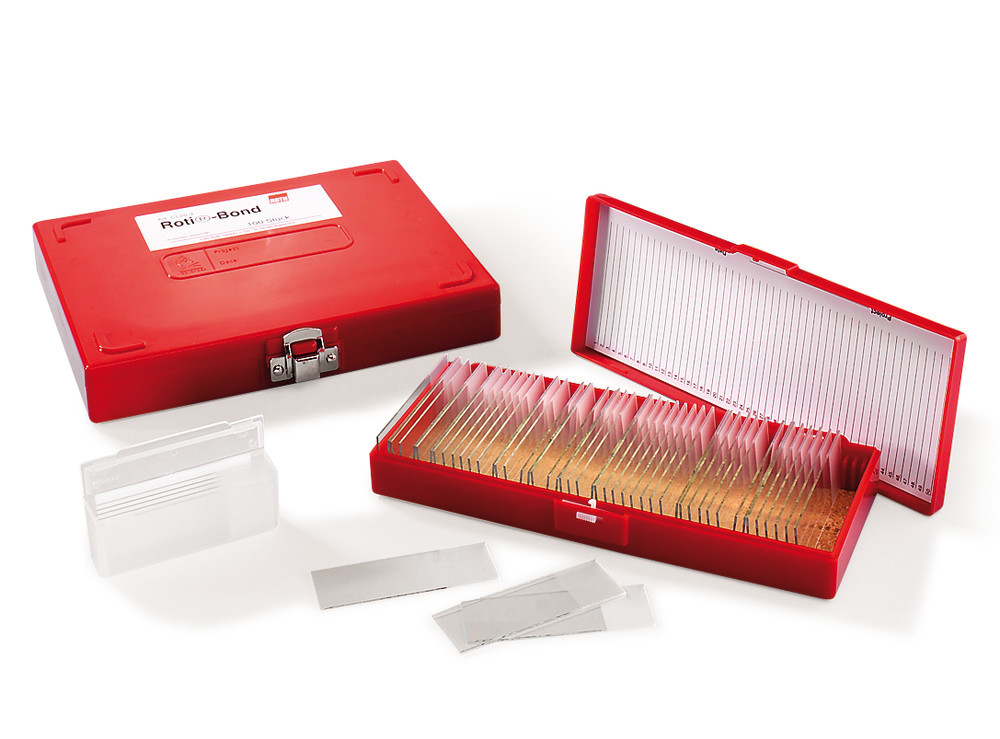
Material: soda-lime glass. Autoclavable: yes. Fast and highly efficient immobilisation of cellular material with optimal structure conservation. The new adhesive coating of the ROTI ® Bond adhesion slides reacts to natural surface structures of cells and tissues, anchoring them securely to the glass surface. Due to this procedure, based on different binding principles, the cells do not lose their antigenicity, their cell functionality and their three-dimensional structure. Assays using only several hundred cells possible No cell loss even during harsh incubation procedures Excellent recovery rate Compatible with all standard and modern assay systems and all fluorescent dyes Particularly adapted to assays using stem cells Directions for use Immobilisation of cells or tissue sections occurs immediately after contact to the glass surface. Drying of the samples is therefore not necessary. The cellular material can then be fixed with all common fixatives. Cell cultivation can be continued in appropriate culture medium after cell adhesion, allowing in-vivo live assays, e.g. with a multiphoton or laserscan microscope. At present, there is no evidence of any preferential cell type binding in heterogenous cellular material. Dimensions: L 75 mm × W 25 mm, dikte 1 mm. ROTI ® Bond adhesion slides 50 and 100 are delivered in ROTILABO ® -slide boxes. Adhesion slides ROTI ® Bond Figure: Brand comparison of efficient cell immobilisation. 1800 murine myeloma cells in 30 µl PBS were applied to each slide. Cells were counted after full immunohistochemical assay including alkali treatment (70 mM NaOH, 150 mM NaCl, 40 % ethanol, 5 min, RT) and DAPI-counterstaining of the remaining nuclei. A: Other adhesion slide, B: ROTI ® Bond Adhesion Slide, C: Recovery rate in percent (I and II: other adhesion slides, III: ROTI ® Bond) Not a medical device / Not an IVD product

Product Detail
New
CL20.2, Carl Roth

CL20.2, Carl Roth

Material: soda-lime glass. Autoclavable: yes. Fast and highly efficient immobilisation of cellular material with optimal structure conservation. The new adhesive coating of the ROTI ® Bond adhesion slides reacts to natural surface structures of cells and tissues, anchoring them securely to the glass surface. Due to this procedure, based on different binding principles, the cells do not lose their antigenicity, their cell functionality and their three-dimensional structure. Assays using only several hundred cells possible No cell loss even during harsh incubation procedures Excellent recovery rate Compatible with all standard and modern assay systems and all fluorescent dyes Particularly adapted to assays using stem cells Directions for use Immobilisation of cells or tissue sections occurs immediately after contact to the glass surface. Drying of the samples is therefore not necessary. The cellular material can then be fixed with all common fixatives. Cell cultivation can be continued in appropriate culture medium after cell adhesion, allowing in-vivo live assays, e.g. with a multiphoton or laserscan microscope. At present, there is no evidence of any preferential cell type binding in heterogenous cellular material. Dimensions: L 75 mm × W 25 mm, dikte 1 mm. ROTI ® Bond adhesion slides 50 and 100 are delivered in ROTILABO ® -slide boxes. Adhesion slides ROTI ® Bond Figure: Brand comparison of efficient cell immobilisation. 1800 murine myeloma cells in 30 µl PBS were applied to each slide. Cells were counted after full immunohistochemical assay including alkali treatment (70 mM NaOH, 150 mM NaCl, 40 % ethanol, 5 min, RT) and DAPI-counterstaining of the remaining nuclei. A: Other adhesion slide, B: ROTI ® Bond Adhesion Slide, C: Recovery rate in percent (I and II: other adhesion slides, III: ROTI ® Bond) Not a medical device / Not an IVD product

Product Detail
New
CL20.3, Carl Roth

CL20.3, Carl Roth

Material: soda-lime glass. Autoclavable: yes. Fast and highly efficient immobilisation of cellular material with optimal structure conservation. The new adhesive coating of the ROTI ® Bond adhesion slides reacts to natural surface structures of cells and tissues, anchoring them securely to the glass surface. Due to this procedure, based on different binding principles, the cells do not lose their antigenicity, their cell functionality and their three-dimensional structure. Assays using only several hundred cells possible No cell loss even during harsh incubation procedures Excellent recovery rate Compatible with all standard and modern assay systems and all fluorescent dyes Particularly adapted to assays using stem cells Directions for use Immobilisation of cells or tissue sections occurs immediately after contact to the glass surface. Drying of the samples is therefore not necessary. The cellular material can then be fixed with all common fixatives. Cell cultivation can be continued in appropriate culture medium after cell adhesion, allowing in-vivo live assays, e.g. with a multiphoton or laserscan microscope. At present, there is no evidence of any preferential cell type binding in heterogenous cellular material. Dimensions: L 75 mm × W 25 mm, dikte 1 mm. ROTI ® Bond adhesion slides 50 and 100 are delivered in ROTILABO ® -slide boxes. Adhesion slides ROTI ® Bond Figure: Brand comparison of efficient cell immobilisation. 1800 murine myeloma cells in 30 µl PBS were applied to each slide. Cells were counted after full immunohistochemical assay including alkali treatment (70 mM NaOH, 150 mM NaCl, 40 % ethanol, 5 min, RT) and DAPI-counterstaining of the remaining nuclei. A: Other adhesion slide, B: ROTI ® Bond Adhesion Slide, C: Recovery rate in percent (I and II: other adhesion slides, III: ROTI ® Bond) Not a medical device / Not an IVD product

Product Detail
New
CEX0.1, Marienfeld

CEX0.1, Marienfeld

Material: soda-lime glass. The silanised glass surface has a permanent positive charge which ensures that all types of section attach securely to the glass. Coloured labelling spaces enable use in routine histology. Suitable for: In-situ hybridisation Problematic tissue samples, such as brain or bone marrow Multiple washing cycles, sections adhere firmly to the glass Microwave staining Purpose: microscope slides are accessories for in vitro diagnostic examinations in optical microscopy and are used to cover specimens of biological samples (tissue and bodily fluids) and for archiving purposes. Adhesion slides Histobond ® Corners grounded 90° In vitro diagnostic medical device class A

Product Detail
allied chemi
  • secure-payment
  • visa
  • american-express
  • master-card

© 2023 Copyright. All Rights Reserved. Unit 19, Euroway House, Roydsdale Way, Bradford, BD4 6SE, UK