Deliver to United Kingdom
0
Products Found: 18
Showing Results For: Starter Kit DNA-Synthesis for approx. 100x 30mers

Starter Kit DNA-Synthesis for approx. 100x 30mers


DMT Removal DCE, 450 ml

MF Part: K060.1
MOQ: 1 - 5
£ 50.22
In Stock
more details

Activation reagent, 200 ml

MF Part: 2253.1
MOQ: 1 - 5
£ 128.21
In Stock
more details

Capping reagent II, 2.5 l

MF Part: 2256.3
MOQ: 1 - 3
£ 240.93
In Stock
more details

Cytidine-CPG-Support

MF Part: 2319.3
MOQ: 1 - 5
£ 75.02
In Stock
more details

Capping reagent I, 450 ml

MF Part: 2255.2
MOQ: 1 - 5
£ 95.81
In Stock
more details

Oxidation reagent, 450 ml

MF Part: 2254.2
MOQ: 1 - 5
£ 65.70
In Stock
more details

New Items
New
2255.1, Carl Roth

2255.1, Carl Roth

Capping reagent I for DNA synthesis

Product Detail
New
1318-02-1, Carl Roth

1318-02-1, Carl Roth

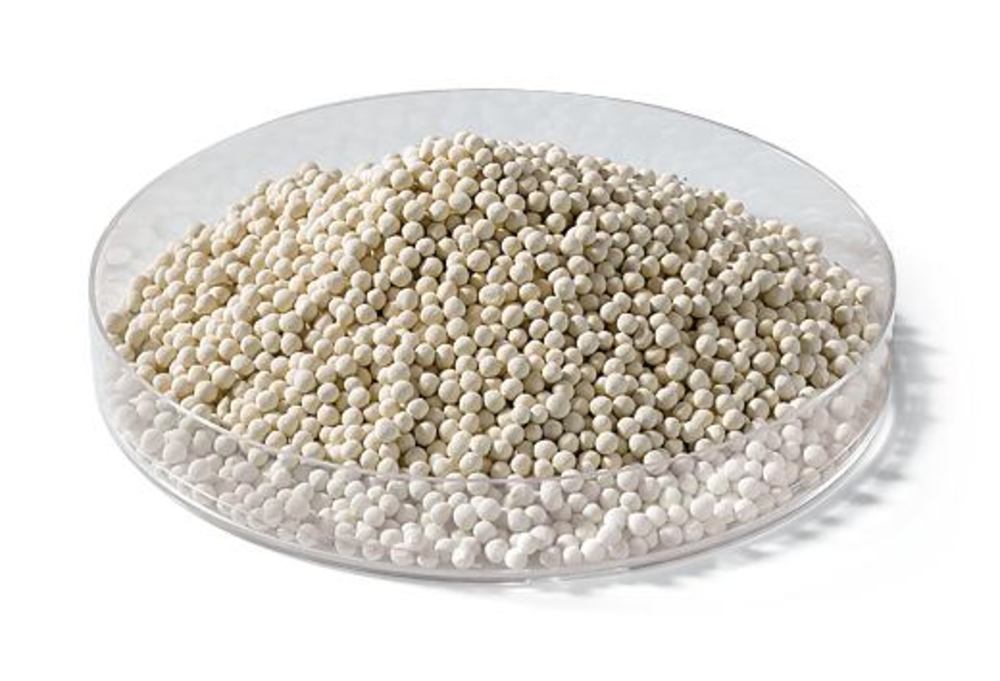
Molecular sieve 3 Å activated, under argon, for DNA synthesis

Product Detail
New
2255.3, Carl Roth

2255.3, Carl Roth

Capping reagent I for DNA synthesis

Product Detail
New
2321.3, Carl Roth

2321.3, Carl Roth

Thymidine-CPG-Support 500 Å pore size CPG/Supports are carriers for automated DNA synthesis. Mostly derivatized Controlled Pore Glass (CPG) is used. The 500 Å supports are suitable for almost all applications. In order to avoid steric obstacles between the growing oligonucleotide chains and thus obtain the highest possible yield of full-length chains, a long-chain alkylamine "spacer arm" is used.

Product Detail
New
2256.2, Carl Roth

2256.2, Carl Roth

Capping reagent II for DNA synthesis

Product Detail
New
2318.3, Carl Roth

2318.3, Carl Roth

Adenosine-CPG-Support 500 Å pore size CPG/Supports are carriers for automated DNA synthesis. Mostly derivatized Controlled Pore Glass (CPG) is used. The 500 Å supports are suitable for almost all applications. In order to avoid steric obstacles between the growing oligonucleotide chains and thus obtain the highest possible yield of full-length chains, a long-chain alkylamine "spacer arm" is used.

Product Detail
New
2254.1, Carl Roth

2254.1, Carl Roth

Oxidation reagent for DNA synthesis 0,05 M Iodine The phosphite triester linkage formed during oligonucleotide synthesis is of limited stability and has to stabilised. Treatment of the support-bound material with iodine and water in the presence of a weak base oxidizes the phosphite triester into a tetracoordinated phosphate triester, a protected precursor of the naturally occurring phosphate diester internucleosidic linkage.

Product Detail
New
2256.1, Carl Roth

2256.1, Carl Roth

Capping reagent II for DNA synthesis

Product Detail
New
2253.2, Carl Roth

2253.2, Carl Roth

Activation reagent for DNA synthesis

Product Detail
New
2320.3, Carl Roth

2320.3, Carl Roth

Guanosine-CPG-Support 500 Å pore size CPG/Supports are carriers for automated DNA synthesis. Mostly derivatized Controlled Pore Glass (CPG) is used. The 500 Å supports are suitable for almost all applications. In order to avoid steric obstacles between the growing oligonucleotide chains and thus obtain the highest possible yield of full-length chains, a long-chain alkylamine "spacer arm" is used.

Product Detail
New
K060.2, Carl Roth

K060.2, Carl Roth

DMT Removal DCE for DNA synthesis Dimethoxytrityl is a protective group for hydroxy groups which is used to protect the 5' OH group of the individual nucleotides in DNA synthesis. The protective group is acid labile and is removed in the ongoing synthesis reaction by the addition of trifluoroacetic acid (deprotection) to enable the coupling of the subsequent nucleotide. We offer DMT-Removal-Reagent in dichloroethane (K060) as well as in dichloromethane (2257). DMT in DCE is used for synthesizers which draw the solution from the bottles by vacuum pumps and push it through the reaction columns. Since these vacuum pumps apply a significant force, the DCE is more suitable due to its high boiling pressure, as it is absorbed and introduced into the reaction without the formation of gas bubbles. The use of DMT in DCM could interfere with the reaction by creating gas bubbles.

Product Detail
New
2254.3, Carl Roth

2254.3, Carl Roth

Oxidation reagent for DNA synthesis 0,05 M Iodine The phosphite triester linkage formed during oligonucleotide synthesis is of limited stability and has to stabilised. Treatment of the support-bound material with iodine and water in the presence of a weak base oxidizes the phosphite triester into a tetracoordinated phosphate triester, a protected precursor of the naturally occurring phosphate diester internucleosidic linkage.

Product Detail
allied chemi
  • secure-payment
  • visa
  • american-express
  • master-card

© 2026 Copyright. All Rights Reserved.