Deliver to United Kingdom
0
Products Found: 35
Showing Results For: Affinity Chromatography

Affinity Chromatography


1314.2, Carl Roth

MF Part: 1314.2
MOQ: 1 - 5
£ 898.83
In Stock
more details

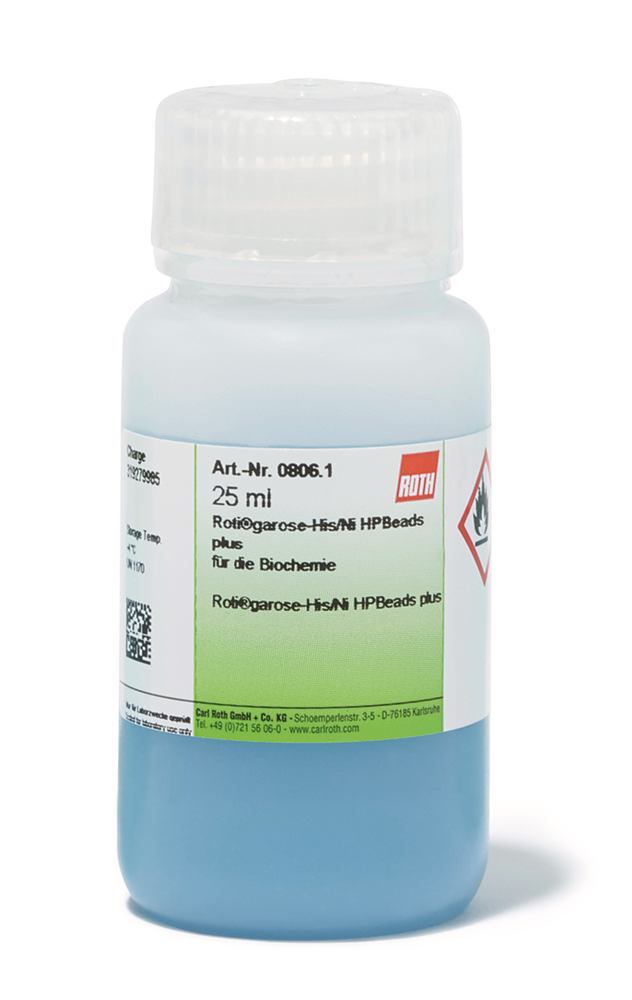
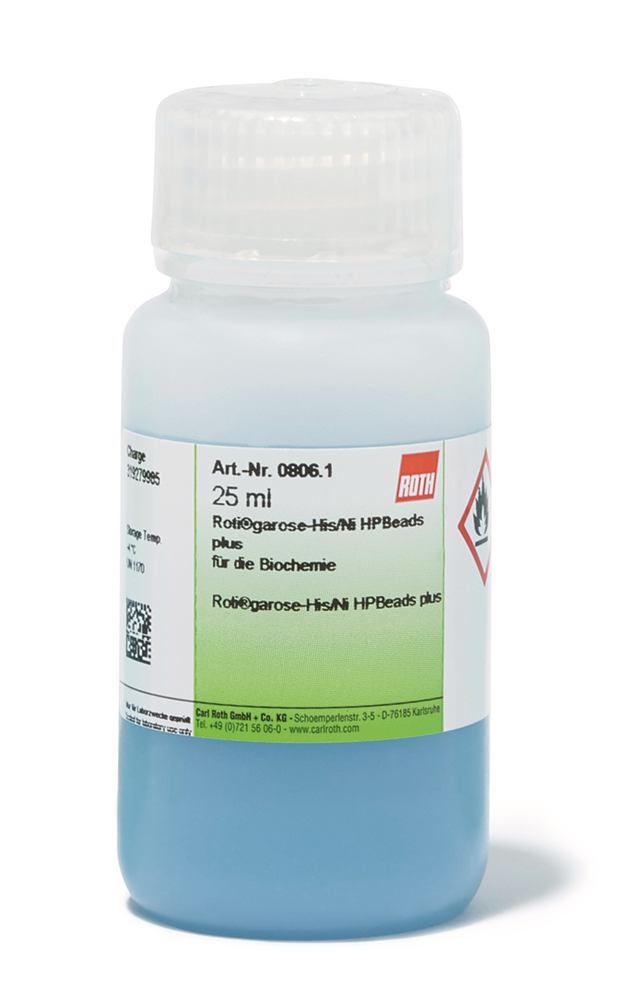
0806.1, Carl Roth

MF Part: 0806.1
MOQ: 1 - 5
£ 724.68
In Stock
more details

0809.3, Carl Roth

MF Part: 0809.3
MOQ: 1 - 5
£ 415.08
In Stock
more details

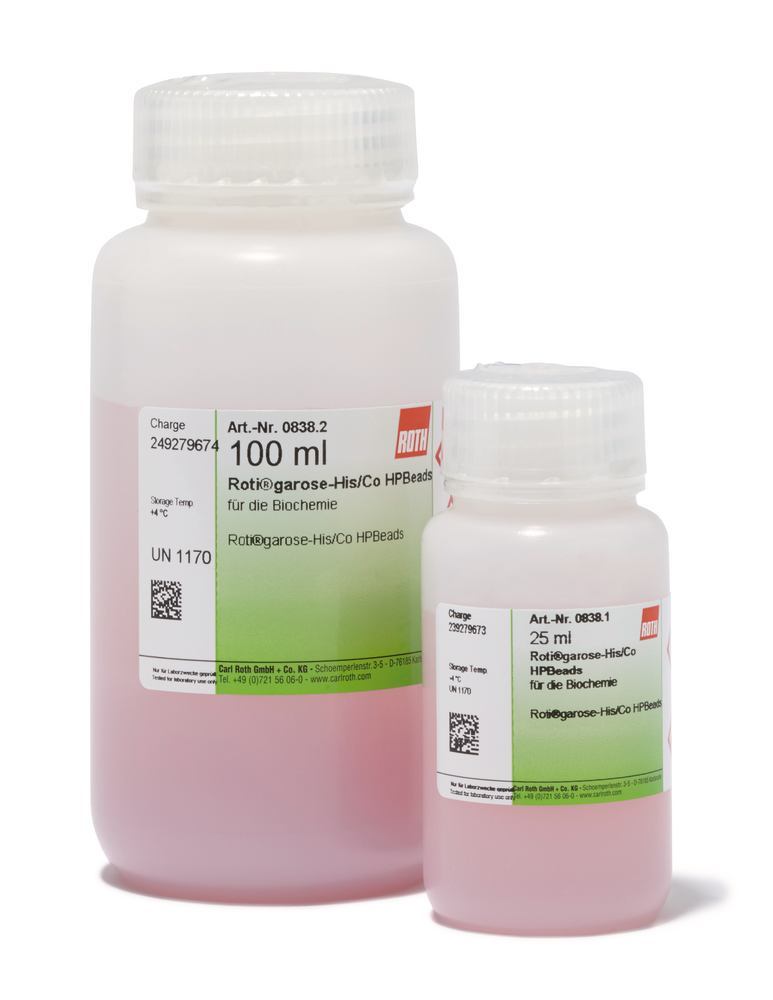
0838.2, Carl Roth

MF Part: 0838.2
MOQ: 1 - 5
£ 962.69
In Stock
more details

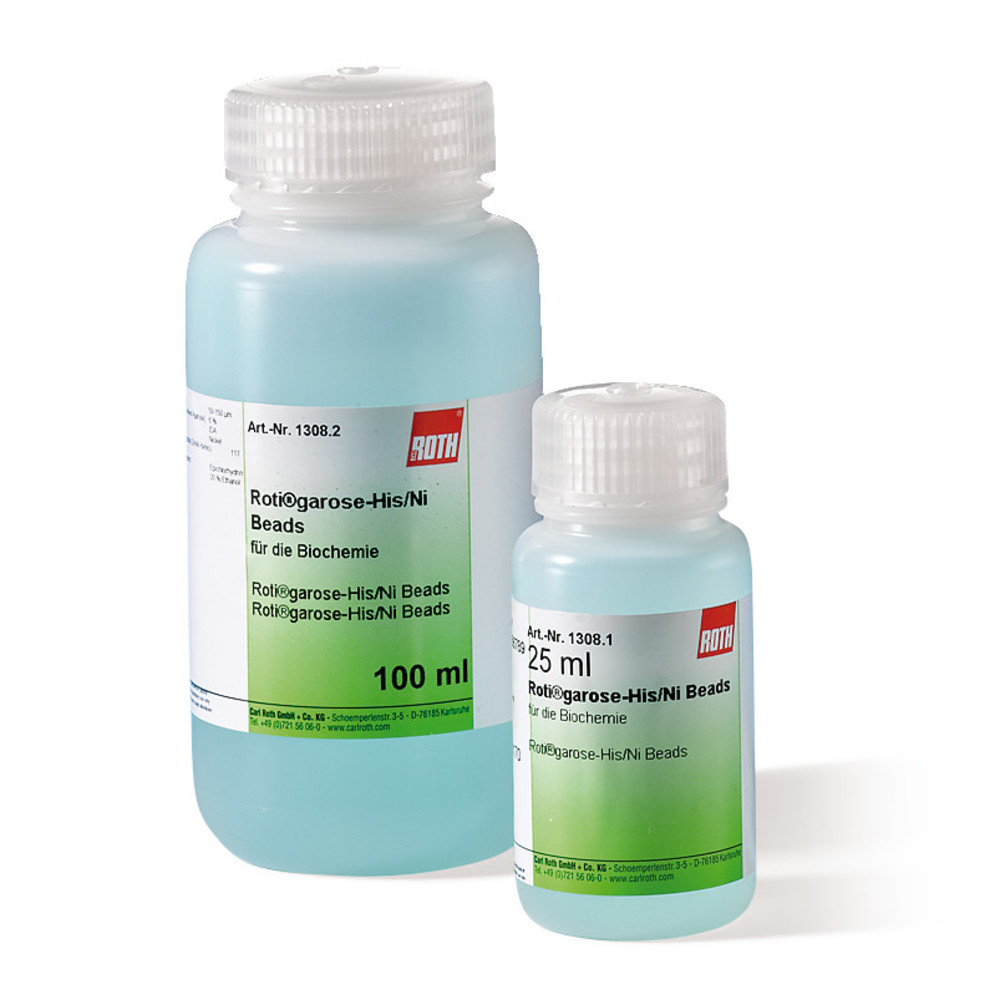
1308.2, Carl Roth

MF Part: 1308.2
MOQ: 1 - 5
£ 995.58
In Stock
more details

0805.2, Carl Roth

MF Part: 0805.2
MOQ: 1 - 5
£ 1886.63
In Stock
more details

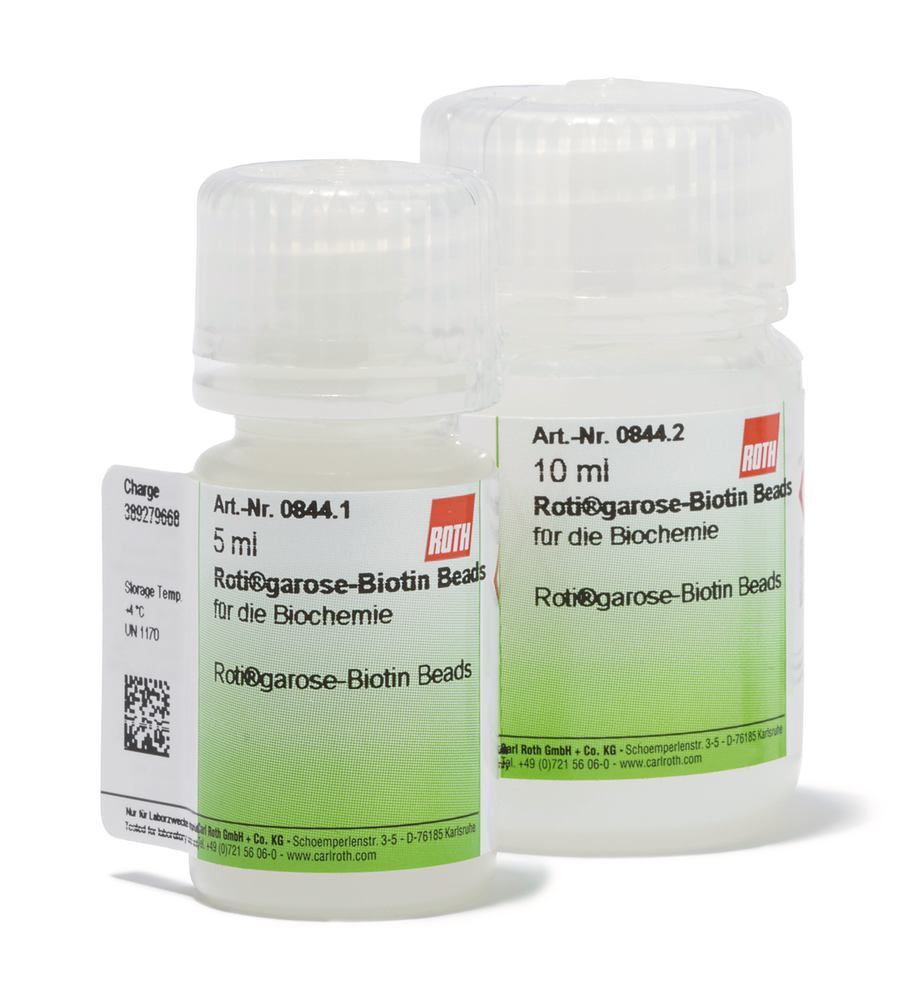
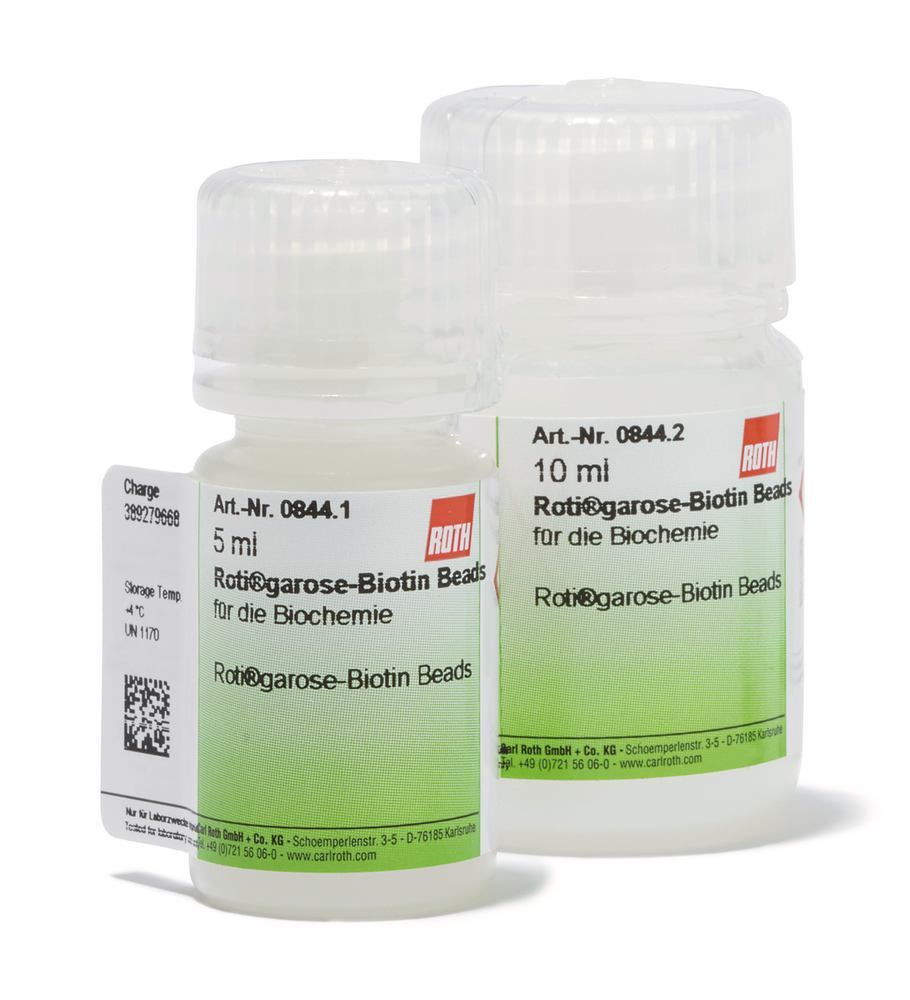
0844.2, Carl Roth

MF Part: 0844.2
MOQ: 1 - 5
£ 898.83
In Stock
more details

1267.1, Carl Roth

MF Part: 1267.1
MOQ: 1 - 5
£ 343.49
In Stock
more details

1314.1, Carl Roth

MF Part: 1314.1
MOQ: 1 - 5
£ 347.36
In Stock
more details

0835.1, Carl Roth

MF Part: 0835.1
MOQ: 1 - 5
£ 347.36
In Stock
more details

0807.1, Carl Roth

MF Part: 0807.1
MOQ: 1 - 5
£ 449.91
In Stock
more details

0844.1, Carl Roth

MF Part: 0844.1
MOQ: 1 - 5
£ 507.96
In Stock
more details

New Items
New
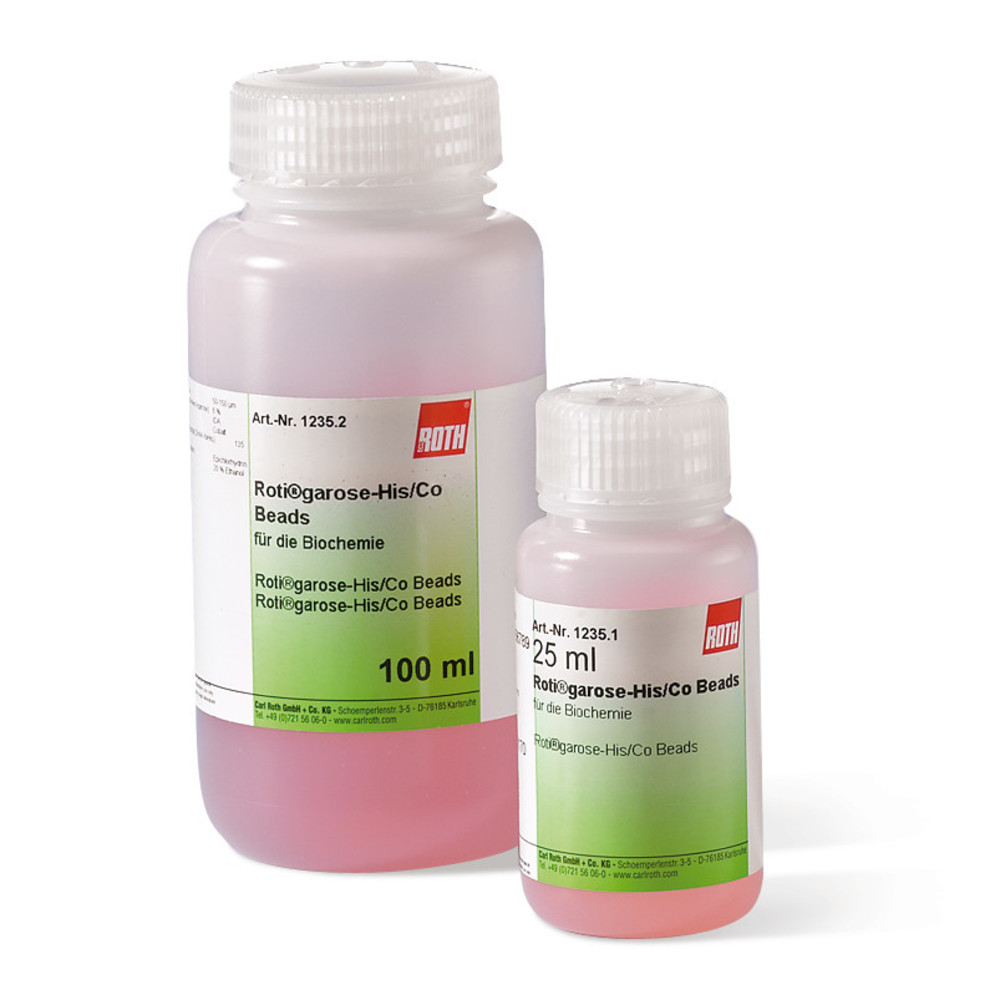
1235.1, Carl Roth

1235.1, Carl Roth

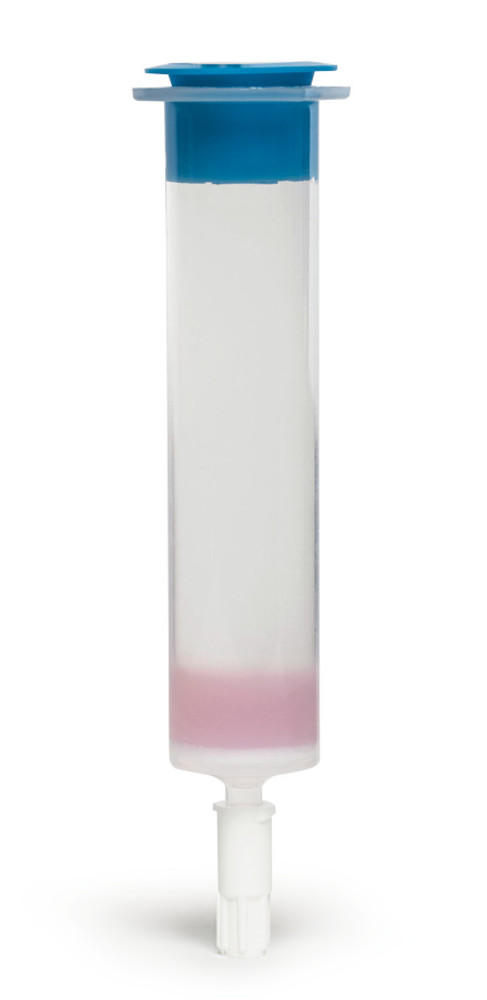
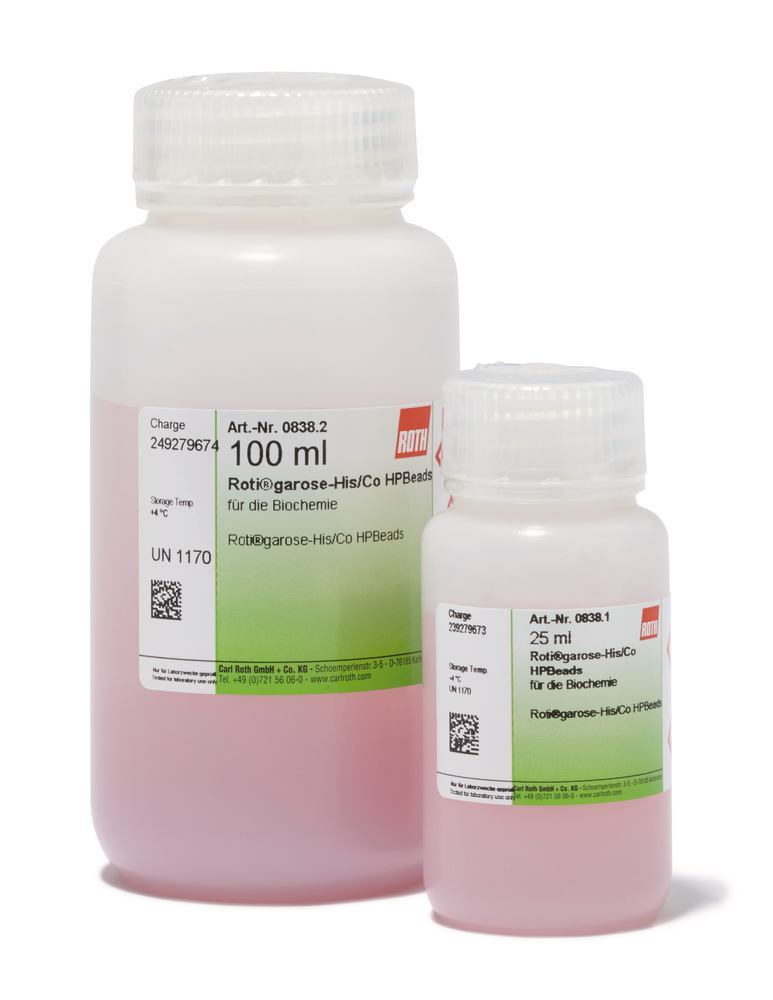
For the isolation of high yields of highly pure His-tagged proteins under non-reducing conditions. Immobilized metal ion affinity chromatography (IMAC) still is the most widely used method to obtain high yield of very pure proteins with reasonable effort. ROTI ® Garose His/Co Beads and ready-to-use columns offer the perfect solution for your specific applications in the field of benchtop column chromatography, for protein isolation in batch processes or under medium pressures (MPLC, FPLC). Depending on the product, our beads are optimally suited for low or high flow rates or when small or large sample volumes are to be purified. The ready-to-use columns and cartridges offer you the perfect solution for fast and easy purification of His-tag proteins from total lysate. Good recovery rate of extremely pure His-tagged proteins Very low Cobalt leaching Compatible with denaturing reagents The matrix of ROTI ® Garose His/Co products consists of crosslinked and beaded 6 % agarose, IDA-conjugated and charged with divalent Cobalt ions. Cobalt chelates recognize two histidines consecutive in an amino acid sequence with superior specificity and good affinity, resulting in acceptable to good recovery rates only, but yielding proteins of superior purity. This matrix is, therefore, the perfect choice if extremely pure proteins are required, or if hard-to-separate proteins shall be isolated. ROTI ® Garose His/Co beads result in eluates with considerably low metal contamination. Directions for use The tridentate IDA cross-linker provides easy elution with low amounts of imidazole. Additionally, ROTI ® Garose Beads may repeatedly be regenerated, making them very cost-effective. The Matrix is stable in all commonly used reagents including denaturing reagents (like 8 M urea, 6 M guanidinium hydrochloride, 5 mM DTT). For insulation under reducing conditions we recommend ROTI ® Garose-His/Ni NTA beads. ROTI ® Garose-His/Co Beads ROTI ® Garose for biochemistry Cobalt charged IDA-agarose beads for low pressure affinity chromatography. 50 % bead suspension in 20 % ethanol. One-Step purification of His-tagged proteins from total lysates Binding capacity (purified 6xHis protein) of 135 mg per ml matrix Easy elution and regeneration For batch mode and gravity flow column chromatogrphy Suitable for Perfect choice if extremely pure proteins are required, or if hard-to-separate proteins shall be isolated. Directions for use May be autoclaved at 121 °C for 30 mins.

Product Detail
New
1278.2, Carl Roth

1278.2, Carl Roth

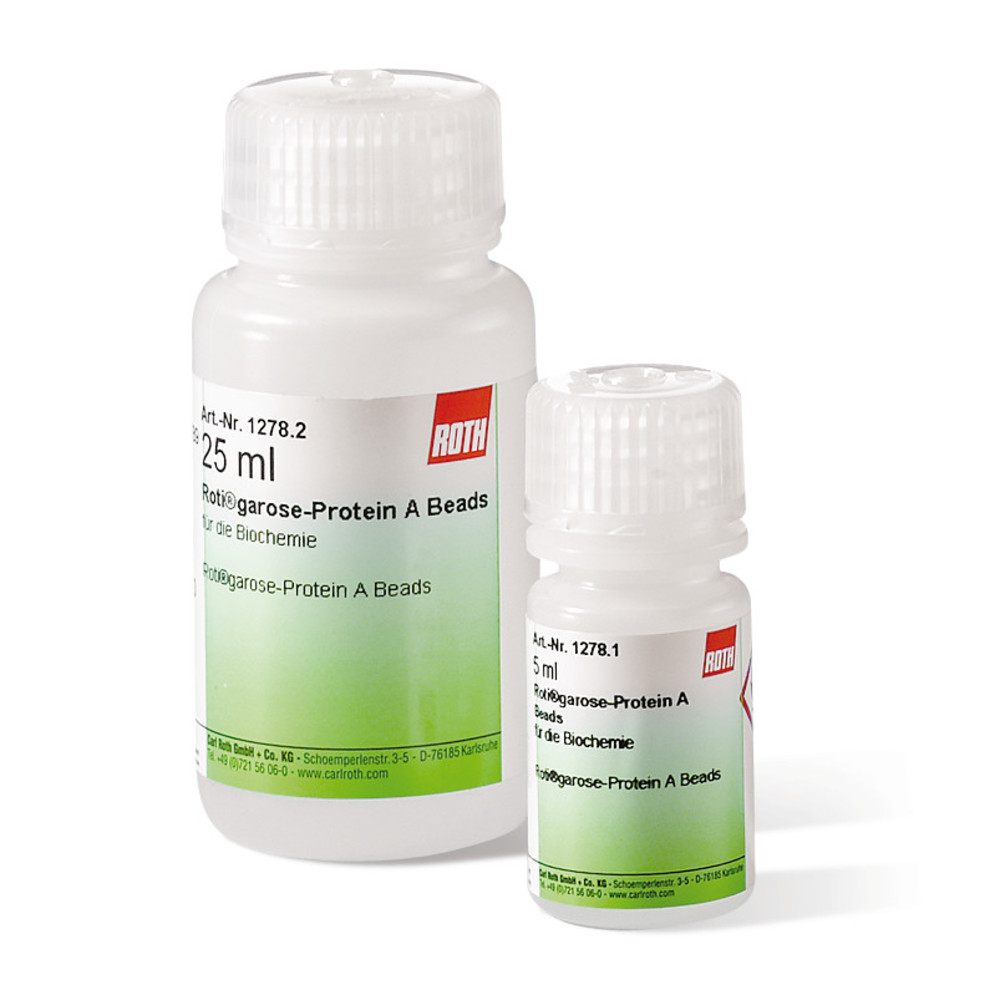
For rapid and simple purification of antibodies with reasonable effort, affinity chromatography still is the first choice in most cases. ROTI ® Garose-Protein A and G Beads offer the perfect solution for your specific application under medium pressure (MPLC, FPLC), if rapid flow rates are desired or if big samples volumes have to be purified. Rapid one-step purification of immunoglobulins from cell lysates and biological solutions High yield of very pure immunoglobulins Easy elution and regeneration Covalent binding of protein G in high ligand density The matrix of ROTI ® Garose-Protein A and G Beads consists of crosslinked and beaded 4 % agarose, coated and covalently coupled with protein A from Staphylococcus aureus and protein G from Streptococcus , respectively. The recombinant protein A ( rec A) shares IgG binding properties with natural protein A of S. aureus Cowan strain I. It has high affinity for IgG from a variety of different mammalian species, also binding some populations of IgA and IgM. Binding domains specific for albumin as well as cell walls and cell membranes have been removed in the recombinant protein G , in order to ensure the maximum specific IgG binding capacity. It has high affinity for IgG from a variety of different mammalian species, also binding IgG3 with high affinity. Directions for use Most immunoglobulins may be eluted in 100 mM glycin or citric acid buffer (pH 3.0). ROTI ® Garose-Protein A and G Beads may be regenerated, making them very cost-effective. May not be autoclaved. ROTI ® Garose-Protein A Beads ROTI ® Garose for biochemistry Protein A coated agarose beads for low pressure affinity chromatography. High-performance affinity resin for antibody purification. 50 % bead suspension in 20 % ethanol. Binding capacity (human IgG) of approx. 25 mg per ml matrix Superior affinity for IgG from various mammalian species Binding of some populations IgA and IgM For batch mode, gravity flow, MPLC und FPLC Suitable for Isolation of antibodies, in affinity column chromatography or in batch procedures. Directions for use The matrix of ROTI ® Garose Protein A Beads consists of cross-linked and beaded 4 % agarose, coated and covalently coupled with protein A from Staphylococcus aureus . High binding affinity to IgGs of many different mammalian species, binding of some populations IgA and IgM.

Product Detail
New
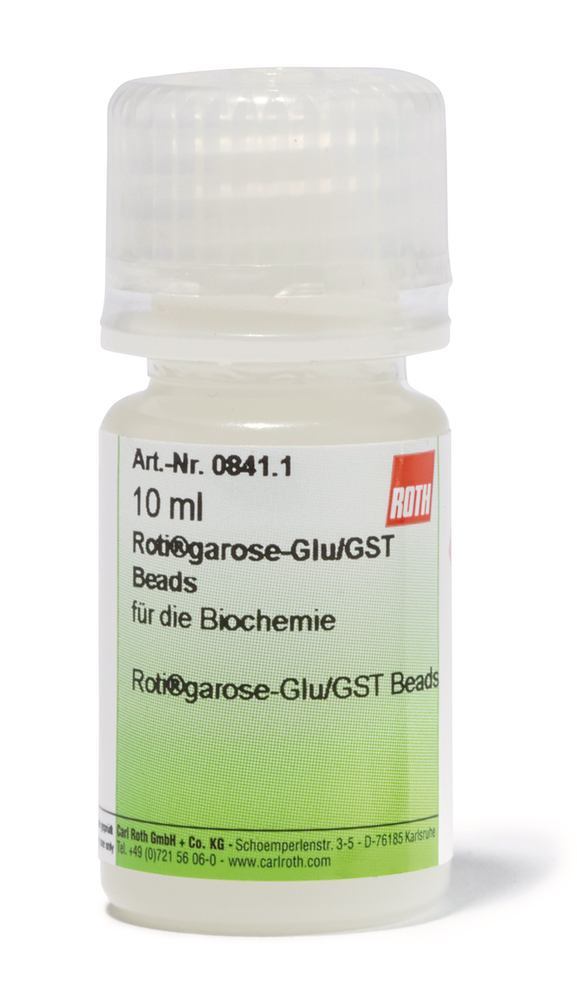
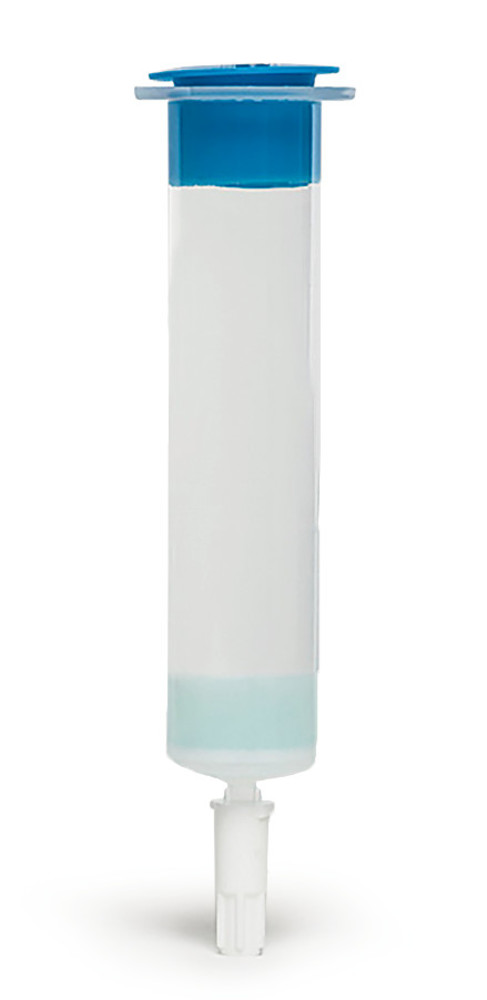
0843.2, Carl Roth

0843.2, Carl Roth

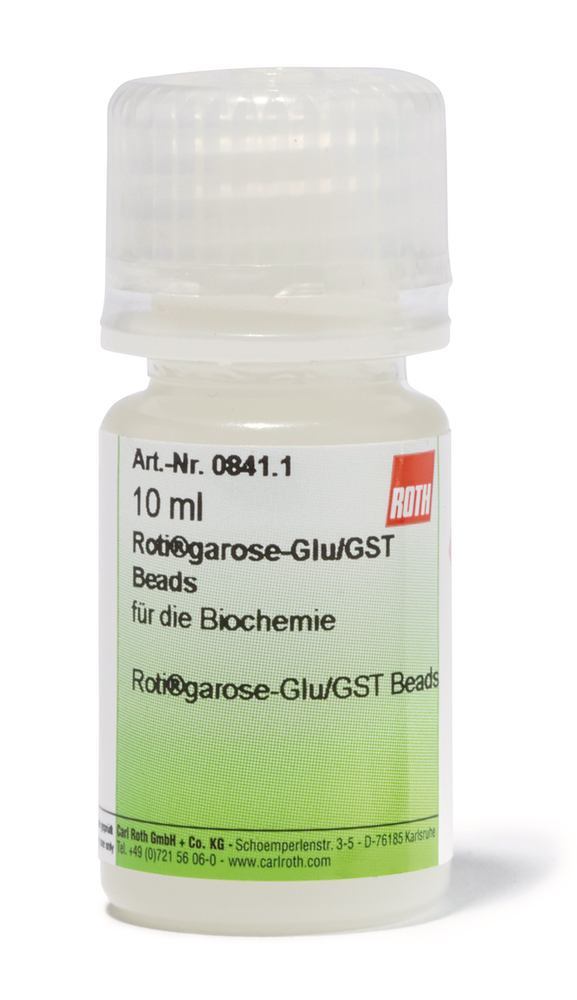
Glutathione coupled agarose beads for isolation of glutathione-S-transferase (GST) or GST fusion proteins. ROTI ® Garose-Glu/GST Beads offer the perfect solution for your specific application of low flow column chromatography or protein isolation in batch mode, under medium pressure (MPLC, FPLC), if rapid flow rates are desired or if big samples volumes have to be purified. Rapid, mild and highly specific purification Suitable for isolation of GST-peptides and protein complexes of all sizes High binding capacity Easy elution and regeneration Efficient and highly specific isolation of GST-tagged proteins via affinity chromatography is based on the affinity of the glutathion-S-transferase to it’s substrate glutathione. Merely no unspecific binding of proteins without GST-tag takes place, even during purification from raw extracts, while the biological activity of the purified proteins is preserved by chromatography conditions. Directions for use The matrix of ROTI ® Garose-Glu/GST Beads consists of beaded 4 % agarose without crosslinking, coupled with glutathione. Elution is carried out via a mild Tris/glutathione buffer, enabling even recovery of native protein complexes. ROTI ® Garose-Glu/GST Beads may be regenerated, making them very cost-effective. ROTI ® Garose-Glu/GST Cartridges ROTI ® Garose for biochemistry Prepacked cartridges with glutathione coupled agarose beads for medium pressure affinity chromatography (MPLC). ROTI ® Garose-Glu/GST Cartridges offer the perfect solution for your specific application of chromatography under medium pressure (MPLC, FPLC). Matrix in 20 % ethanol. Easy isolation of GST-tagged proteins from total lysates Recommended flow rate 0,5-5 ml/min. Standard ports (10-32) For medium pressure flow chromatography Very versatile. Applicable with ÄKTA™FPLC™, pump and syringe Suitable for Optimal for isolation of glutathione-S-transferase (GST) or GST fusion proteins via automated liquid chromatography, or if proteins shall be isolated under pressure. Suitable for ÄKTA ™FPLC™ and for sample application via peristaltic pump or syringe. Directions for use ROTI ® Garose-Glu/GST Cartridges are prepacked and may be used directly. Column material made from polypropylene and polyethylene (frit), Inner diameter 1,6 cm, height 2,5 cm, inlet port 10-32 (1/16″) female, outlet port 10-32 (1/16″) male.

Product Detail
New
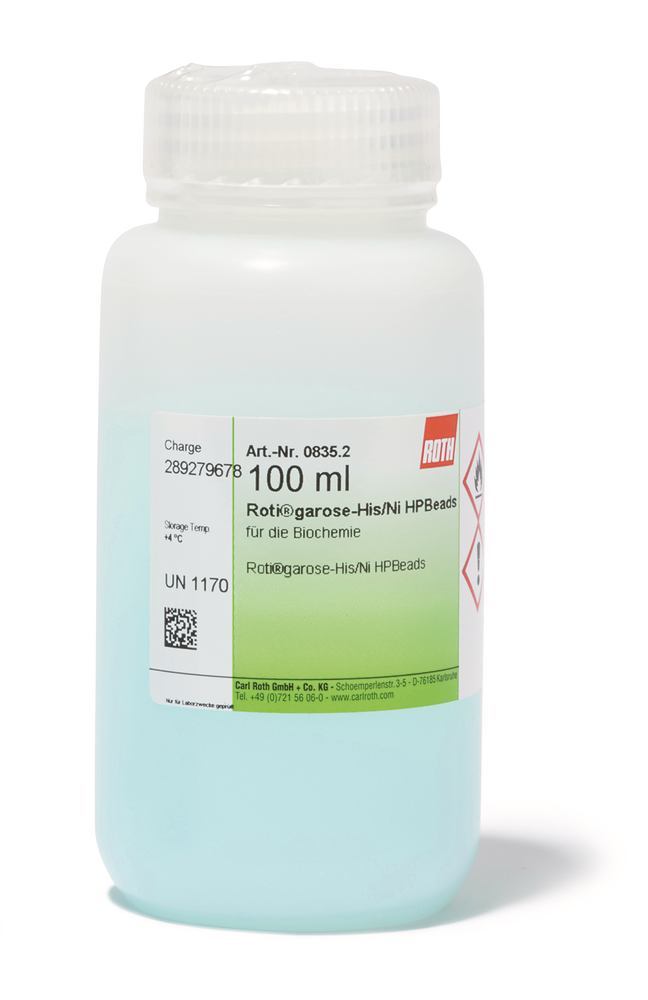
0835.2, Carl Roth

0835.2, Carl Roth

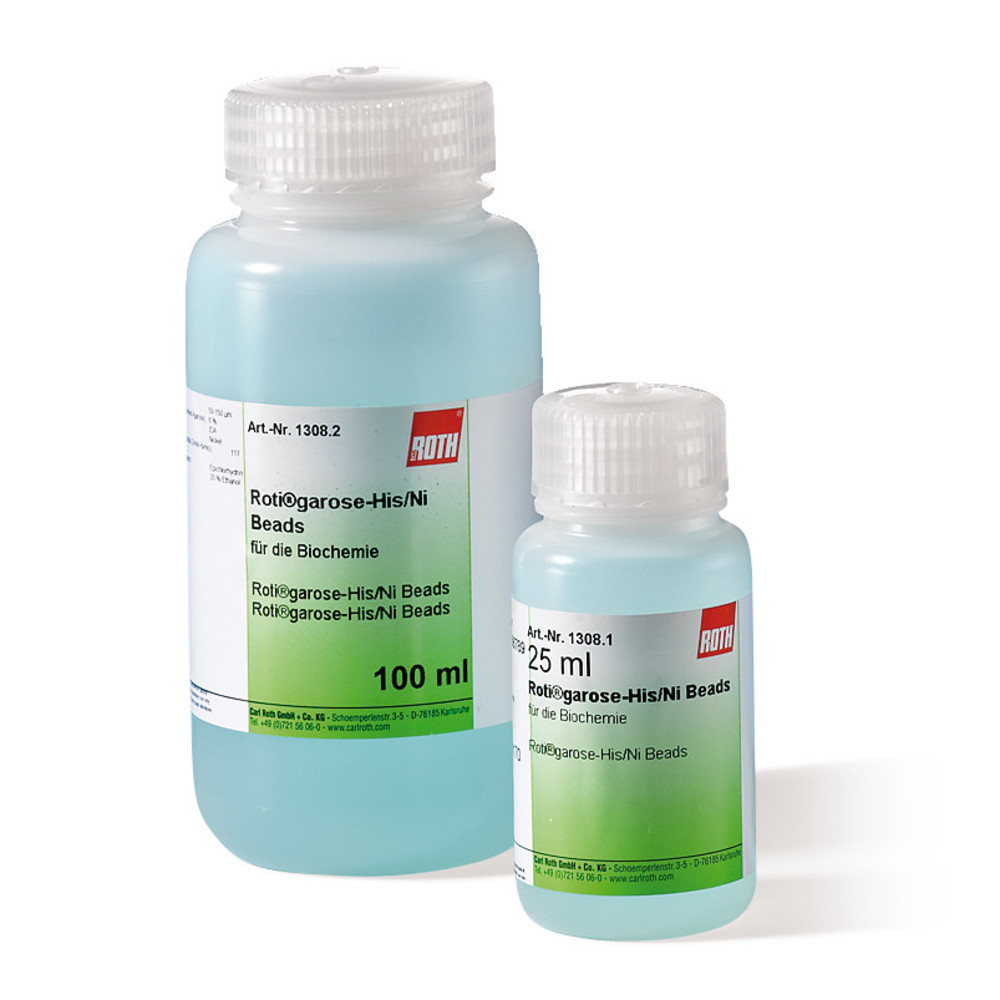
For the isolation of very high yields of pure His-tagged proteins under non-reducing conditions. Immobilized metal ion affinity chromatography (IMAC) still is the most widely used method to obtain high yield of very pure proteins with reasonable effort. ROTI ® Garose His/Ni Beads and ready-to-use columns offer the perfect solution for your specific applications in the field of benchtop column chromatography, for protein isolation in batch processes or under medium pressures (MPLC, FPLC). Depending on the product, our beads are optimally suited for low or high flow rates or when small or large sample volumes are to be purified. The ready-to-use columns and cartridges offer you the perfect solution for fast and easy purification of His-tag proteins from total lysate. Superior recovery rate of pure His-tagged proteins Very low Nickel leaching Compatible with denaturing reagents The matrix of ROTI ® Garose His/Ni products consists of crosslinked and beaded 6 % agarose, IDA-conjugated and charged with divalent Nickel ions. Nickel chelates recognize two histidines that are in close proximity and accessible with good specificity and very high affinity, making the Ni 2+ charged matrix the first choice for all standard applications. ROTI ® Garose His/Ni beads give very high yields of pure His-tagged protein with considerably low metal contamination. Directions for use The tridentate IDA cross-linker provides easy elution with low amounts of imidazole. Additionally, ROTI ® Garose Beads may repeatedly be regenerated, making them very cost-effective. The Matrix is stable in all commonly used reagents including denaturing reagents (like 8 M urea, 6 M guanidinium hydrochloride, 5 mM DTT). A special feature is the modified polychelate linker used in the ROTI ® Garose-His/Ni HPBeads plus (0806). For more detailed data please see this product. For insulation under reducing conditions we recommend ROTI ® Garose-His/Ni HPBeads plus or ROTI ® Garose-His/Ni NTA beads. ROTI ® Garose-His/Ni HPBeads ROTI ® Garose for biochemistry Nickel charged IDA-agarose beads for affinity chromatography under medium pressure, with high flow rate or with big sample-/matrix volume. In ROTI ® Garose-His/Ni HPBeads, the advantages of the highly efficient Nickel-His binding have been combined with a bead technology allowing a very rapid flow rate. ROTI ® Garose-His/Ni HPBeads are ideal for purifying large sample volumes. 50 % bead suspension in 20 % ethanol. Rapid one-step purification of very pure His-tagged proteins from total lysates Very high binding capacity for 6xHis-tagged protein Easy elution and regeneration For batch mode, gravity flow, MPLC und FPLC Recommended for big matrix volumes Suitable for MPLC and FPLC, or if His-tag proteins shall be isolated either in particularly short time or in big amounts . Directions for use May be autoclaved at 121 °C for 30 mins.

Product Detail
New
0808.2, Carl Roth

0808.2, Carl Roth

For rapid and simple purification of antibodies with reasonable effort, affinity chromatography still is the first choice in most cases. ROTI ® Garose-Protein A and G Beads offer the perfect solution for your specific application under medium pressure (MPLC, FPLC), if rapid flow rates are desired or if big samples volumes have to be purified. Rapid one-step purification of immunoglobulins from cell lysates and biological solutions High yield of very pure immunoglobulins Easy elution and regeneration Covalent binding of protein G in high ligand density The matrix of ROTI ® Garose-Protein A and G Beads consists of crosslinked and beaded 4 % agarose, coated and covalently coupled with protein A from Staphylococcus aureus and protein G from Streptococcus , respectively. The recombinant protein A ( rec A) shares IgG binding properties with natural protein A of S. aureus Cowan strain I. It has high affinity for IgG from a variety of different mammalian species, also binding some populations of IgA and IgM. Binding domains specific for albumin as well as cell walls and cell membranes have been removed in the recombinant protein G , in order to ensure the maximum specific IgG binding capacity. It has high affinity for IgG from a variety of different mammalian species, also binding IgG3 with high affinity. Directions for use Most immunoglobulins may be eluted in 100 mM glycin or citric acid buffer (pH 3.0). ROTI ® Garose-Protein A and G Beads may be regenerated, making them very cost-effective. May not be autoclaved. ROTI ® Garose-Protein G HPBeads ROTI ® Garose for biochemistry Protein G coated agarose beads for affinity chromatography under medium pressure, with high flow rate or with big sample-/matrix volume. High-performance affinity resin for antibody purification. In ROTI ® Garose-Protein G HPBeads, the advantages of the highly efficient protein G/antibody binding have been combined with a bead technology allowing a very rapid flow rate. 50% bead suspension in 20 % ethanol. Binding capacity (human IgG) of approx. 20 mg per ml matrix High affinity binding of IgG3 Recommended for the isolation of rat IgGs For batch mode, gravity flow, MPLC und FPLC Recommended for big matrix volumes Suitable for All small-scale applications, for MPLC and FPLC, or if antibodies shall be isolated either in short time or in big amounts. Directions for use The matrix of ROTI ® Garose-Protein G HPBeads consists of crosslinked and beaded 4 % agarose, coated and covalently coupled with protein G from Streptococcus . High affinity binding of IgG3. Low affinity to other immunoglobulins such as IgA, IgE or IgM. Protein G is recommended for the isolation of rat IgGs.

Product Detail
New
0846.1, Carl Roth

0846.1, Carl Roth

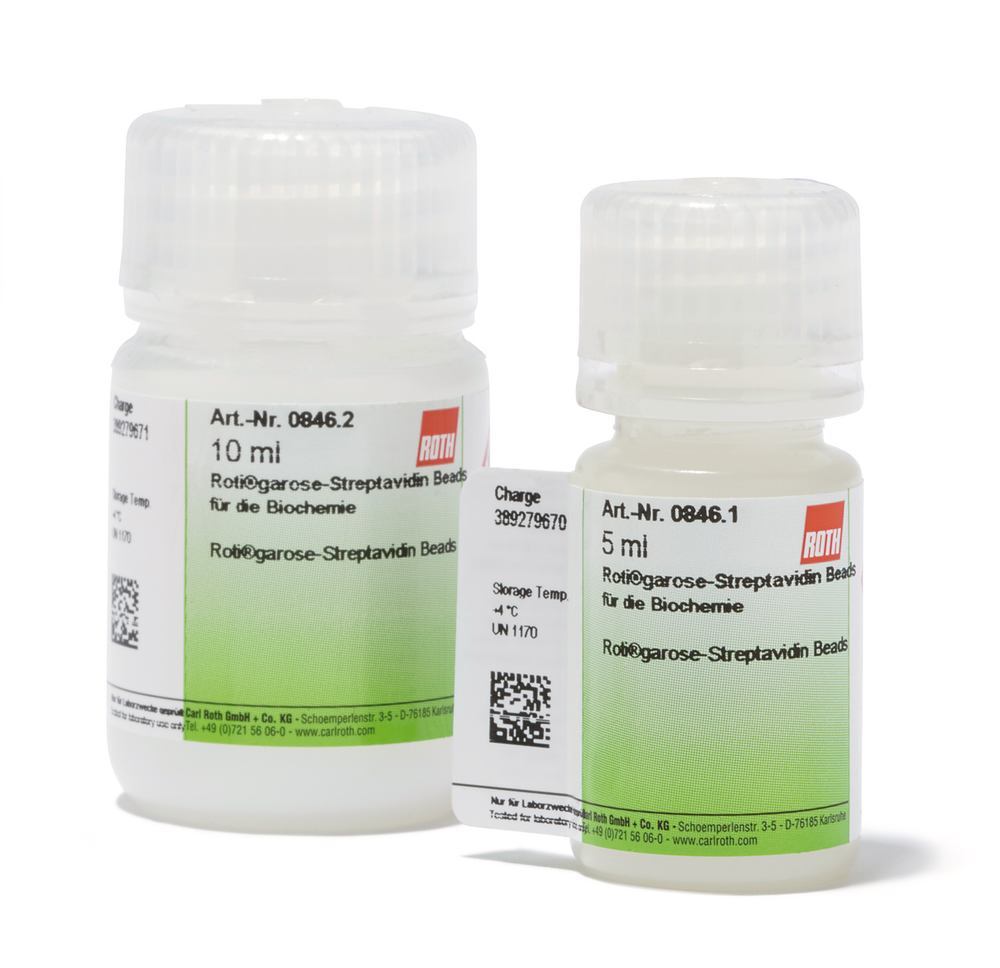
ROTI ® Garose-Biotin and Streptavidin beads offer the perfect solution for the isolation of biotinylated and streptavidinated molecules in benchtop column chromatography or in batch procedures. Rapid, mild and highly specific purification Suitable for isolation of DNA, proteins and other molecules of all sizes High binding capacity High recovery rates With a value of K a ~10 -14 /M, the affinity of avidin and streptavidin for biotin is the strongest non-covalent bond between molecules known in biochemistry. Efficient and highly specific isolation of biotinylatd or avidin/streptavidin-tagged molecules via affinity chromatography is based on this particular affinity. Directions for use The matrix is easy to pack and results in very evenly packed columns. Elution is carried out via 8 M guanidine-HCl or prior to gel loading during heating in gel loading buffer. Merely no unspecific binding of unlabelled molecules takes place, even during purification from raw extracts. ROTI ® Garose-Streptavidin Beads ROTI ® Garose for biochemistry Biotin coupled agarose beads for affinity chromatography. 50 % bead suspension in 20 % ethanol. One-step isolation of biotinylated molecules from total lysates For batch mode and gravity flow Suitable for Recommended for isolation of biotinylated molecules in batch mode or via columns via low pressure affinity chromatography. Directions for use The matrix of ROTI ® Garose-Streptavidin Beads consists of beaded 6 % cross-linked agarose. Elution of imminobiotinylated molecules is performed by 50 mM NH 4 -acetate buffer. Isolation of an antigen by biotinylated antibodies can be performed by 0.1 M glycine buffer. Streptavidin is immobilised to the beads through a spacer arm and covalent carboxy/amide linkage, not only minimizing streptavidin leakage during elution, but also enhancing the binding capacity by reduction of steric effects.

Product Detail
New
0809.2, Carl Roth

0809.2, Carl Roth

For rapid and simple purification of antibodies with reasonable effort, affinity chromatography still is the first choice in most cases. ROTI ® Garose-Protein A and G Beads offer the perfect solution for your specific application under medium pressure (MPLC, FPLC), if rapid flow rates are desired or if big samples volumes have to be purified. Rapid one-step purification of immunoglobulins from cell lysates and biological solutions High yield of very pure immunoglobulins Easy elution and regeneration Covalent binding of protein G in high ligand density The matrix of ROTI ® Garose-Protein A and G Beads consists of crosslinked and beaded 4 % agarose, coated and covalently coupled with protein A from Staphylococcus aureus and protein G from Streptococcus , respectively. The recombinant protein A ( rec A) shares IgG binding properties with natural protein A of S. aureus Cowan strain I. It has high affinity for IgG from a variety of different mammalian species, also binding some populations of IgA and IgM. Binding domains specific for albumin as well as cell walls and cell membranes have been removed in the recombinant protein G , in order to ensure the maximum specific IgG binding capacity. It has high affinity for IgG from a variety of different mammalian species, also binding IgG3 with high affinity. Directions for use Most immunoglobulins may be eluted in 100 mM glycin or citric acid buffer (pH 3.0). ROTI ® Garose-Protein A and G Beads may be regenerated, making them very cost-effective. May not be autoclaved. ROTI ® Garose-Protein A/G HPBeads ROTI ® Garose for biochemistry Mixture (1:1) of protein A- and protein G coated agarose beads for affinity chromatography under medium pressure, with high flow rate or with big sample-/matrix volume. High-performance affinity resin for antibody purification. In ROTI ® Garose-Protein A/G HPBeads, the advantages of the highly efficient protein A and G/antibody binding have been combined with a bead technology allowing a very rapid flow rate. 50 % bead suspension in 20 % ethanol. Binding capacity (human IgG) of approx. 25 mg per ml matrix Superior affinity for a wide range of IgGs Binding of some populations IgA and IgM Recommended for the isolation of rat IgGs For batch mode, gravity flow, MPLC und FPLC Recommended for big matrix volumes Suitable for All small-scale applications, for MPLC and FPLC, or if antibodies shall be isolated either in short time or in big amounts. Directions for use The matrix of ROTI ® Garose-Protein A/G HPBeads consists of crosslinked and beaded 4 % agarose, coated and covalently coupled with protein A from Staphylococcus aureus and protein G from Streptococcus , respectively. High binding affinity to IgGs of many different mammalian species, high affinity binding of all IgG3, binding of some populations IgA and IgM.

Product Detail
New
0808.1, Carl Roth

0808.1, Carl Roth

For rapid and simple purification of antibodies with reasonable effort, affinity chromatography still is the first choice in most cases. ROTI ® Garose-Protein A and G Beads offer the perfect solution for your specific application under medium pressure (MPLC, FPLC), if rapid flow rates are desired or if big samples volumes have to be purified. Rapid one-step purification of immunoglobulins from cell lysates and biological solutions High yield of very pure immunoglobulins Easy elution and regeneration Covalent binding of protein G in high ligand density The matrix of ROTI ® Garose-Protein A and G Beads consists of crosslinked and beaded 4 % agarose, coated and covalently coupled with protein A from Staphylococcus aureus and protein G from Streptococcus , respectively. The recombinant protein A ( rec A) shares IgG binding properties with natural protein A of S. aureus Cowan strain I. It has high affinity for IgG from a variety of different mammalian species, also binding some populations of IgA and IgM. Binding domains specific for albumin as well as cell walls and cell membranes have been removed in the recombinant protein G , in order to ensure the maximum specific IgG binding capacity. It has high affinity for IgG from a variety of different mammalian species, also binding IgG3 with high affinity. Directions for use Most immunoglobulins may be eluted in 100 mM glycin or citric acid buffer (pH 3.0). ROTI ® Garose-Protein A and G Beads may be regenerated, making them very cost-effective. May not be autoclaved. ROTI ® Garose-Protein G HPBeads ROTI ® Garose for biochemistry Protein G coated agarose beads for affinity chromatography under medium pressure, with high flow rate or with big sample-/matrix volume. High-performance affinity resin for antibody purification. In ROTI ® Garose-Protein G HPBeads, the advantages of the highly efficient protein G/antibody binding have been combined with a bead technology allowing a very rapid flow rate. 50% bead suspension in 20 % ethanol. Binding capacity (human IgG) of approx. 20 mg per ml matrix High affinity binding of IgG3 Recommended for the isolation of rat IgGs For batch mode, gravity flow, MPLC und FPLC Recommended for big matrix volumes Suitable for All small-scale applications, for MPLC and FPLC, or if antibodies shall be isolated either in short time or in big amounts. Directions for use The matrix of ROTI ® Garose-Protein G HPBeads consists of crosslinked and beaded 4 % agarose, coated and covalently coupled with protein G from Streptococcus . High affinity binding of IgG3. Low affinity to other immunoglobulins such as IgA, IgE or IgM. Protein G is recommended for the isolation of rat IgGs.

Product Detail
New
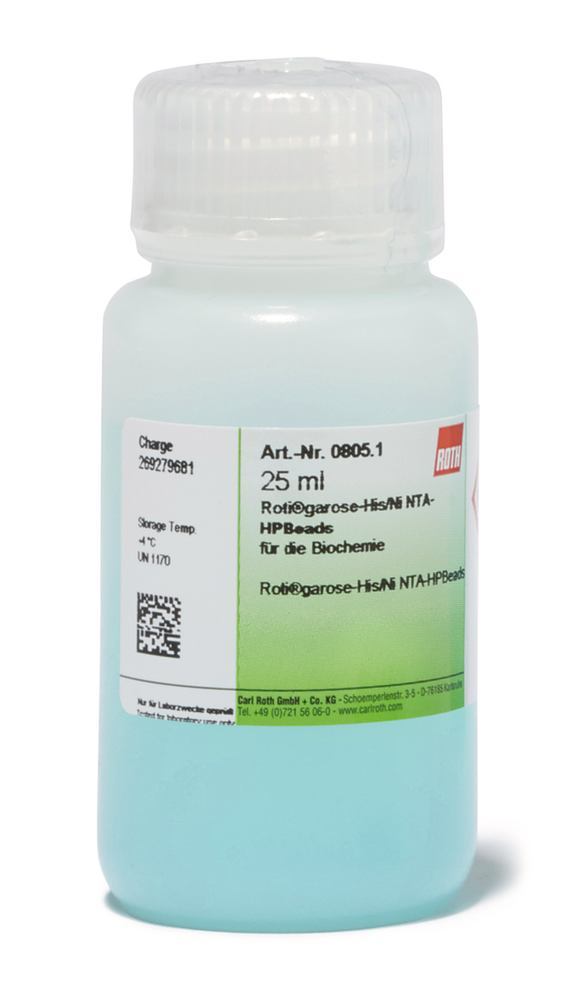
0805.1, Carl Roth

0805.1, Carl Roth

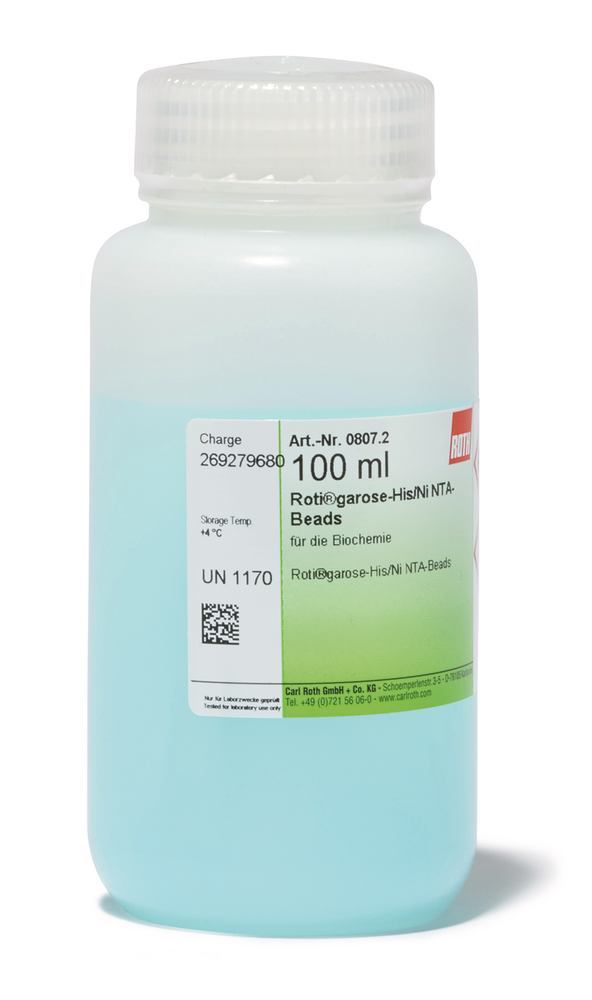
For the isolation of His-tagged proteins under reducing conditions. Immobilized metal ion affinity chromatography (IMAC) still is the most widely used method to obtain high yield of very pure proteins with reasonable effort. ROTI ® Garose His/Ni Beads and ready-to-use columns offer the perfect solution for your specific applications in the field of benchtop column chromatography, for protein isolation in batch processes or under medium pressures (MPLC, FPLC). Depending on the product, our beads are optimally suited for low or high flow rates or when small or large sample volumes are to be purified. Superior recovery rate of pure His-tagged proteins Minimized Nickel leaching Compatible with denaturing and reducing reagents The matrix of ROTI ® Garose-His/Ni NTA products consists of crosslinked and beaded 6 % agarose, NTA-conjugated and charged with divalent Nickel ions. Nickel chelates recognize two histidines that are in close proximity and accessible with good specificity and very high affinity, making the Ni 2+ charged matrix the first choice for all standard applications. The tetradentate NTA crosslinker enables highly efficient binding of His-tagged proteins and leads to high recovery rates with minimized nickel bleeding into the eluate. Directions for use ROTI ® Garose-His/Ni NTA-Beads may be regenerated, making them very cost-effective. The Matrix is stable in all commonly used reagents including denaturing reagents (like 8 M urea, 6 M guanidinium hydrochloride) and (dependent on the respective buffer) reducing substances (for instance ≤30 mM glutathion, ≤10  mM DTT, ≤10 mM DTE, ≤20 mM β-mercaptoethanol und ≤0,3 % SDS). ROTI ® Garose-His/Ni NTA-HPBeads ROTI ® Garose for biochemistry Nickel charged NTA-agarose beads for affinity chromatography under reducing conditions. The matrix of choice for applications under medium pressure, with high flow rate or with big sample-/matrix volume. In ROTI ® Garose-His/Ni NTA-HPBeads, the advantages of the highly efficient Nickel-His binding have been combined with a bead technology allowing a very rapid flow rate. ROTI ® Garose-His/Ni HPBeads are ideal for purifying large sample volumes. 50 % bead suspension in 20 % ethanol. Rapid one-step purification of very pure His-tagged proteins from total lysates High binding capacity for 6xHis-tagged protein (≥60 mg/ml purified His-tagged protein) Reliably elution and regeneration For batch mode, gravity flow, MPLC und FPLC Recommended for big matrix volumes Suitable for MPLC and FPLC, or if His-tag proteins shall be isolated either in particularly short time or in big amounts from reducing solutions . Directions for use May be autoclaved at 121 °C for 30 mins.

Product Detail
New
1235.2, Carl Roth

1235.2, Carl Roth

For the isolation of high yields of highly pure His-tagged proteins under non-reducing conditions. Immobilized metal ion affinity chromatography (IMAC) still is the most widely used method to obtain high yield of very pure proteins with reasonable effort. ROTI ® Garose His/Co Beads and ready-to-use columns offer the perfect solution for your specific applications in the field of benchtop column chromatography, for protein isolation in batch processes or under medium pressures (MPLC, FPLC). Depending on the product, our beads are optimally suited for low or high flow rates or when small or large sample volumes are to be purified. The ready-to-use columns and cartridges offer you the perfect solution for fast and easy purification of His-tag proteins from total lysate. Good recovery rate of extremely pure His-tagged proteins Very low Cobalt leaching Compatible with denaturing reagents The matrix of ROTI ® Garose His/Co products consists of crosslinked and beaded 6 % agarose, IDA-conjugated and charged with divalent Cobalt ions. Cobalt chelates recognize two histidines consecutive in an amino acid sequence with superior specificity and good affinity, resulting in acceptable to good recovery rates only, but yielding proteins of superior purity. This matrix is, therefore, the perfect choice if extremely pure proteins are required, or if hard-to-separate proteins shall be isolated. ROTI ® Garose His/Co beads result in eluates with considerably low metal contamination. Directions for use The tridentate IDA cross-linker provides easy elution with low amounts of imidazole. Additionally, ROTI ® Garose Beads may repeatedly be regenerated, making them very cost-effective. The Matrix is stable in all commonly used reagents including denaturing reagents (like 8 M urea, 6 M guanidinium hydrochloride, 5 mM DTT). For insulation under reducing conditions we recommend ROTI ® Garose-His/Ni NTA beads. ROTI ® Garose-His/Co Beads ROTI ® Garose for biochemistry Cobalt charged IDA-agarose beads for low pressure affinity chromatography. 50 % bead suspension in 20 % ethanol. One-Step purification of His-tagged proteins from total lysates Binding capacity (purified 6xHis protein) of 135 mg per ml matrix Easy elution and regeneration For batch mode and gravity flow column chromatogrphy Suitable for Perfect choice if extremely pure proteins are required, or if hard-to-separate proteins shall be isolated. Directions for use May be autoclaved at 121 °C for 30 mins.

Product Detail
New
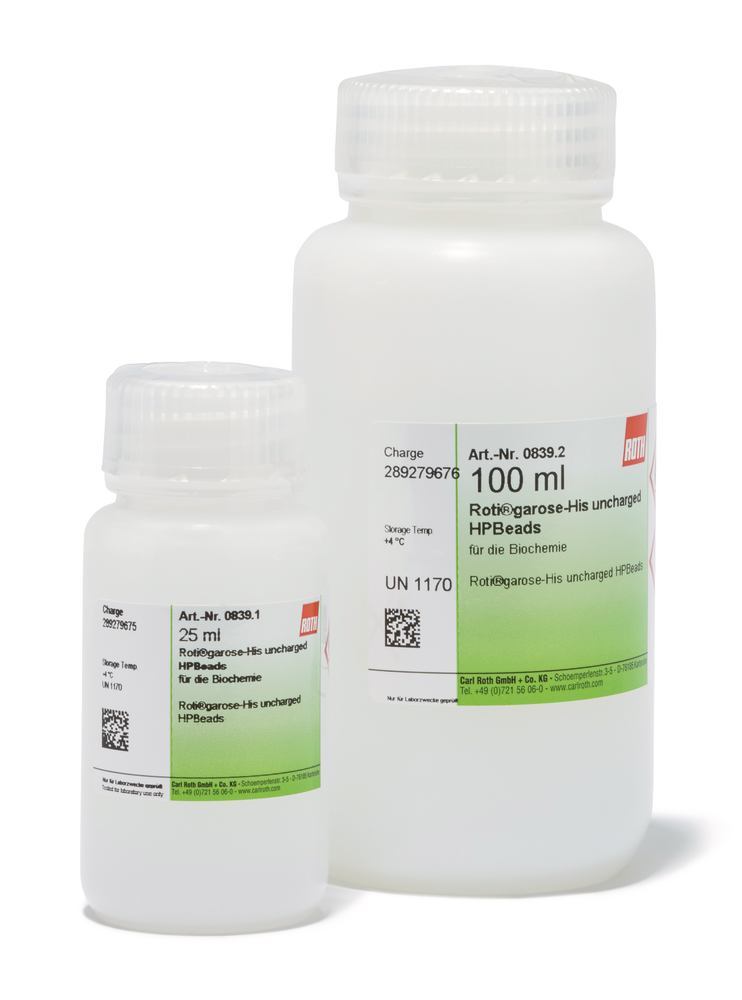
0839.1, Carl Roth

0839.1, Carl Roth

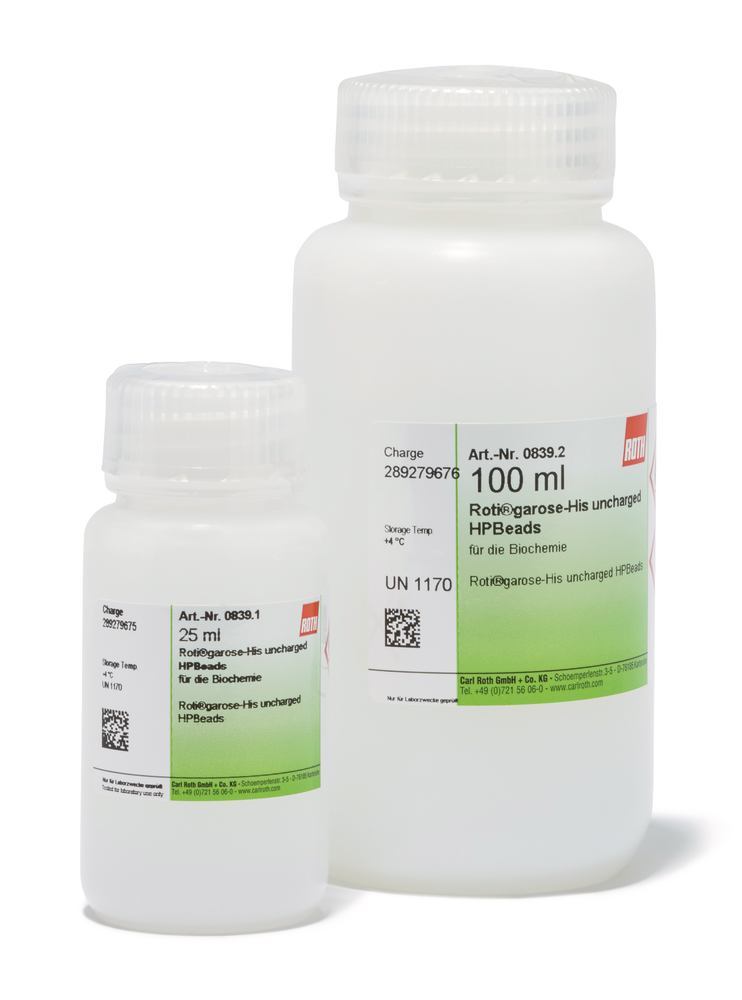
Immobilized metal ion affinity chromatography (IMAC) still is the most widely used method to obtain high yield of very pure proteins with reasonable effort. ROTI ® Garose-His uncharged HPBeads offer the perfect solution for your specific application under medium pressure (MPLC, FPLC), if rapid flow rates are desired or if big samples volumes have to be purified. Easy elution and regeneration Very low metal leaching Compatible with denaturing reagents The matrix of ROTI ® Garose-His uncharged HPBeads consists of crosslinked and beaded 6 % agarose, IDA-conjugated. In one step, the beads can be loaded safely and rapidly with all standard bivalent metal cations (Ni 2+ , Co 2+ , Zn 2+ , Cu 2+ ). ROTI ® Garose-His uncharged HPBeads result in eluates with considerably low metal contamination. Directions for use The tridentate IDA cross-linker provides easy elution with low amounts of imidazole. Additionally, ROTI ® Garose-His uncharged HPBeads may repeatedly be regenerated, making them very cost-effective. The Matrix is stable in all commonly used reagents including denaturing reagents (like 8 M urea, 6 M guanidinium hydrochloride, 5 mM DTT). ROTI ® Garose-His uncharged HPBeads ROTI ® Garose for biochemistry Uncharged IDA-agarose beads for affinity chromatography under medium pressure, with high flow rate or with big sample-/matrix volume. In ROTI ® Garose-His uncharged HPBeads, the advantages of the efficient metal ion/His binding have been combined with a bead technology allowing a very rapid flow rate. 50 % bead suspension in 20 % ethanol. Rapid one-step purification of His-tagged proteins from total lysates High binding capacity for standard me 2+ ions under rapid one-step loading For batch mode, gravity flow, MPLC und FPLC Recommended for big matrix volumes Suitable for Suitable for MPLC and FPLC, or if His-tag proteins shall be isolated either in particularly short time or in big amounts. Directions for use May be autoclaved at 121 °C for 30 mins.

Product Detail
New
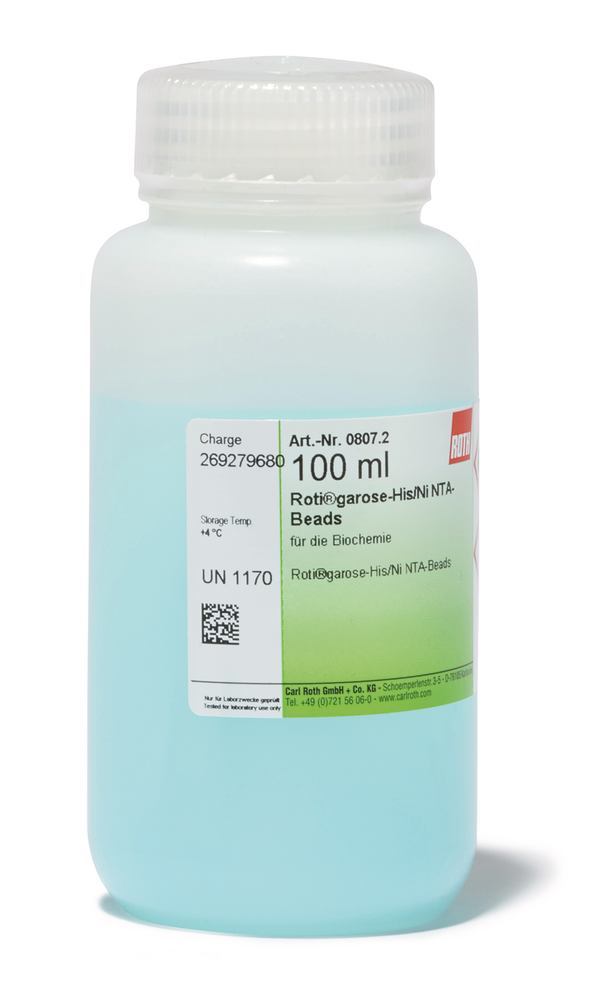
0806.2, Carl Roth

0806.2, Carl Roth

For the isolation of very high yields of pure His-tagged proteins under non-reducing conditions. Immobilized metal ion affinity chromatography (IMAC) still is the most widely used method to obtain high yield of very pure proteins with reasonable effort. ROTI ® Garose His/Ni Beads and ready-to-use columns offer the perfect solution for your specific applications in the field of benchtop column chromatography, for protein isolation in batch processes or under medium pressures (MPLC, FPLC). Depending on the product, our beads are optimally suited for low or high flow rates or when small or large sample volumes are to be purified. The ready-to-use columns and cartridges offer you the perfect solution for fast and easy purification of His-tag proteins from total lysate. Superior recovery rate of pure His-tagged proteins Very low Nickel leaching Compatible with denaturing reagents The matrix of ROTI ® Garose His/Ni products consists of crosslinked and beaded 6 % agarose, IDA-conjugated and charged with divalent Nickel ions. Nickel chelates recognize two histidines that are in close proximity and accessible with good specificity and very high affinity, making the Ni 2+ charged matrix the first choice for all standard applications. ROTI ® Garose His/Ni beads give very high yields of pure His-tagged protein with considerably low metal contamination. Directions for use The tridentate IDA cross-linker provides easy elution with low amounts of imidazole. Additionally, ROTI ® Garose Beads may repeatedly be regenerated, making them very cost-effective. The Matrix is stable in all commonly used reagents including denaturing reagents (like 8 M urea, 6 M guanidinium hydrochloride, 5 mM DTT). A special feature is the modified polychelate linker used in the ROTI ® Garose-His/Ni HPBeads plus (0806). For more detailed data please see this product. For insulation under reducing conditions we recommend ROTI ® Garose-His/Ni HPBeads plus or ROTI ® Garose-His/Ni NTA beads. ROTI ® Garose-His/Ni HPBeads plus ROTI ® Garose for biochemistry Nickel charged agarose beads for affinity chromatography under presence of EDTA or DTT. The matrix of choice for applications under low or medium pressure, and applicable for every required sample and/or matrix volume. In ROTI ® Garose-His/Ni HPBeads plus , the advantages of the highly efficient Nickel-His binding have been combined with a bead technology allowing a very rapid flow rate. The specially developed polychelating ligand forms highly stabile nickel chelates, which are able to isolate His-tagged proteins even from solutions containing 20 mM EDTA or DTT - reliably and without undesired nickel stripping. 50 % bead suspension in 20 % ethanol. Rapid one-step purification of very pure His-tagged proteins from total lysates High binding capacity for 6xHis-tagged protein (≥80 mg/ml purified His-tagged protein) Reliably elution and regeneration Minimized Nickel leaching Compatible with 20 mM EDTA and DTT For batch mode, gravity flow, MPLC und FPLC Recommended for all matrix volumes Suitable for MPLC and FPLC, or if His-tag proteins shall be isolated either in particularly short time or in big amounts from reducing solutions . Directions for use In the matrix of ROTI ® Garose-His/Ni HPBeads plus, IDA was replaced by a polychelator conjugation. This multi dentate cross-linker binds his-tagged proteins very efficiently, leading to high recovery rates with minimized nickel bleeding into the eluate. ROTI ® Garose-His/Ni HPBeads plus may not be regenerated. The matrix is very stabile and may generally be used with buffers including the following reagents: ≤20 mM EDTA, ≤20 mM DTT, ≤8 M urea, ≤6 M guanidinium hydrochloride, ≤100 % methanol, ≤100 % ethanol, ≤30 % acetonitrile, pH range 4-9. May be autoclaved at 121 °C for 30 mins.

Product Detail
allied chemi
  • secure-payment
  • visa
  • american-express
  • master-card

© 2023 Copyright. All Rights Reserved. Unit 19, Euroway House, Roydsdale Way, Bradford, BD4 6SE, UK