Deliver to United Kingdom
0
Products Found: 32
Showing Results For: Reagents for Decalcification

Reagents for Decalcification


6484.2, Carl Roth

MF Part: 6484.2
MOQ: 1 - 5
£ 48.29
In Stock
more details

76-03-9, Carl Roth

MF Part: 76-03-9
MOQ: 1 -
£ 22.05
In Stock
more details

64-19-7, Carl Roth

MF Part: 64-19-7
MOQ: 1 - 5
£ 32.45
In Stock
more details

6483.3, Carl Roth

MF Part: 6483.3
MOQ: 1 - 3
£ 75.02
In Stock
more details

7647-01-0, Carl Roth

MF Part: 7647-01-0
MOQ: 1 - 5
£ 25.07
In Stock
more details

76-03-9, Carl Roth

MF Part: 76-03-9
MOQ: 1 -
£ 84.33
In Stock
more details

64-19-7, Carl Roth

MF Part: 64-19-7
MOQ: 1 - 3
£ 75.02
In Stock
more details

64-19-7, Carl Roth

MF Part: 64-19-7
MOQ: 1 - 5
£ 124.83
In Stock
more details

64-18-6, Carl Roth

MF Part: 64-18-6
MOQ: 1 - 5
£ 57.02
In Stock
more details

7697-37-2, Carl Roth

MF Part: 7697-37-2
MOQ: 1 - 5
£ 42.48
In Stock
more details

7647-01-0, Carl Roth

MF Part: 7647-01-0
MOQ: 1 - 5
£ 256.41
In Stock
more details

76-03-9, Carl Roth

MF Part: 76-03-9
MOQ: 1 -
£ 161.73
In Stock
more details

New Items
New
76-03-9, Carl Roth

76-03-9, Carl Roth

<p>Trichloroacetic acid, with a Molecular Weight of 163.39 g/mol, is classified as a reagent for decalcification in life science applications. It belongs to substance groups such as carboxylic acids, substituted, and chlorine compounds, organic. This compound has a Melting Point of 135 to 136°F and a Boiling Point of 385 to 387°F. Due to its hazardous nature, it carries the GHS signal word &quot;Danger.&quot; Users should wear safety gloves and safety goggles when handling this substance, which may cause severe skin burns and eye damage, and is suspected of causing cancer. It is recommended to avoid swallowing this compound.</p> <ul> <li>CAS Number: 76-03-9</li> <li>Molecular Formula: C2HCl3O2</li> <li>Molecular Weight: 163.38</li> <li>Exact Mass: 161.904212</li> <li>Boiling Point: 385 to 387 °F at 760 mmHg (NTP, 1992)</li> <li>Melting Point: 135 to 136 °F (NTP, 1992)</li> <li>Vapour Density: 5.6 (NTP, 1992) - Heavier than air; will sink (Relative to Air)</li> <li>GHS Signal Word: Danger</li> <li>Hazard Statements:</li> <li>H314: Causes severe skin burns and eye damage [Danger Skin corrosion/irritation]</li> <li>H351: Suspected of causing cancer [Warning Carcinogenicity]</li> <li>H303: May be harmful if swallowed [Warning Acute toxicity, oral]</li> </ul>

Product Detail
New
7647-01-0, Carl Roth

7647-01-0, Carl Roth

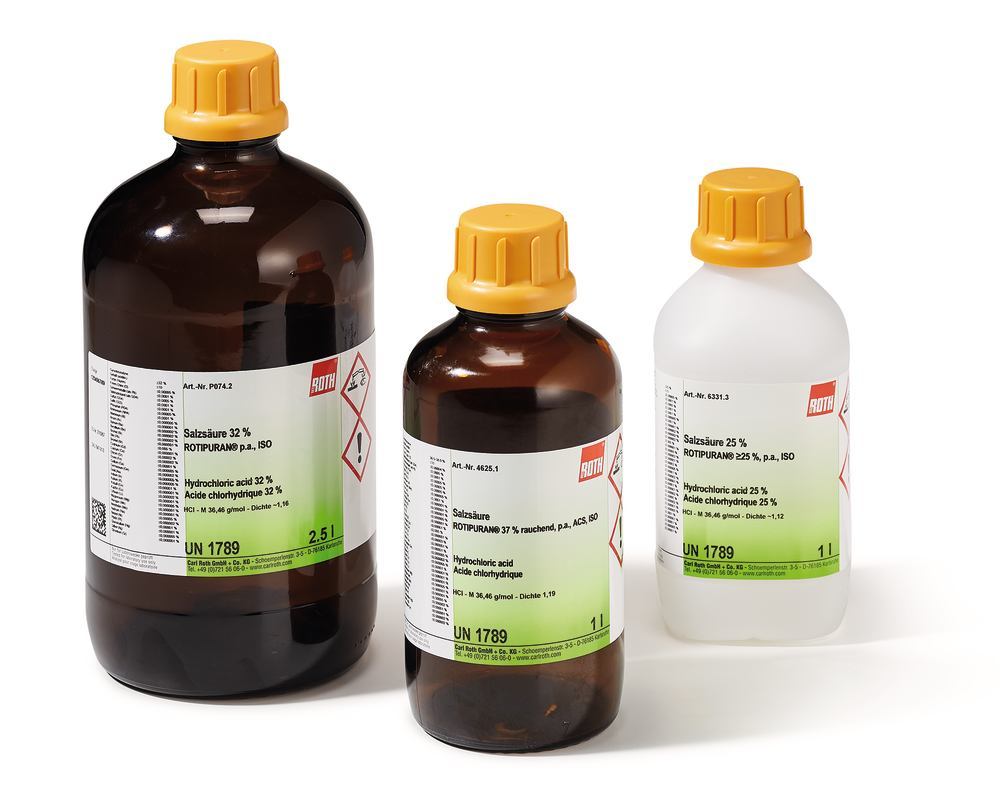
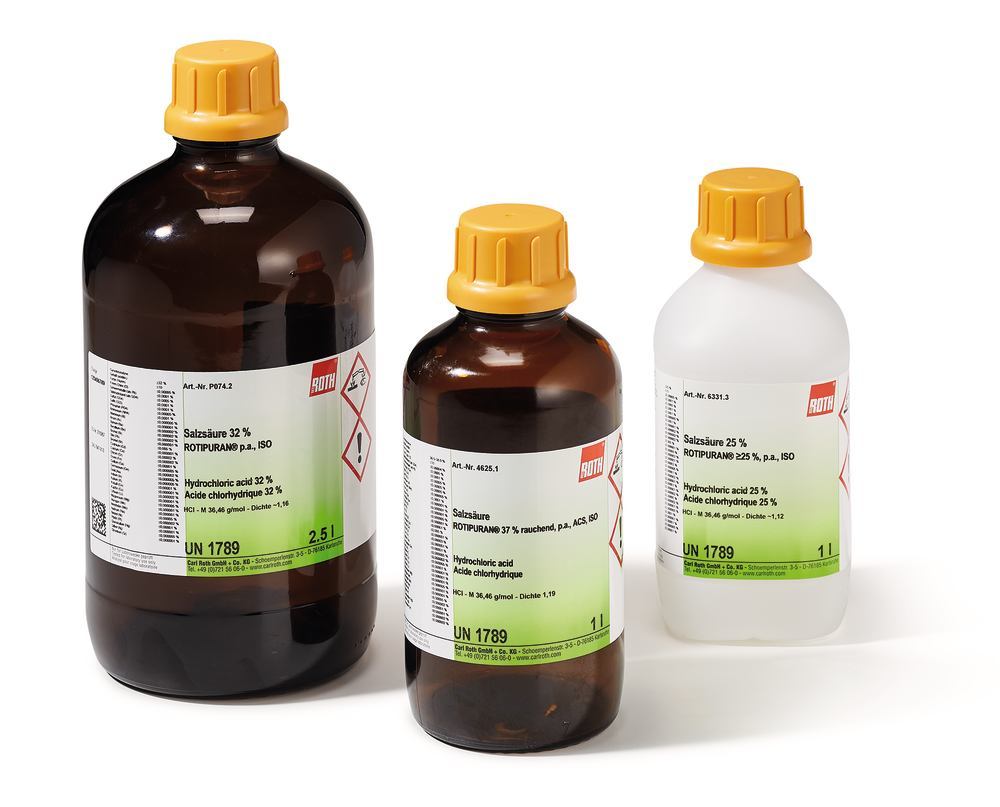
<p>This 1 liter glass container holds Hydrochloric Acid, a reagent used for decalcification in life science applications such as histology and microscopy. Its CAS Number is 7647-01-0, and its molecular formula is Cl-. This substance belongs to the groups of Chlorine compounds, inorganic, and Inorganic gases. It is recommended to use safety equipment including goggles, shoes, and gloves when handling this product due to its corrosive nature. The workplace has various labels prohibiting smoking, unauthorized access, and specifying caution for toxicity, corrosivity, and gas cylinders. The European Union has set an 8-hour limit value of 8 mg/m3 (5 ppm) and a short-term limit value of 15 mg/m3 (10 ppm) for occupational exposure.</p> <ul> <li>CAS Number: 7647-01-0</li> <li>Molecular Formula: Cl-</li> <li>Molecular Weight: 35.45</li> <li>Exact Mass: 34.9688527</li> <li>Melting Point: -101 °C</li> <li>GHS Signal Word: Warning</li> <li>Hazard Statements:</li> <li>H317: May cause an allergic skin reaction [Warning Sensitization, Skin]</li> </ul>

Product Detail
New
64-19-7, Carl Roth

64-19-7, Carl Roth

<p>This 1 liter plastic container holds acetic acid, a carboxylic acid used as a reagent for decalcification in life science applications such as histology and microscopy. The CAS Number for this compound is 64-19-7. It is recommended to use safety goggles and gloves when handling this substance due to its corrosive nature. In the workplace, it is prohibited to have open flames, allow unauthorized persons, smoke, or engage in activities that may cause fires. The European Union has set an 8-hour limit value of 25 mg/m3 (10 ppm) and a short-term limit value of 50 mg/m3 (20 ppm) for occupational exposure.</p> <ul> <li>CAS Number: 64-19-7</li> <li>Molecular Formula: C2H3O2-</li> <li>Molecular Weight: 59.04</li> <li>Exact Mass: 59.013304334</li> </ul>

Product Detail
New
6483.3, Carl Roth

6483.3, Carl Roth

<p>Intended for structured formulation workflows, the Decalcifier Standard, a 2.5L plastic container of ready-to-use reagent, serves as a crucial tool in histology processes. This solution, comprising trichloroacetic acid and formalin, facilitates decalcification of tissues containing hard materials like bones or keratin. However, it&#x27;s essential to ensure proper fixation prior to decalcification due to potential morphological alterations caused by trichloroacetic acid in unfixed tissue. The duration of decalcification varies depending on the specimen&#x27;s size and type; smaller bones typically require 1-2 days for complete decalcification. While this decalcifier offers some fixing qualities, it&#x27;s not recommended for immunological applications. For such purposes, consider using our Decalcifier Soft based on EDTA instead.</p> <ul> <li><strong>Category:</strong> Reagents for Decalcification</li> <li><strong>Boiling point (bp):</strong> 100 °C</li> </ul>

Product Detail
New
6484.2, Carl Roth

6484.2, Carl Roth

<p>Intended for structured formulation workflows, the Decalcifier Soft, available in a 1L glass container, offers a gentle yet effective method for decalcifying tissues prior to paraffin embedding. This ready-to-use solution contains 25% EDTA, ensuring a prolonged decalcification period, particularly beneficial for bone biopsies which typically require 3-4 days. Acceleration can be achieved through the use of a magnetic stirrer. The solution maintains a weakly basic pH, preserving nucleic acids and enzymes, making it suitable for immunological applications. With a density of 1.1 g/cm³, this decalcifier solution provides a sustainable alternative to traditional methods without compromising quality.</p> <ul> <li><strong>Category:</strong> Reagents for Decalcification</li> <li><strong>Density (D):</strong> 1,1 g/cm³</li> </ul>

Product Detail
New
76-03-9, Carl Roth

76-03-9, Carl Roth

<p>This Trichloroacetic Acid, with a Molecular Weight of 163.39 g/mol, is categorized as a reagent for decalcification in life science applications. It belongs to the substance groups of carboxylic acids, substituted, and chlorine compounds, organic. According to the provided data, it has a Melting Point of 135 to 136°F and a Boiling Point of 385 to 387°F at standard pressure. Due to its hazardous properties, it carries the GHS signal word &quot;Danger&quot; and requires the use of safety goggles, safety gloves, and caution when handling as it may cause severe skin burns and eye damage, is suspected of causing cancer, and may be harmful if swallowed.</p> <ul> <li>CAS Number: 76-03-9</li> <li>Molecular Formula: C2HCl3O2</li> <li>Molecular Weight: 163.38</li> <li>Exact Mass: 161.904212</li> <li>Boiling Point: 385 to 387 °F at 760 mmHg (NTP, 1992)</li> <li>Melting Point: 135 to 136 °F (NTP, 1992)</li> <li>Vapour Density: 5.6 (NTP, 1992) - Heavier than air; will sink (Relative to Air)</li> <li>GHS Signal Word: Danger</li> <li>Hazard Statements:</li> <li>H314: Causes severe skin burns and eye damage [Danger Skin corrosion/irritation]</li> <li>H351: Suspected of causing cancer [Warning Carcinogenicity]</li> <li>H303: May be harmful if swallowed [Warning Acute toxicity, oral]</li> </ul>

Product Detail
New
64-19-7, Carl Roth

64-19-7, Carl Roth

<p>This 2.5 liter glass container holds acetic acid, a carboxylic acid used as a reagent for decalcification in life science applications. The CAS Number for this compound is 64-19-7. It falls under the substance group of carboxylic acids. In the workplace, it is labeled with various warnings such as &quot;Prohibition label,&quot; &quot;No open flame; fire, open ignition sources and smoking prohibited,&quot; &quot;No admittance for unauthorized persons,&quot; &quot;Warning label,&quot; &quot;Caution - inflammable material,&quot; &quot;Caution - corrosive material,&quot; &quot;Precept label,&quot; &quot;Use safety goggles,&quot; and &quot;Wear safety gloves.&quot; As per Directive 2017/164/EU, the recommended indicative occupational exposure limit value for 8 hours is 25 mg/m3 (10 ppm), while the short term limit value is 50 mg/m3 (20 ppm). Safety measures</p> <ul> <li>CAS Number: 64-19-7</li> <li>Molecular Formula: C2H3O2-</li> <li>Molecular Weight: 59.04</li> <li>Exact Mass: 59.013304334</li> </ul>

Product Detail
New
7697-37-2, Carl Roth

7697-37-2, Carl Roth

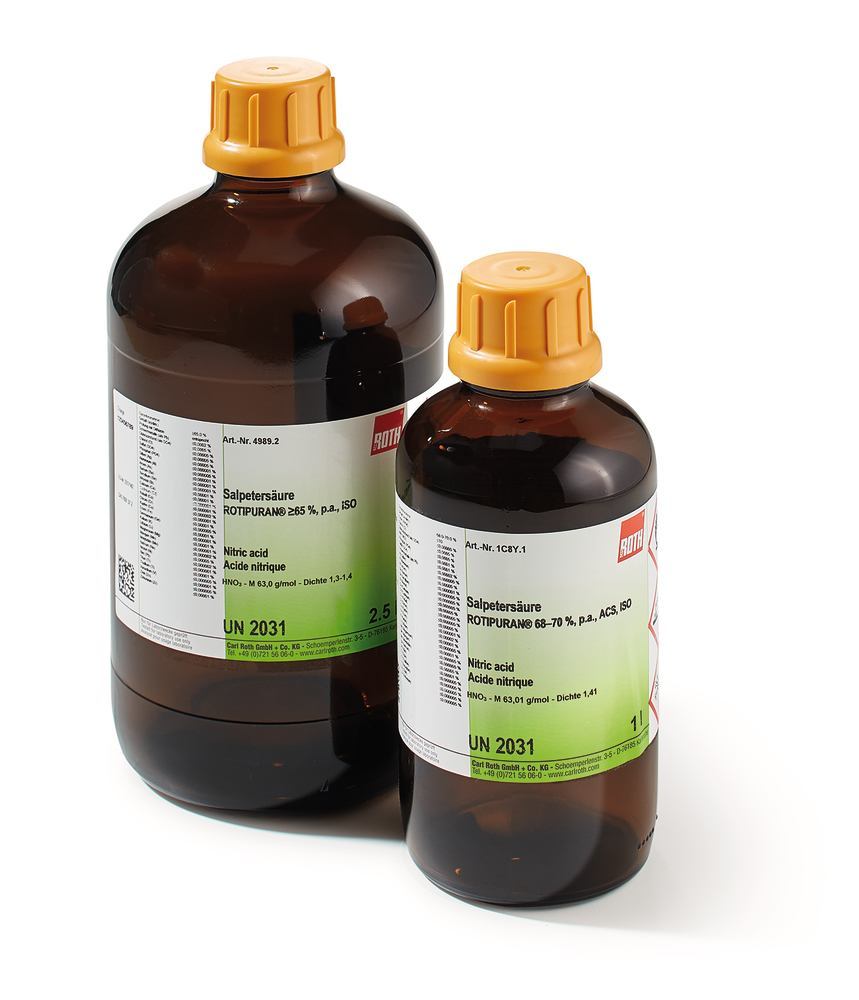
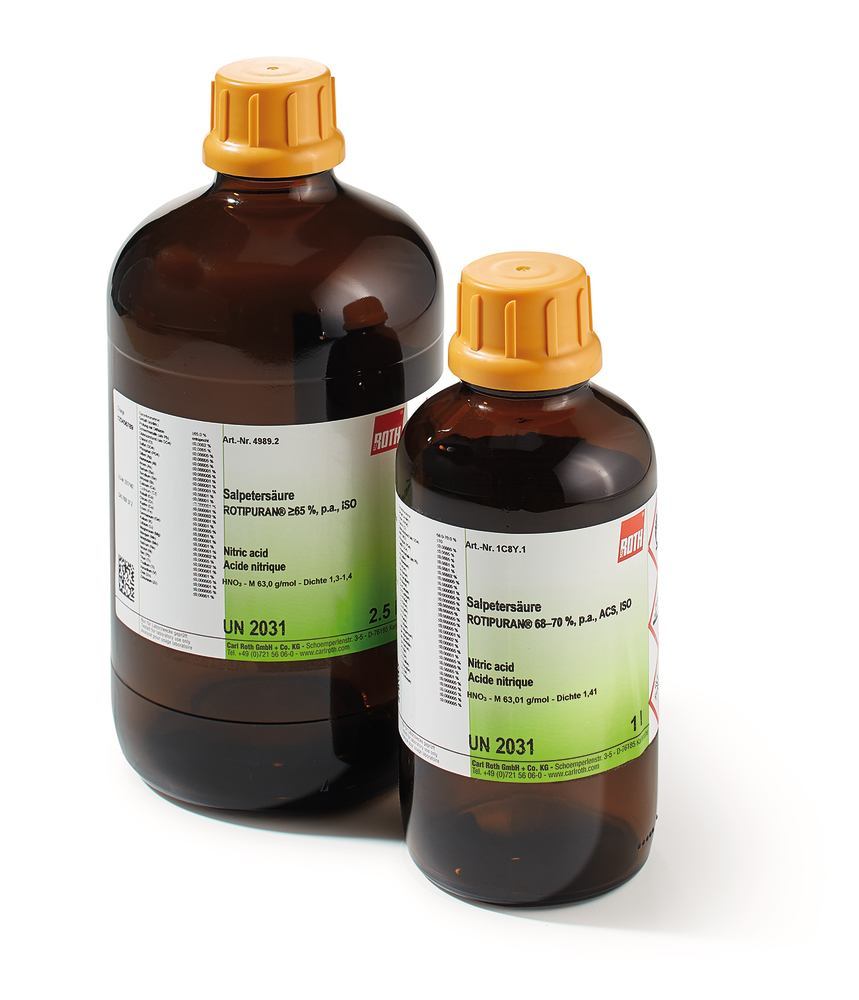
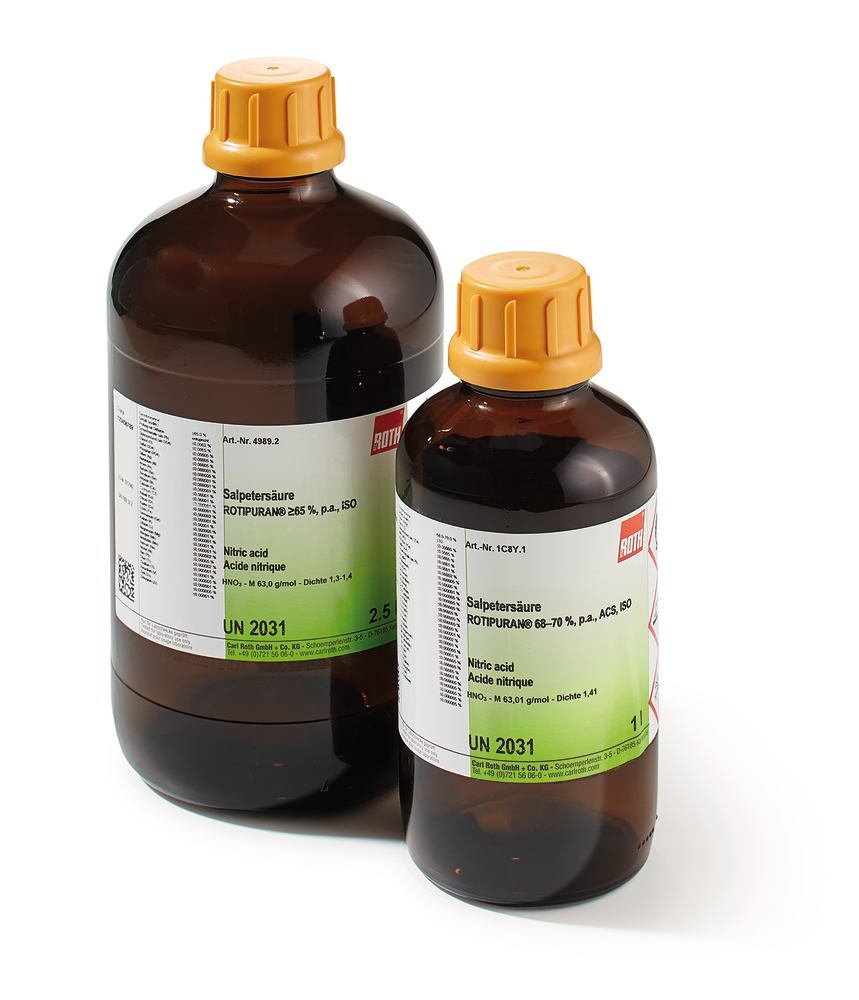
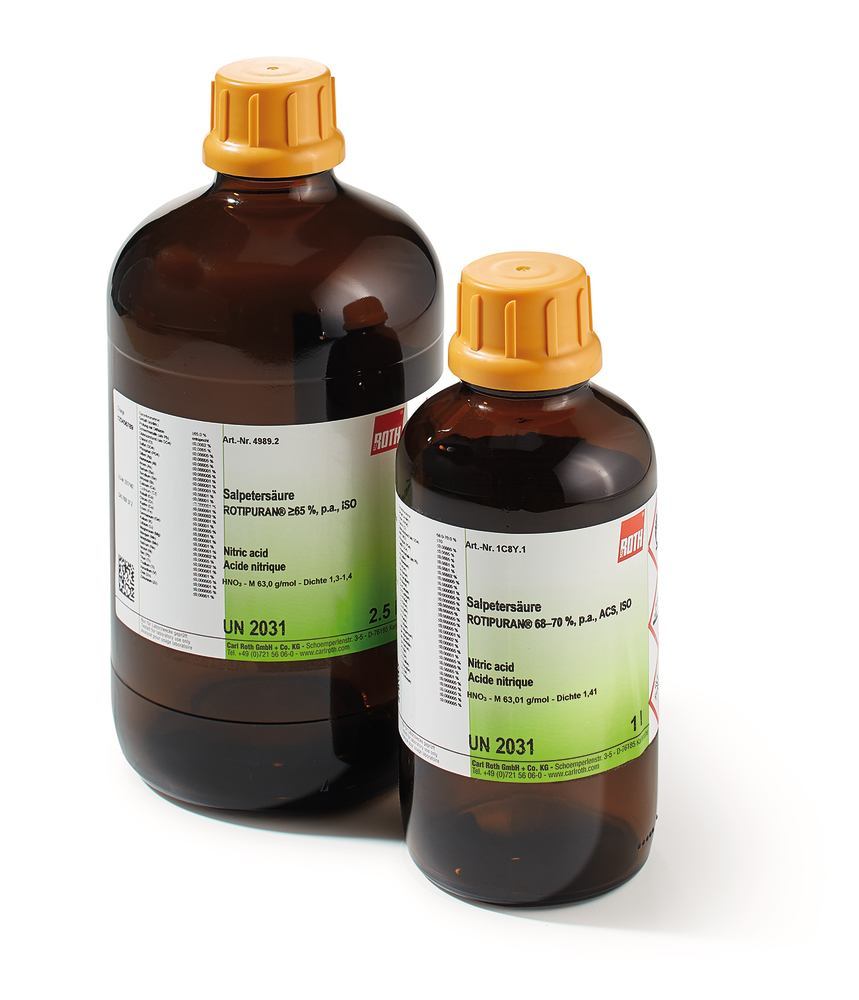
<p>This 1-liter glass container holds nitric acid, a reagent used for decalcification in life science applications, specifically within histology and microscopy. The CAS Number for this compound is 7697-37-2. It falls under the substance groups of acids, inorganic, and nitrogen compounds, inorganic. In the workplace, various precautions should be taken when handling this material, including wearing safety goggles and gloves, prohibiting open flames, and adhering to other warning and precept labels. Additionally, a recommended short-term exposure limit value of 2.6 mg/m3 (1 ppm) has been established by Directive 2006/15/EC for the European Union.</p> <ul> <li>CAS Number: 7697-37-2</li> <li>Molecular Formula: NO3-</li> <li>Molecular Weight: 62.005</li> <li>Exact Mass: 61.987817862</li> </ul>

Product Detail
New
7647-01-0, Carl Roth

7647-01-0, Carl Roth

<p>This Hydrochloric Acid, available in a 25-liter plastic container, falls under the category of reagents for decalcification in life science applications. Its CAS Number is 7647-01-0. It belongs to the group of Chlorine compounds, inorganic and Inorganic gases. The substance requires various workplace precautions, including the use of safety goggles, safety shoes, and safety gloves. Additionally, there are prohibitions such as no smoking and no admittance for unauthorized persons. The recommended indicative occupational exposure limit value for the European Union is an 8-hour limit value of 8 mg/m3 (5 ppm) and a short-term limit value of 15 mg/m3 (10 ppm) according to Directive 2000/39/EC.</p> <ul> <li>CAS Number: 7647-01-0</li> <li>Molecular Formula: Cl-</li> <li>Molecular Weight: 35.45</li> <li>Exact Mass: 34.9688527</li> <li>Melting Point: -101 °C</li> <li>GHS Signal Word: Warning</li> <li>Hazard Statements:</li> <li>H317: May cause an allergic skin reaction [Warning Sensitization, Skin]</li> </ul>

Product Detail
New
64-18-6, Carl Roth

64-18-6, Carl Roth

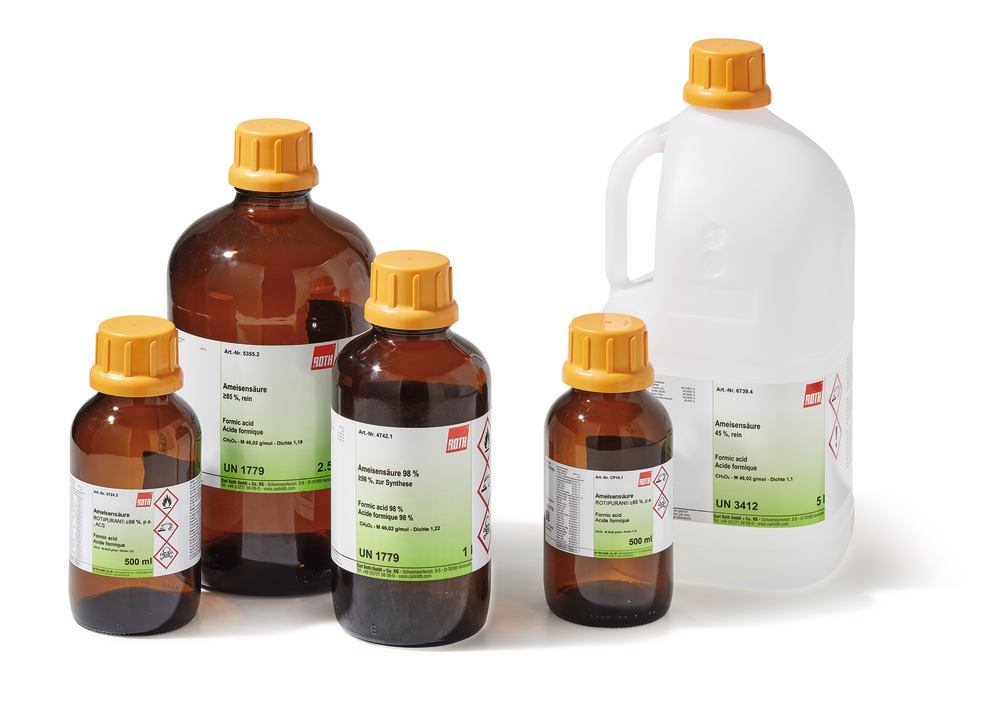
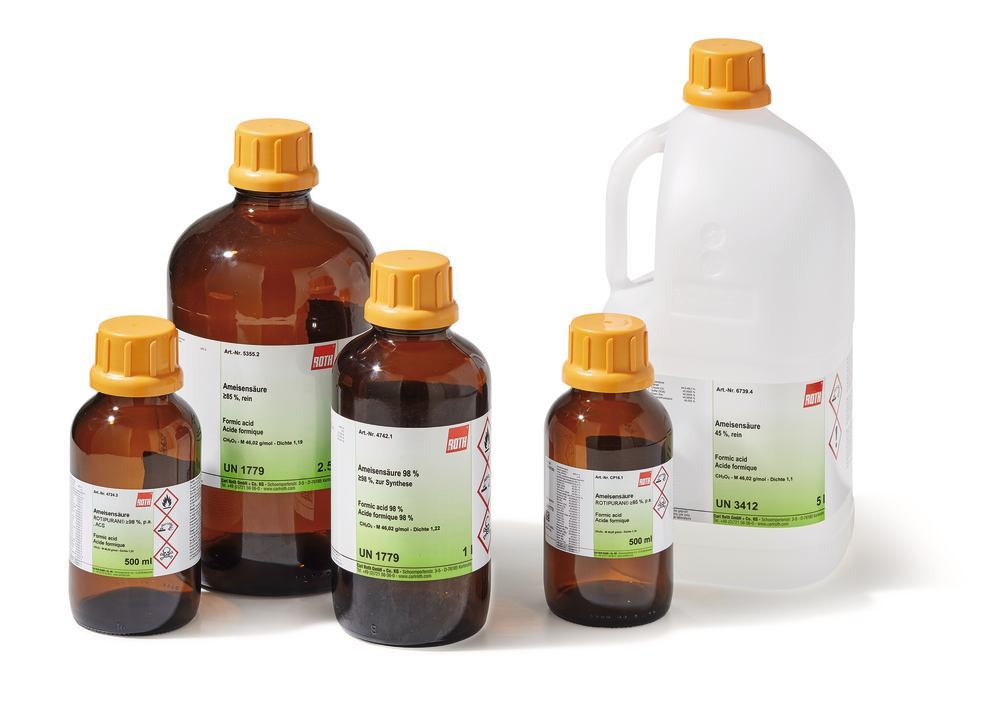
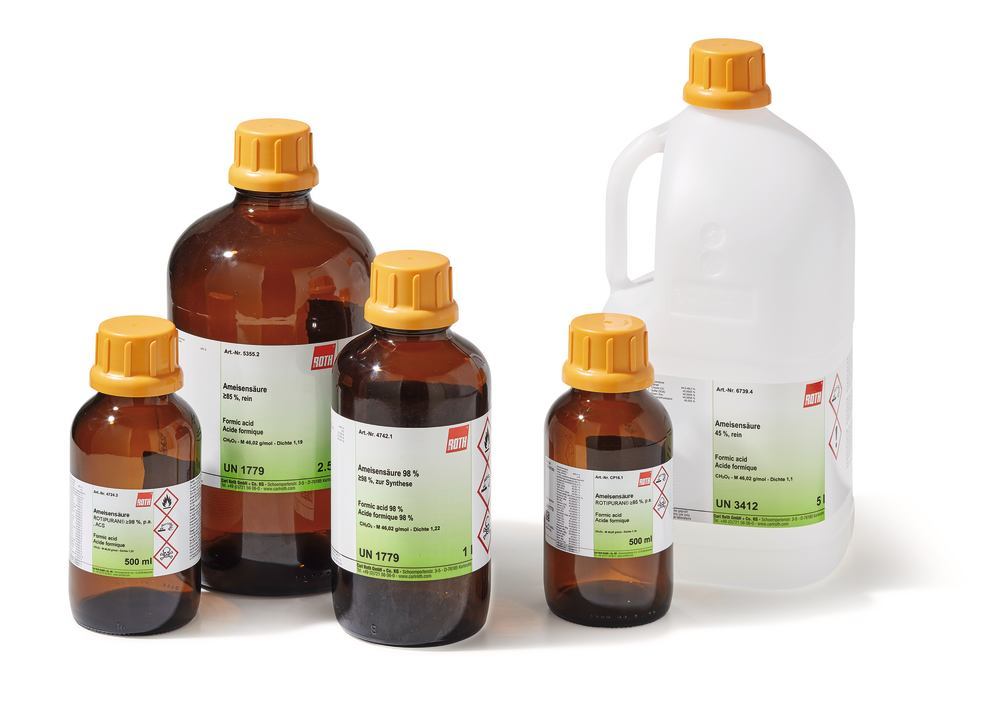
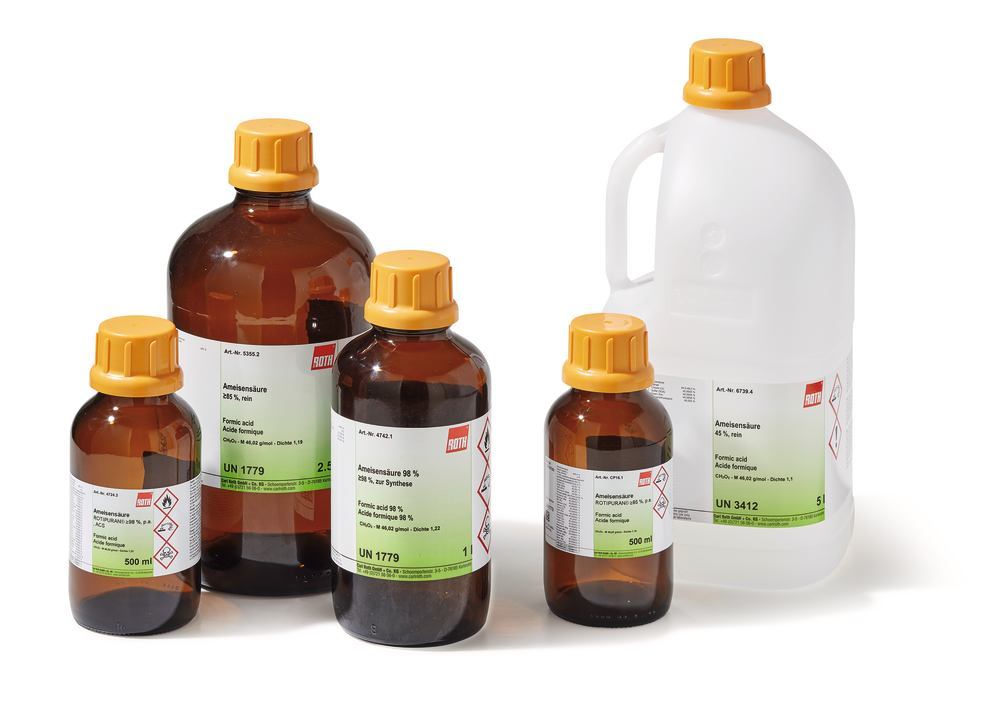
<p>This 1 liter glass container holds Formic Acid, a reagent used for decalcification in life science applications, specifically within histology and microscopy. It falls under the category of carboxylic acids with a Molecular Weight of 46.03 g/mol. The CAS Number is 64-18-6. Due to its properties, this substance requires caution when handling as it is classified as inflammable, toxic, and corrosive. Safety measures such as wearing protective equipment, avoiding open flames, and adhering to workplace guidelines are essential. Additionally, an 8-hour limit value of 9 mg/m3 (5 ppm) has been recommended by Directive 2006/15/EC for occupational exposure.</p> <ul> <li>CAS Number: 64-18-6</li> <li>Molecular Formula: CHO2-</li> <li>Molecular Weight: 45.017</li> <li>Exact Mass: 44.997654270</li> </ul>

Product Detail
New
64-19-7, Carl Roth

64-19-7, Carl Roth

<p>This 5-liter plastic container holds acetic acid, a carboxylic acid commonly used as a reagent for decalcification in life science applications. The CAS Number for this compound is 64-19-7. It falls under the substance group of carboxylic acids. In the workplace, it is labeled with various precautions such as the prohibition of open flames, no admittance for unauthorized persons, and the requirement to use safety goggles and gloves. Additionally, there are recommended indicative occupational exposure limits set by Directive 2017/164/EU, with an 8-hour limit value of 25 mg/m3 (10 ppm) and a short-term limit value of 50 mg/m3 (20 ppm).</p> <ul> <li>CAS Number: 64-19-7</li> <li>Molecular Formula: C2H3O2-</li> <li>Molecular Weight: 59.04</li> <li>Exact Mass: 59.013304334</li> </ul>

Product Detail
New
6484.4, Carl Roth

6484.4, Carl Roth

<p>Prepared for use in regulated laboratory conditions, the Decalcifier Soft, 5 L, Plastic falls under the category of reagents for decalcification. This product, part of the Life Science range, is specifically designed for histology purposes, making it ideal for decalcifying tissues that contain solid materials like bones or keratin prior to paraffin embedding. Containing 25% EDTA, this solution ensures a gentler decalcification process compared to traditional methods, although it may require more time, particularly for bone biopsies which typically take approximately 3-4 days. To expedite the process, a magnetic stirrer can be employed. The solution&#x27;s weakly basic environment leaves nucleic acids and enzymes unaffected, making it suitable for immunological applications as well. With a density of 1.1 g/cm³, this sustainable decalcifier solution based on ED</p> <ul> <li><strong>Category:</strong> Reagents for Decalcification</li> <li><strong>Density (D):</strong> 1,1 g/cm³</li> </ul>

Product Detail
allied chemi
  • secure-payment
  • visa
  • american-express
  • master-card

© 2023 Copyright. All Rights Reserved. Unit 19, Euroway House, Roydsdale Way, Bradford, BD4 6SE, UK