
Deliver to United Kingdom
0

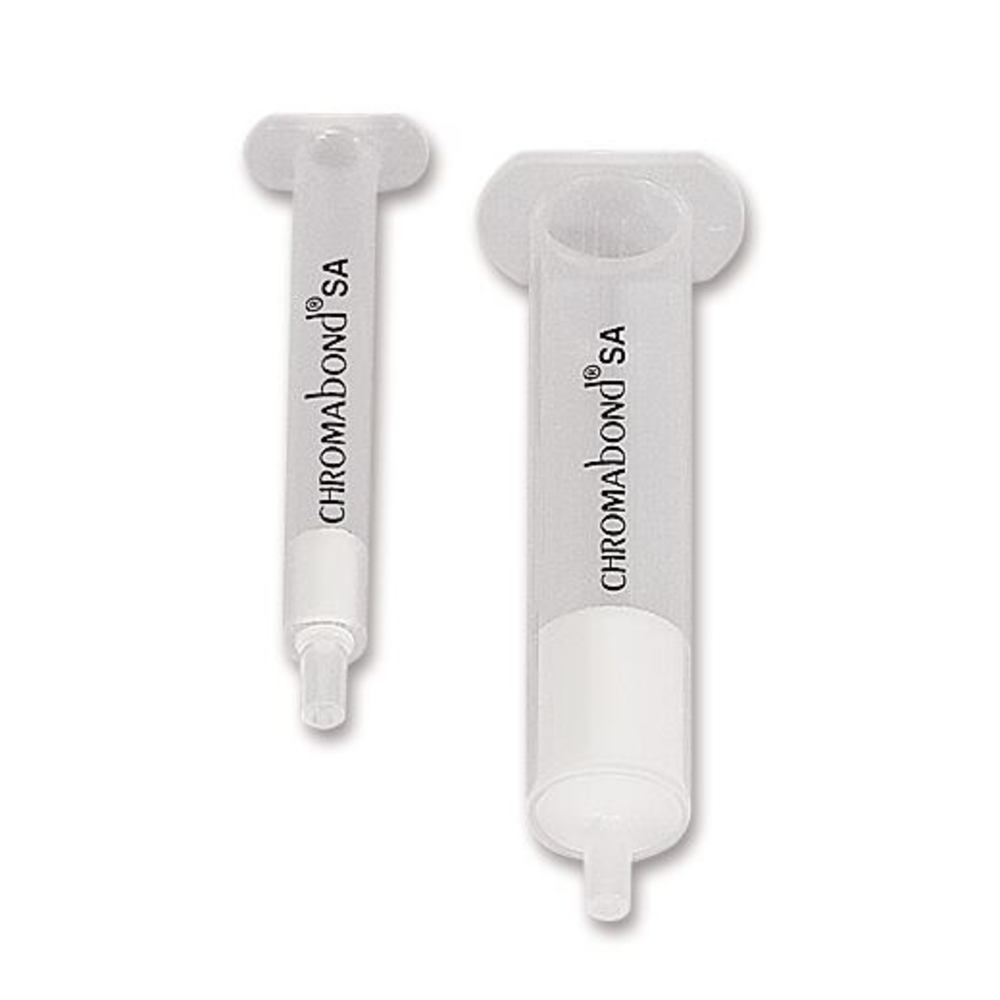
SPE polypropylene column CHROMABOND ® SA (SCX), 3 ml, 500 mg, 250 unit(s)

Order number: 1295.2

Part number: AC100008150
£ 846.59*

*Prices plus VAT plus shipping costs

£ 1015.91*

*incl. VAT, plus shipping costs
In Stock

Price Breakdown

1

6

24

Prepared to meet the demands of technical research tasks, the Spe Polypropylene Column Chromabond® Sa (Scx), available in packs of 5 x 50 units, offers an efficient solution for separating amino acids, chlorophyll, amines, and PCBs through its strong acidic cation exchange property (SCX). This open tubular syringe-shaped column with Luer tip outlet features fully porous particles (FPP) of 45 μm and a specific surface area of 500 m²/g, ensuring optimal performance. The column is filled with 500 mg of silica gel with benzenesulfonic acid modification, providing a recommended exchanger capacity of ~0.5 meq/g. For best results, store this column at room temperature as indicated. Complement your chromatography lab with this versatile tool and explore further attractive products

  • Category: Ion exchangers for the SPE
  • Column type: SPE column
  • Separation principle: Ion exchange (IEX)
  • Column shape: Open tubular syringe-shaped column with Luer tip outlet
  • Exchanger capacity cation/anion: ~0,5 meq/g
  • Pore size: 60 Å
  • Specific surface according to BET: 500 m²/g
  • Surface chemistry: Silica gel with benzenesulfonic acid modification, strongly acidic cation exchanger (SCX)
  • Filling quantity: 500 mg
  • Particle size: 45 µm
  • Material text: Material: PP columns with PE filter elements.
  • Recommended application(s): Amino acids, chlorophyll, Amines, PCBs
  • Phase: SA (SCX)
  • pH stability: 2,0-8,0
  • Similar phases: ROTI ® X Bond SCX Strata™ SCX Bond Elut™ SCX Discovery ® DSC-SCX Supelclean™ LC-SCX CLEAN-UP ® Benzenesulfonic Acid AccuBond ® SCX Bakerbond™ Aromatic Sulfonic Acid Isolute ® SCX LiChrolut ® SCX
  • Recommended storage temperature: RT
  • Column volume: 3 ml
  • Packaging: 5 x 50 units
  • Particle type: Fully porous particles (FPP)