
Deliver to United Kingdom
0

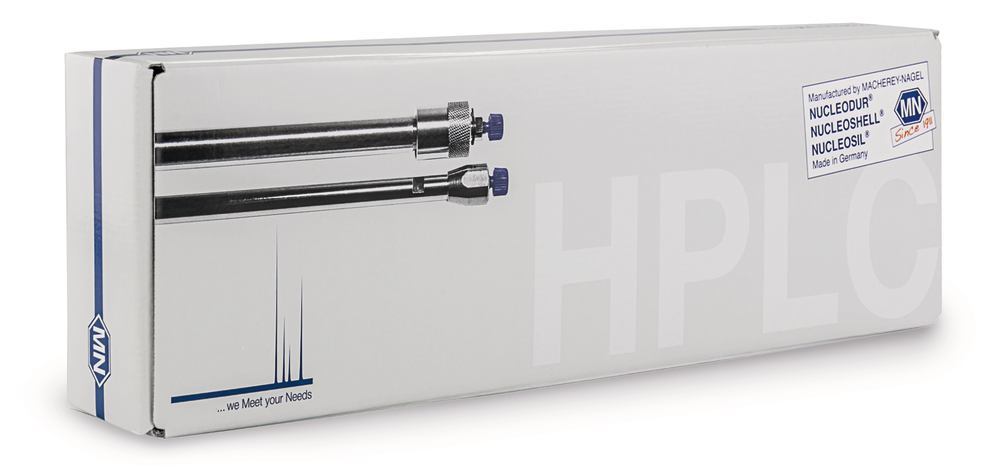
HPLC column NUCLEODUR ® C 18 ec, 5 µm, 110 Å, 125 mm, 4.6 mm

Order number: 35K8.1

Part number: AC100007152
£ 398.61*

*Prices plus VAT plus shipping costs

£ 478.33*

*incl. VAT, plus shipping costs
In Stock

Price Breakdown

1

6

24

Configured for stable performance in synthesis settings, this HPLC column Nucleodur® C 18 ec features a particle size of 5 μm and a pore size of 110 Å, making it suitable for a wide range of applications including basic, neutral, or acidic drugs, derivatized amino acids, pesticides, fat-soluble vitamins, aldehydes, and ketones. With a specific surface area of 340 m²/g according to BET, this fully porous particle (FPP) column offers excellent interaction and retention mechanisms through hydrophobic (van der Waals interactions) and some residual silanol interactions. This analytical separation column is delivered with an instruction leaflet, certificate of analysis, and has a pressure stability of 600 bar and temperature stability of 60°C.

  • Category: Separation columns for HPLC
  • Pore volume: 0.9 ml/g
  • L x Ø internal (column): 125 x 4.6 mm
  • Pressure stability: 600 bar
  • Surface chemistry: Medium density monomeric octadecyl (C 18 , ODS) modification
  • Pore size: 110 Å
  • Column volume: 2.06 ml
  • Interactions / retention mechanism: hydrophobic (van der Waals interactions), some residual silanol interactions
  • Endcapped: yes
  • Eluent in column: Acetonitrile - Water
  • USP listing: L1
  • Specific surface according to BET: 340 m²/g
  • Separation principle: Reversed phase (RP)
  • Temperature stability: 60 ° C
  • Similar phases: NUCLEOSIL ® C 18 Spherisorb ® ODS II Symmetry ® C 18 Hypersil™ ODS Inertsil ® ODS II Kromasil ® C 18 LiChrospher ® RP 18
  • Recommended application(s): Routine analyses Aldehydes Basic, neutral or acidic drugs Derivatised amino acids Fat-soluble vitamins Ketones Pesticides Phenolic compounds
  • Column shape: Analytical separation column
  • Phase: C 18 ec
  • Column type: HPLC column
  • Particle size: 5 µm
  • pH stability: 1,0-9,0
  • Particle type: Fully porous particles (FPP)