
Deliver to United Kingdom
0

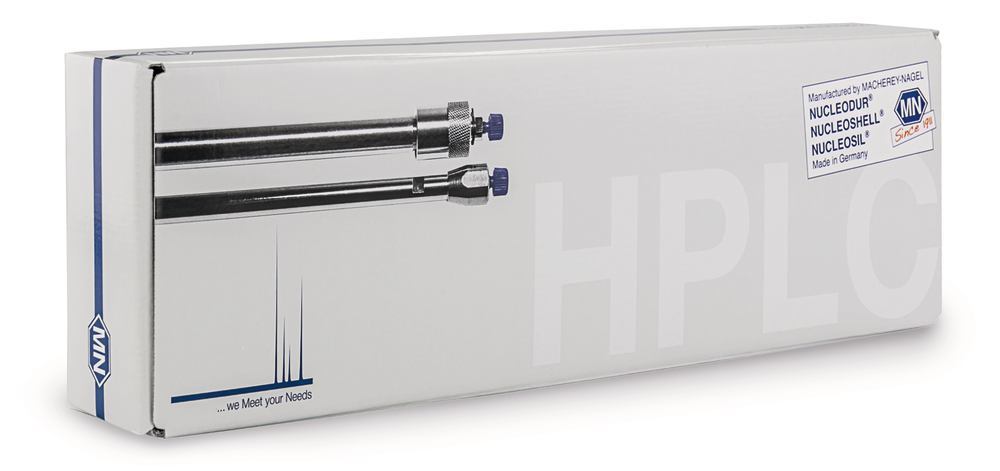
HPLC column NUCLEODUR ® PolarTec, 3 µm, 50 mm, 4.6 mm

Order number: 34H5.1

Part number: AC100007279
£ 744.98*

*Prices plus VAT plus shipping costs

£ 893.98*

*incl. VAT, plus shipping costs
In Stock

Price Breakdown

1

6

24

Formulated to support synthetic operations, the Hplc Column Nucleodur ® Polartec, featuring a particle size of 3 μm and a column volume of 0.83 ml, is designed for use in liquid chromatography (LC, HPLC). This analytical separation column, made from high-purity NUCLEODUR ® silica gel, boasts a polar group embedded in a hydrophobic C 18 modification, resulting in a hydrophobic phase with pronounced hydrophilic properties. Its superior performance under high aqueous conditions makes it suitable for separating a wide range of compounds, including amino acids, basic pharmaceuticals, nitrogen containing compounds, organic acids, pesticides, phenols, water-soluble vitamins, and even 100% aqueous eluents. Additionally, its low bleeding characteristics make

  • Category: Separation columns for HPLC
  • Recommended application(s): Amino acids Basic pharmaceuticals Especially for polar compounds Nitrogen containing compounds Organic acids Pesticides Phenols Suitable for 100 % aqueous eluents Suitable for LC-MS Water-soluble vitamins
  • Temperature stability: 60 ° C
  • Particle size: 3 µm
  • Eluent in column: Acetonitrile - Water
  • Surface chemistry: Octadecyl phase (C 18 , ODS) modification, with embedded polar group (PEG)
  • Pore size: 110 Å
  • Phase: PolarTec
  • Interactions / retention mechanism: hydrophobic and polar (H bonds)
  • Pore volume: 0.9 ml/g
  • Column type: HPLC column
  • USP listing: L1 L60
  • L x Ø internal (column): 50 x 4.6 mm
  • pH stability: 1,0-9,0
  • Column volume: 0.83 ml
  • Application Database (Macherey-Nagel): HPLC
  • Column shape: Analytical separation column
  • Endcapped: yes
  • Pressure stability: 600 bar
  • Specific surface according to BET: 340 m²/g
  • Separation principle: Reversed phase (RP)
  • Particle type: Fully porous particles (FPP)