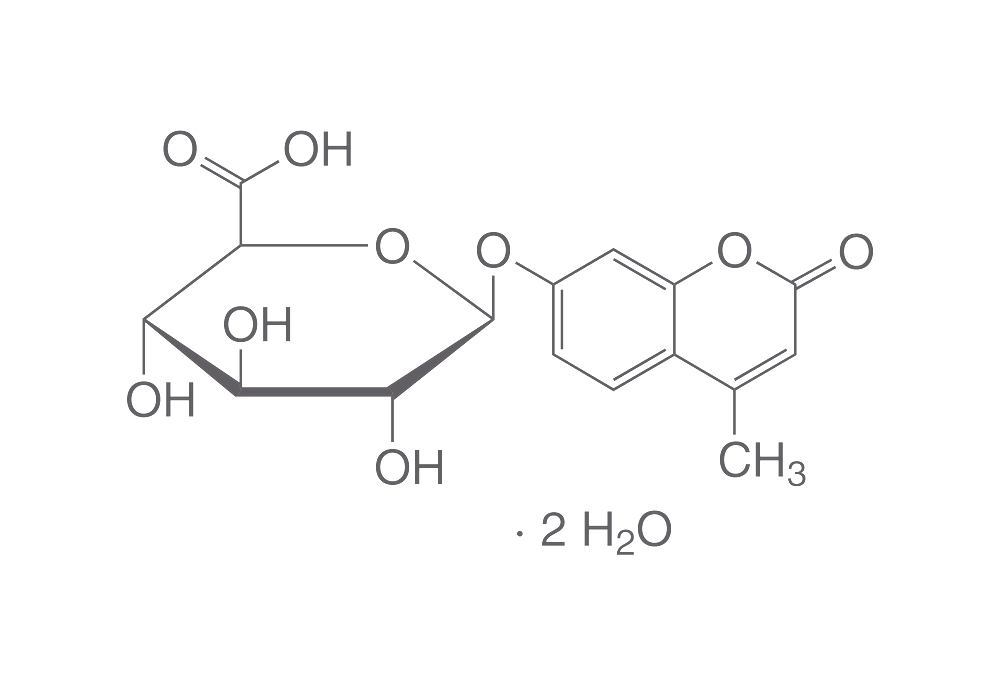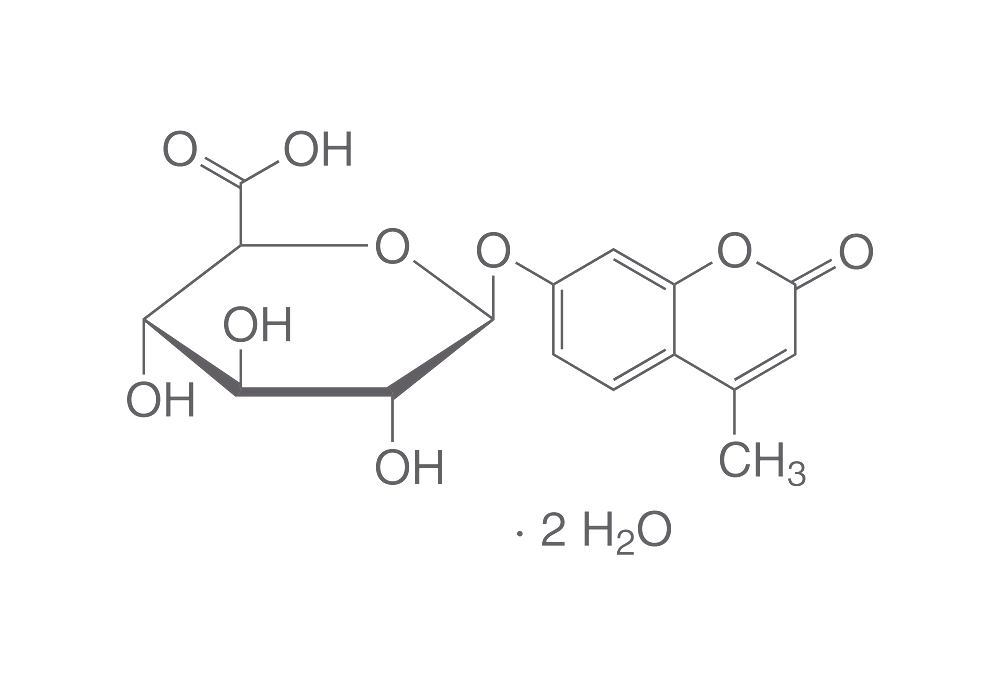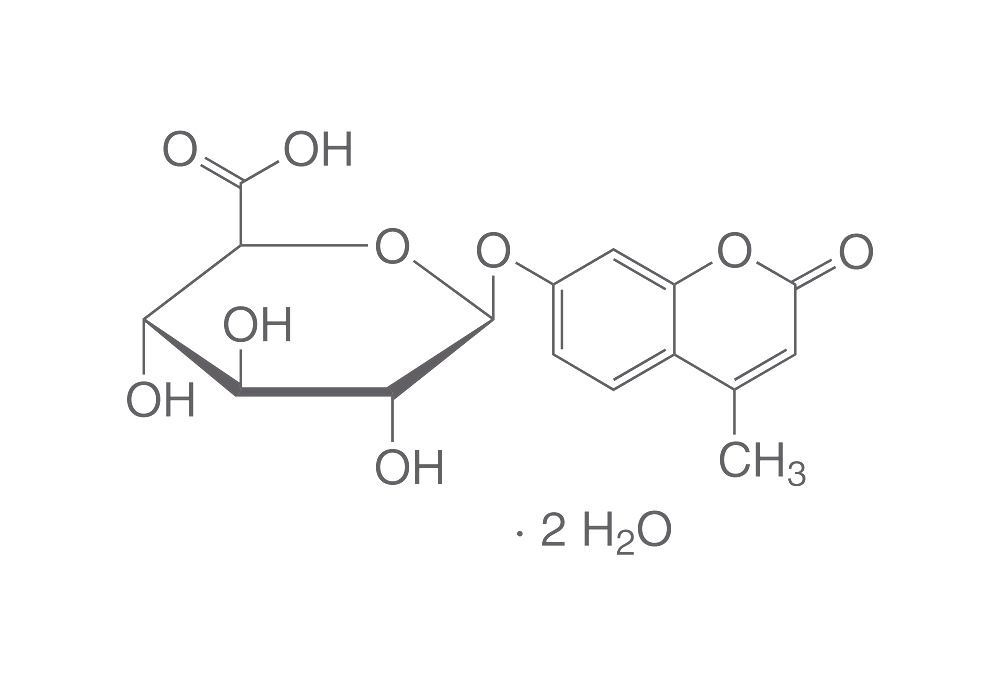
4-Methylumbelliferyl-β-D-glucuronide dihydrate ≥99 %, p.a. Ideal for fluorometric detection of β-glucoronidase hydrolysed by MUG to 4-methylumbelliferone. Detection occurs via long wave UV light (366 nm).
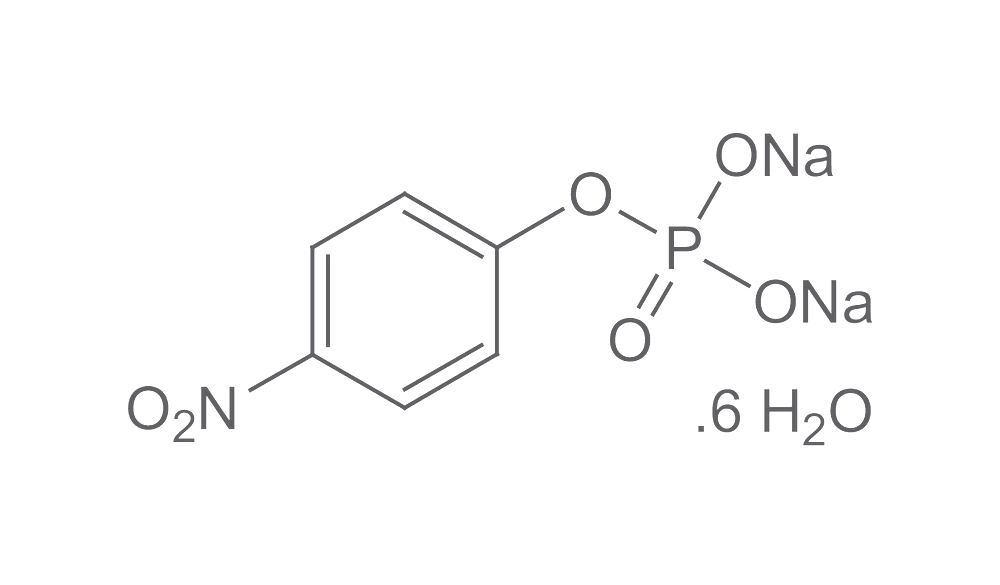
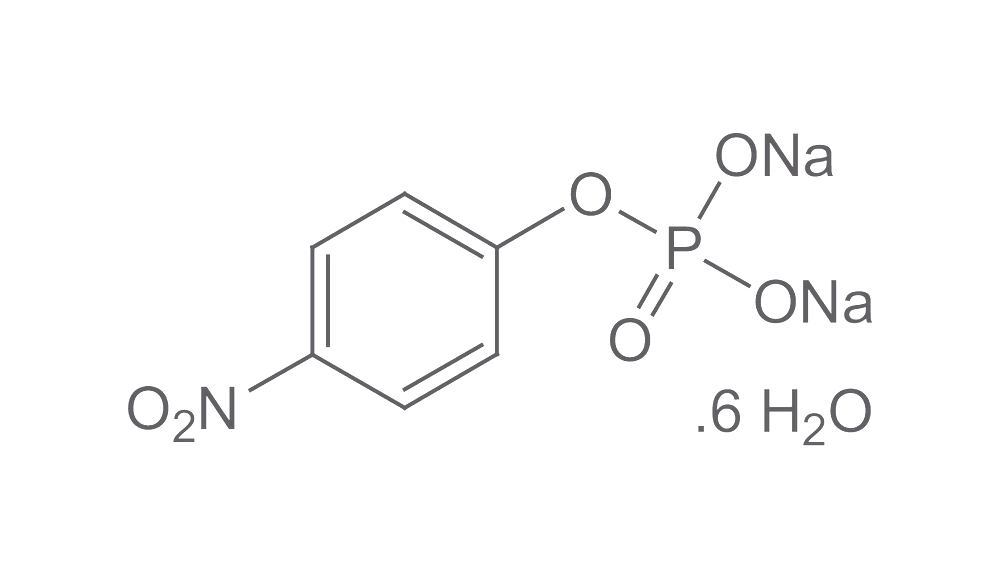
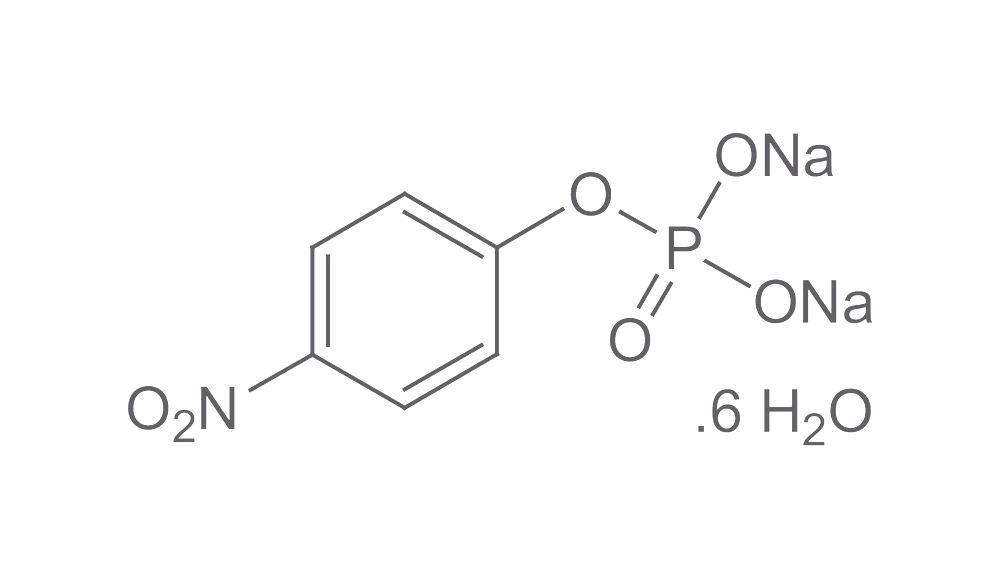
4-Nitrophenyl phosphate disodium salt hexahydrate ≥99 %, for biochemistry Substrate of the alkaline phosphatase for use in ELISAs. During reaction of the substrate, a soluble, yellow product is formed that is detected photometrically at 405 nm wave length. Directions for use Working solution: 1 mg/ml in diethanolamine substrate buffer (10 mM diethanolamine, 0.5 mM MgCl 2 , pH 9.5). For endpoint analysis the reaction may be stopped via addition of 2-3 M NaOH.
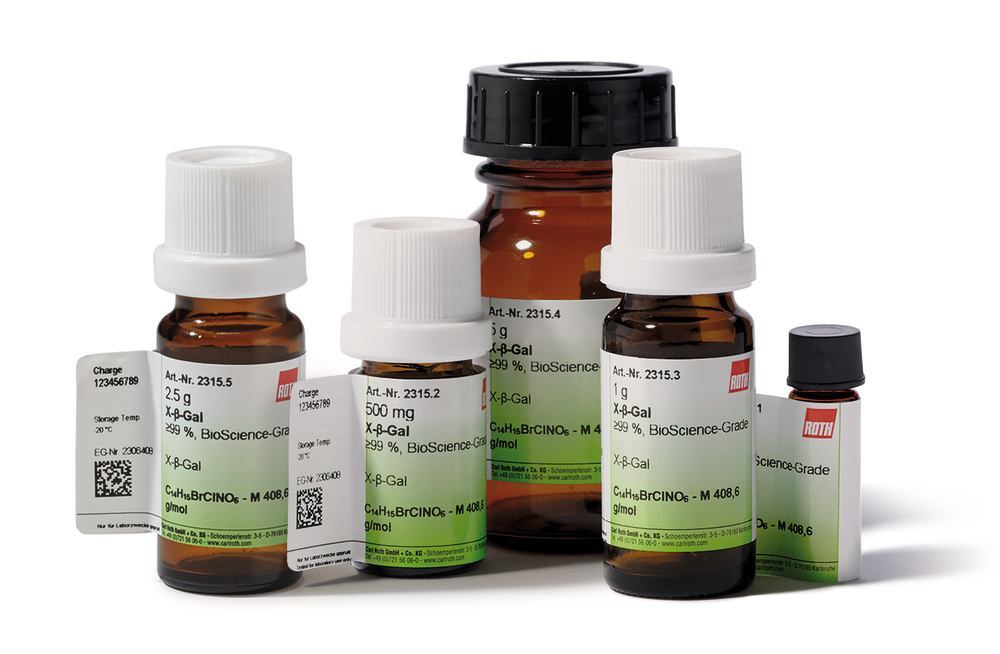
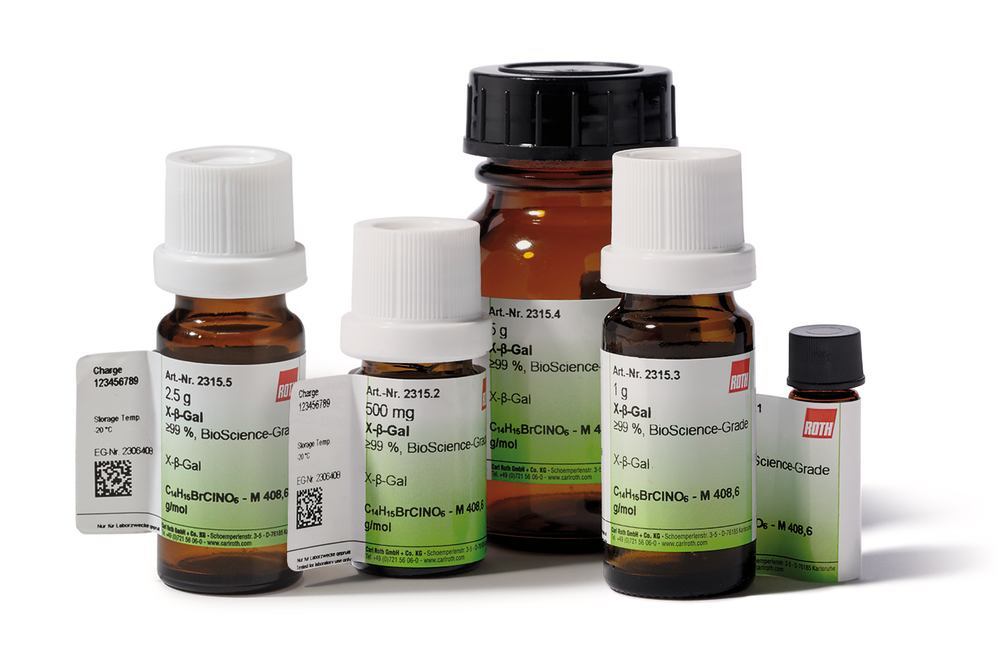
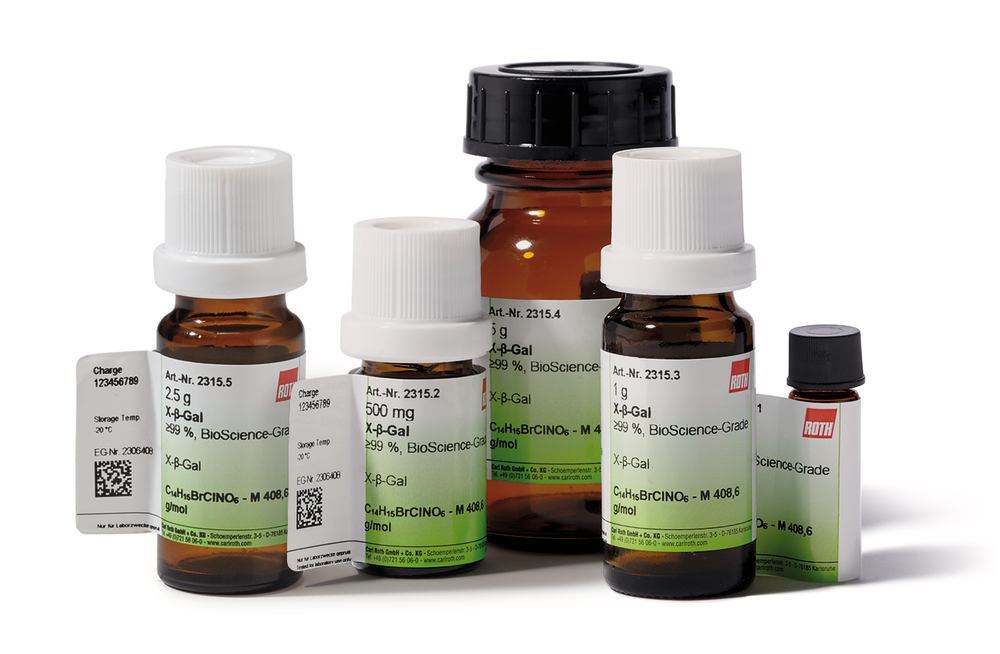
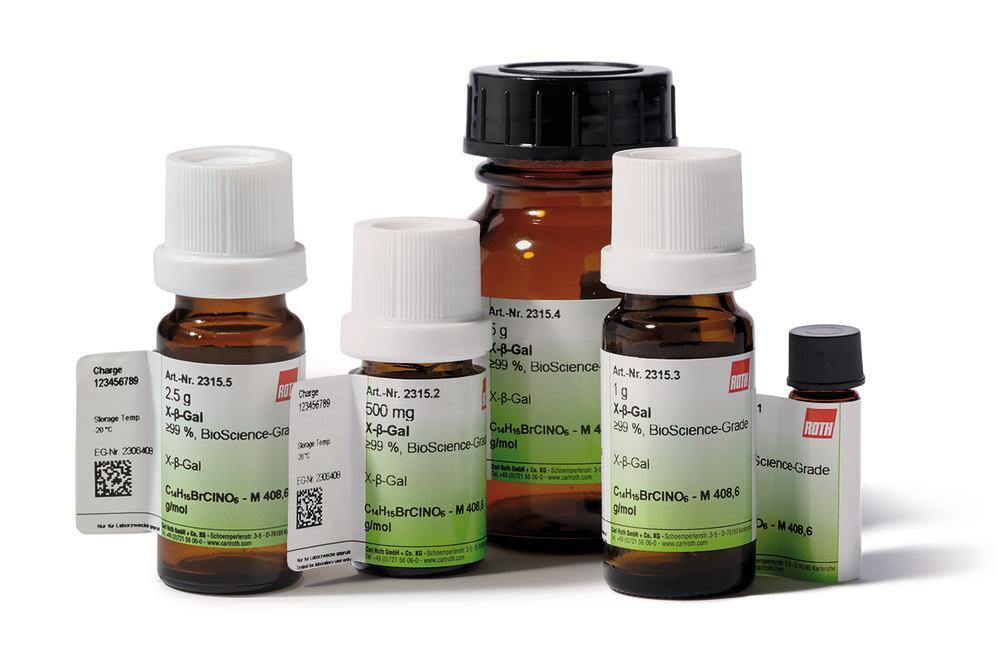
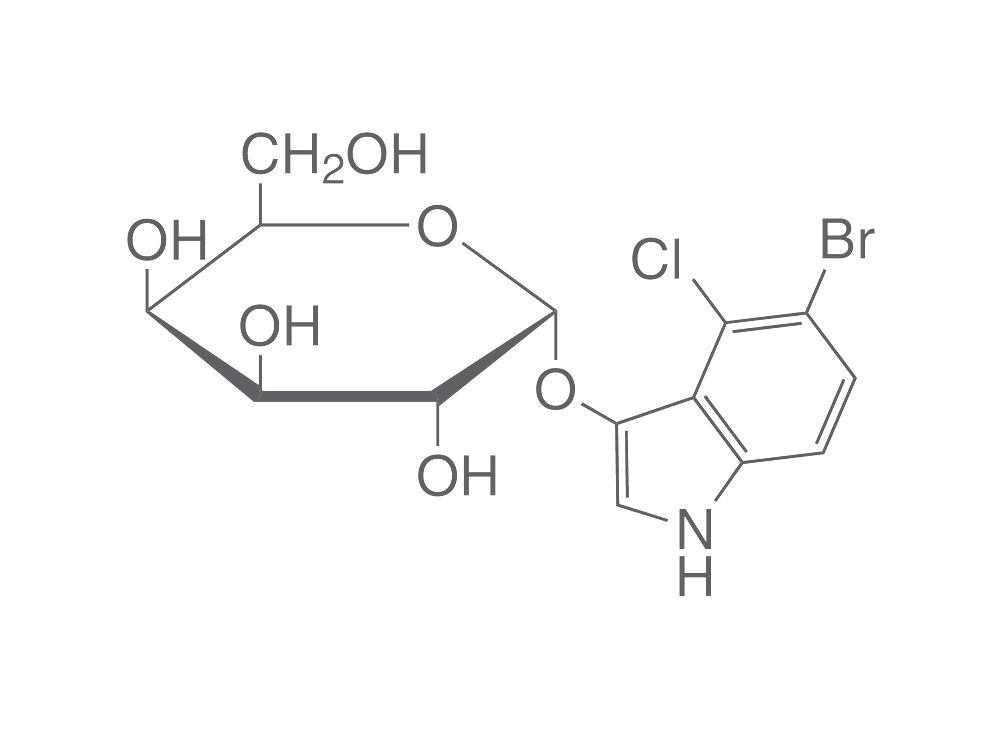
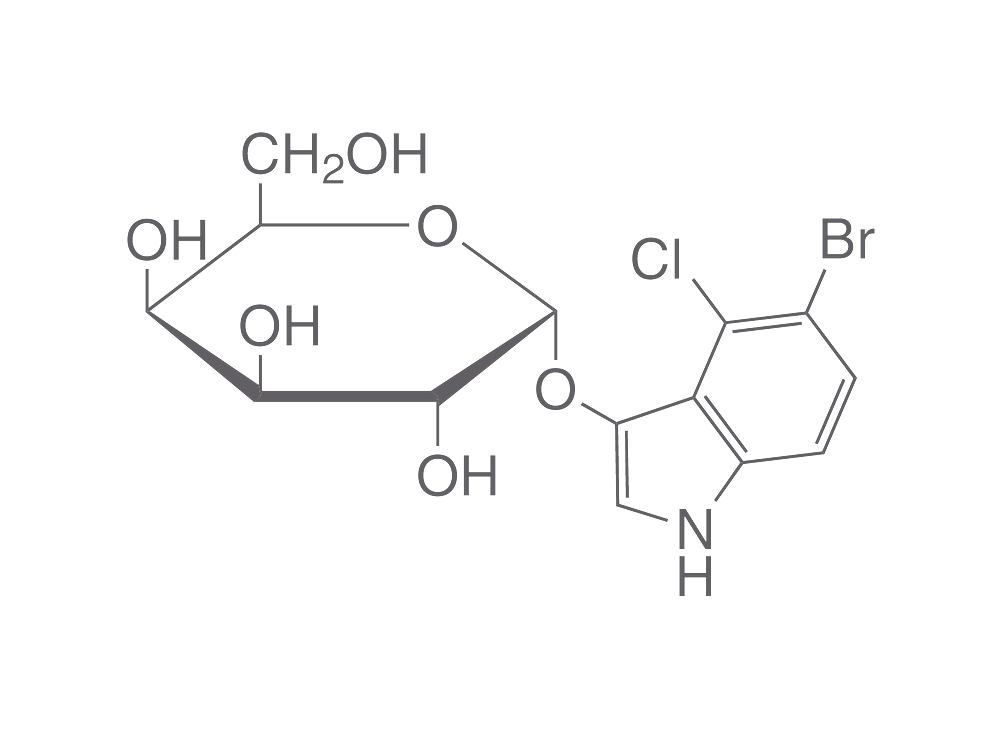
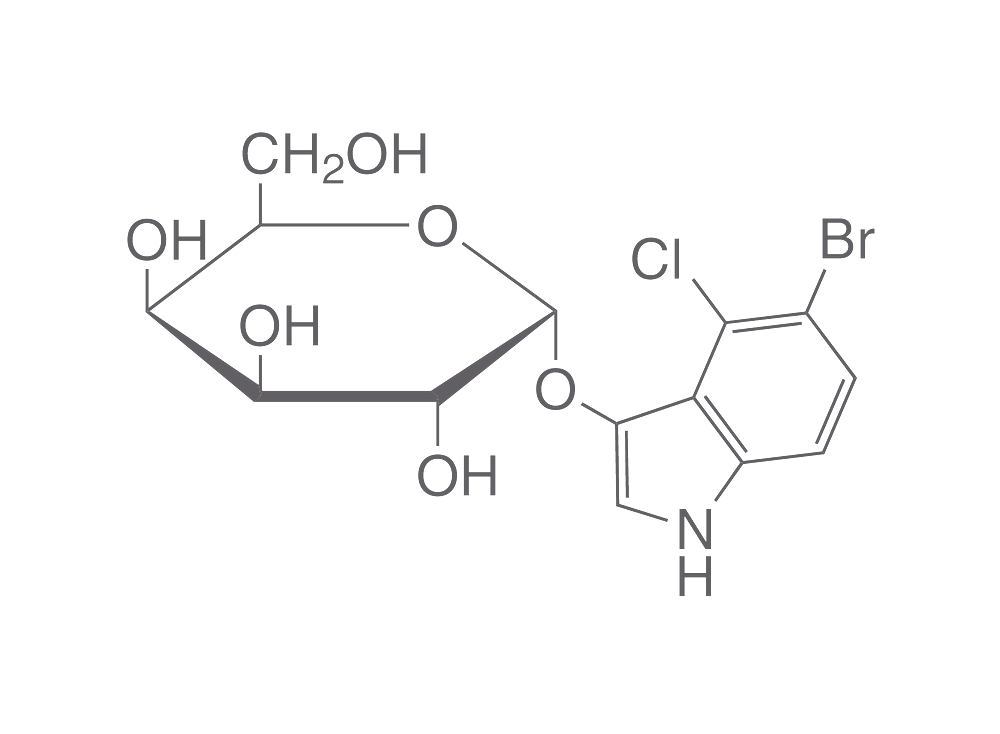
X-β-Gal ≥99 %, BioScience Grade Ideal for colorimetric detection of β-galactosidase activity, for instance during blue-/white selection. Mechanism Being a galacto pyranoside, IPTG inhibits the lac repressor, therefore leading to the induction the lac promotor. Subsequently, using the plasmid as matrix the C-terminal 146 amino acid fragment of the bacterial β-galactosidase is expressed, which functions as so called α-donor and complements the C-terminally deleted bacterial β-galactosidase. The then functional β-galactosidase restricts the galactoside X-Gal, resulting in a blue-coloured dye - therefore, these lac+ clones are coloured dark blue. Since the C-terminal part of the α-donor is located upstream and the N-terminal part is located downstream of the multi cloning site of the plasmid, inserted DNA normally leads to frame shift or at least to major chain elongation, resulting in an unfunctional α-donor and no functional galactosidase - recombinant clones are white. The appearance of light blue clones either results form very short insertions or from the fact that in some plasmids the C-terminal fragment cloned upstream of the MCS is sufficient for α-complementation and restriction of a small amount of X-Gal. Directions for use Working solution: for blue/white selection of recombinant clones on agar plates use 0.3 μl stock solution per ml broth/agar.
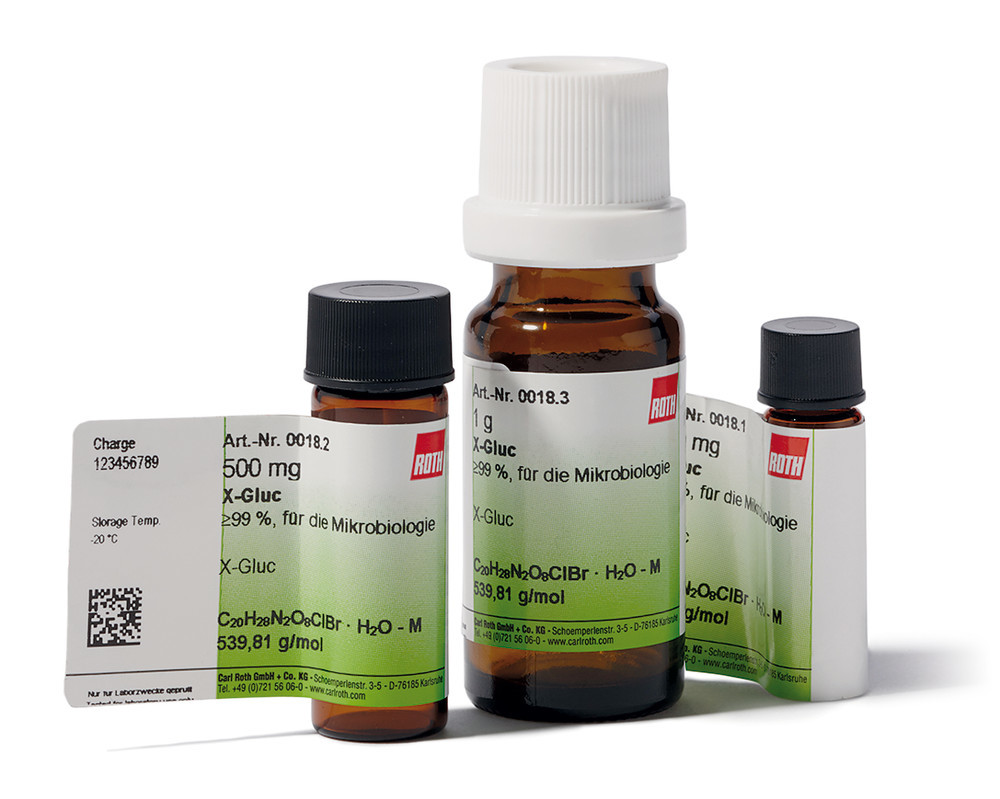
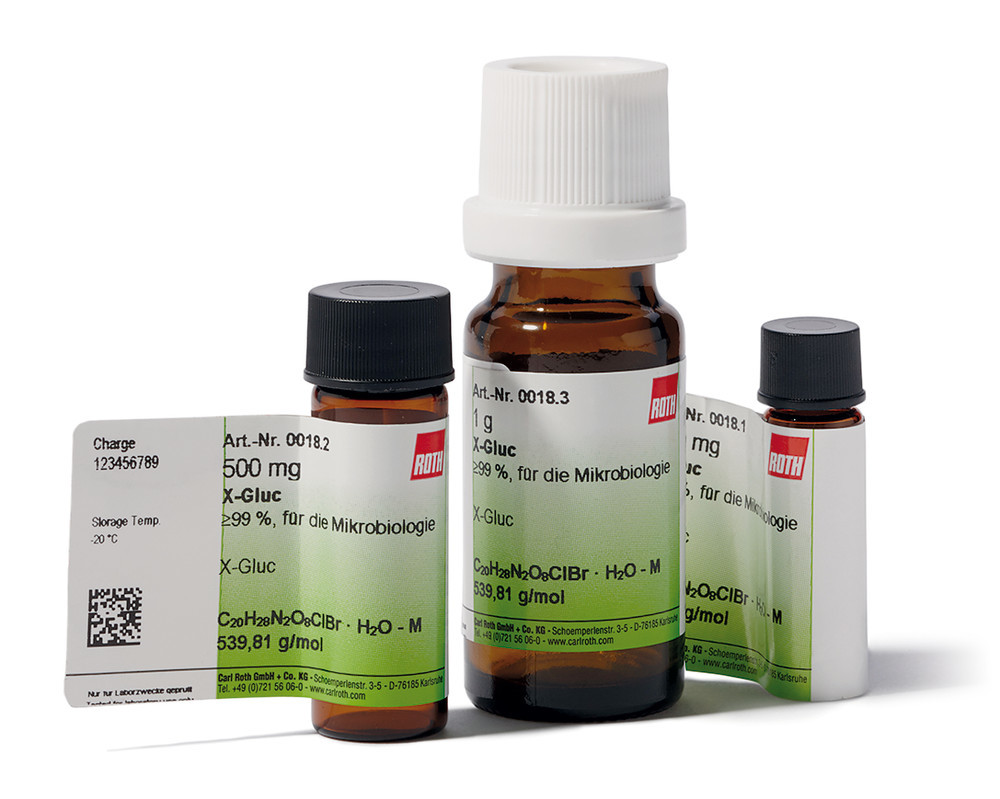
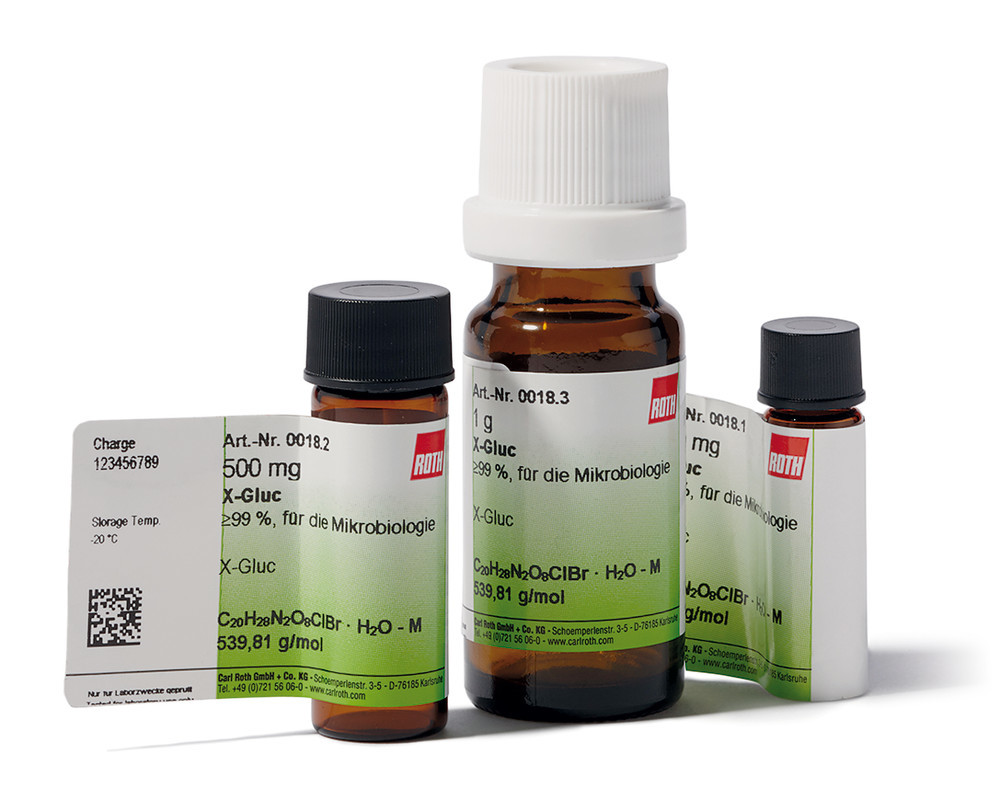
X-Gluc ≥99 %, for microbiology For colorimetric detection of glucuronidase activity. During hydrolysis of X-gluc two molecules are formed, glucuronic acid and 5-bromo-4-chloro-indoxyle, which is then being oxidized to a deep-blue indigo-dye. X-Gluc is used for detection of contaminations by E. coli bacteria in food, waters and feeds. In molecular genetics, it is widely used as marker for expression analysis of target genes.
X-β-Gal ≥99 %, BioScience Grade Ideal for colorimetric detection of β-galactosidase activity, for instance during blue-/white selection. Mechanism Being a galacto pyranoside, IPTG inhibits the lac repressor, therefore leading to the induction the lac promotor. Subsequently, using the plasmid as matrix the C-terminal 146 amino acid fragment of the bacterial β-galactosidase is expressed, which functions as so called α-donor and complements the C-terminally deleted bacterial β-galactosidase. The then functional β-galactosidase restricts the galactoside X-Gal, resulting in a blue-coloured dye - therefore, these lac+ clones are coloured dark blue. Since the C-terminal part of the α-donor is located upstream and the N-terminal part is located downstream of the multi cloning site of the plasmid, inserted DNA normally leads to frame shift or at least to major chain elongation, resulting in an unfunctional α-donor and no functional galactosidase - recombinant clones are white. The appearance of light blue clones either results form very short insertions or from the fact that in some plasmids the C-terminal fragment cloned upstream of the MCS is sufficient for α-complementation and restriction of a small amount of X-Gal. Directions for use Working solution: for blue/white selection of recombinant clones on agar plates use 0.3 μl stock solution per ml broth/agar.
X-α-Gal ≥98 %, for biochemistry Chromogenic substrate of α-galactosidase (melibiase, α-D-galactoside galactohydrolase), an enzyme that is necessary for metabolization of the disaccharide melibiose as a carbon source. Used for selection of positive clones in yeast two-hybrid screens. Directions for use Working concentration: 20-50 µg/ml in agar plates.
X-Gluc ≥99 %, for microbiology For colorimetric detection of glucuronidase activity. During hydrolysis of X-gluc two molecules are formed, glucuronic acid and 5-bromo-4-chloro-indoxyle, which is then being oxidized to a deep-blue indigo-dye. X-Gluc is used for detection of contaminations by E. coli bacteria in food, waters and feeds. In molecular genetics, it is widely used as marker for expression analysis of target genes.
X-β-Gal ≥99 %, BioScience Grade Ideal for colorimetric detection of β-galactosidase activity, for instance during blue-/white selection. Mechanism Being a galacto pyranoside, IPTG inhibits the lac repressor, therefore leading to the induction the lac promotor. Subsequently, using the plasmid as matrix the C-terminal 146 amino acid fragment of the bacterial β-galactosidase is expressed, which functions as so called α-donor and complements the C-terminally deleted bacterial β-galactosidase. The then functional β-galactosidase restricts the galactoside X-Gal, resulting in a blue-coloured dye - therefore, these lac+ clones are coloured dark blue. Since the C-terminal part of the α-donor is located upstream and the N-terminal part is located downstream of the multi cloning site of the plasmid, inserted DNA normally leads to frame shift or at least to major chain elongation, resulting in an unfunctional α-donor and no functional galactosidase - recombinant clones are white. The appearance of light blue clones either results form very short insertions or from the fact that in some plasmids the C-terminal fragment cloned upstream of the MCS is sufficient for α-complementation and restriction of a small amount of X-Gal. Directions for use Working solution: for blue/white selection of recombinant clones on agar plates use 0.3 μl stock solution per ml broth/agar.
4-Nitrophenyl phosphate disodium salt hexahydrate ≥99 %, for biochemistry Substrate of the alkaline phosphatase for use in ELISAs. During reaction of the substrate, a soluble, yellow product is formed that is detected photometrically at 405 nm wave length. Directions for use Working solution: 1 mg/ml in diethanolamine substrate buffer (10 mM diethanolamine, 0.5 mM MgCl 2 , pH 9.5). For endpoint analysis the reaction may be stopped via addition of 2-3 M NaOH.
X-Gluc ≥99 %, for microbiology For colorimetric detection of glucuronidase activity. During hydrolysis of X-gluc two molecules are formed, glucuronic acid and 5-bromo-4-chloro-indoxyle, which is then being oxidized to a deep-blue indigo-dye. X-Gluc is used for detection of contaminations by E. coli bacteria in food, waters and feeds. In molecular genetics, it is widely used as marker for expression analysis of target genes.
4-Methylumbelliferyl-β-D-glucuronide dihydrate ≥99 %, p.a. Ideal for fluorometric detection of β-glucoronidase hydrolysed by MUG to 4-methylumbelliferone. Detection occurs via long wave UV light (366 nm).